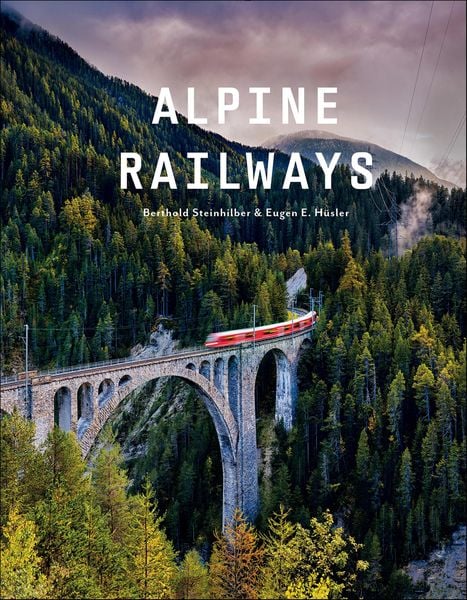
The Railway Landscapes of the Alps
This book and this work are dedicated to the fascinating landscapes of the Alpine railways.
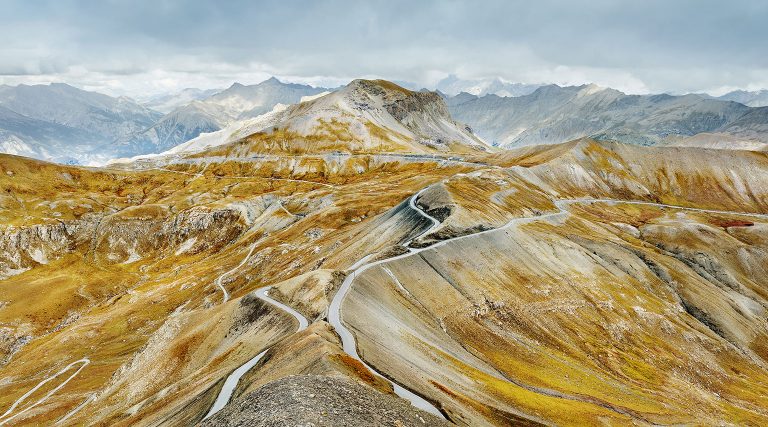
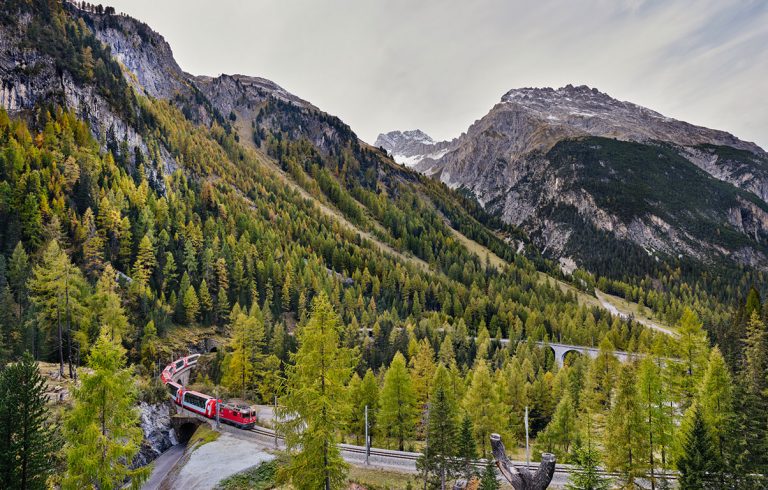
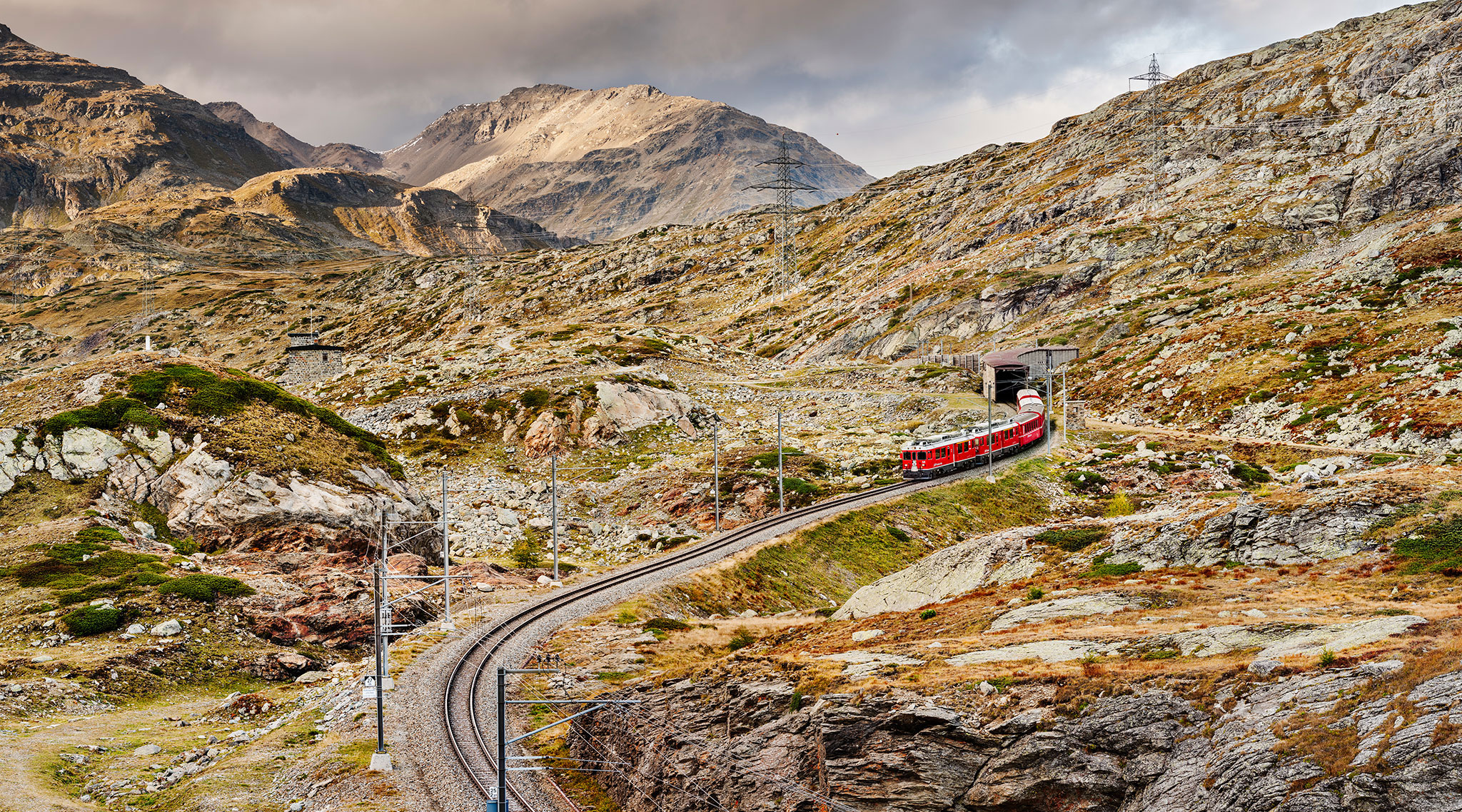
The railways in the Alps are unique and their routing is a pioneering technical achievement. Very often the railways share a narrow and steep valley with a river, mule tracks, country roads and highways. Above, beside and below are villages, farmsteads, mountain meadows, forests and rocks. All these elements are interwoven into a distinctive landscape and together create a picture that I wanted to photograph together with a train. That’s why there are no close-ups of locomotives and trains and yet they are such an important part of these landscapes.
The result is this book with photographs of all the mountain railways in the Alps, from the Tenda Railway line in the French Maritime Alps to the impressive Swiss railways and the Semmering railway in the East of the Alps.
The gallery shows a selection of about 40 of the more than 200 photographs of the different Alpine railways.
Below you will find information about the book, fine art prints and further background information about the creation of the book.
It did not turn out to be easy. It was not clear from the beginning whether this idea could be realised everywhere. Most of the locations are on opposite slopes or above the railway line. I regularly reached a vantage point after an arduous climb, which then turned out not to be optimal after all. A second attempt on the other side of the valley almost became the „norm“. But then there was almost always an alternative panorama that had all the desired attributes, as the views of the Albula railway or the Tenda railway in the Maritime Alps show.
I composed these photograph in particular for the very large format of this book (37 x 58 cm). Every little detail of the railway line and the landscape is clearly visible. The viewer, who may already be very familiar with some railways, can still discover new aspects of them.
When you are working in the Alps for a project like this, history accompanies you everywhere you go. The first mountain railway was opened in 1854 at the Semmering in the eastern Alps, according to plans by Carl von Ghega. The k. u. k. Monarchy built further railways and in 1867 the Brenner Railway was completed under the direction of the Stuttgart engineer Karl Etzel. In 1871, the first trains crossed the Alps at the Mont Cenis, and in the same year the first rack railway in the Alps climbed the Rigi, the most famous of the Swiss panoramic mountains. The technical idea came from Niklaus Riggenbach, a native of Olten.
In France, the Ligne des Alpes went into operation in 1878 and in Switzerland one of the most famous lines was opened in 1882: the Gotthard Railway.
The Austrian Arlbergbahn followed in 1884, and electric rack railways ran up Mount Pilatus (1889) and to Gornergrat (1898). Two of the most beautiful lines in the Alps followed in 1903 and 1910: the Albula Railway and the Bernina Railway.