Alpine Railways
The Railway Landscapes of the Alps
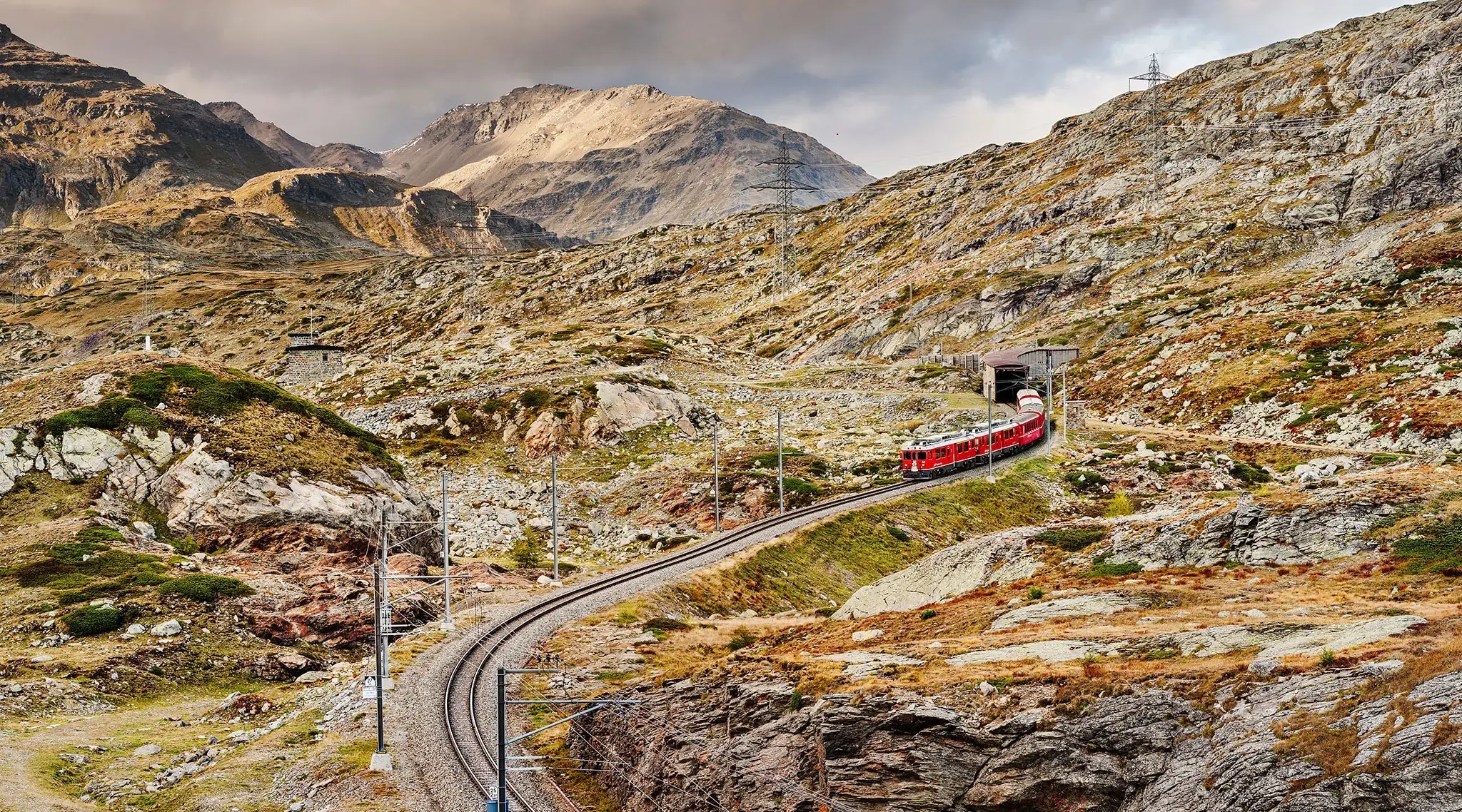
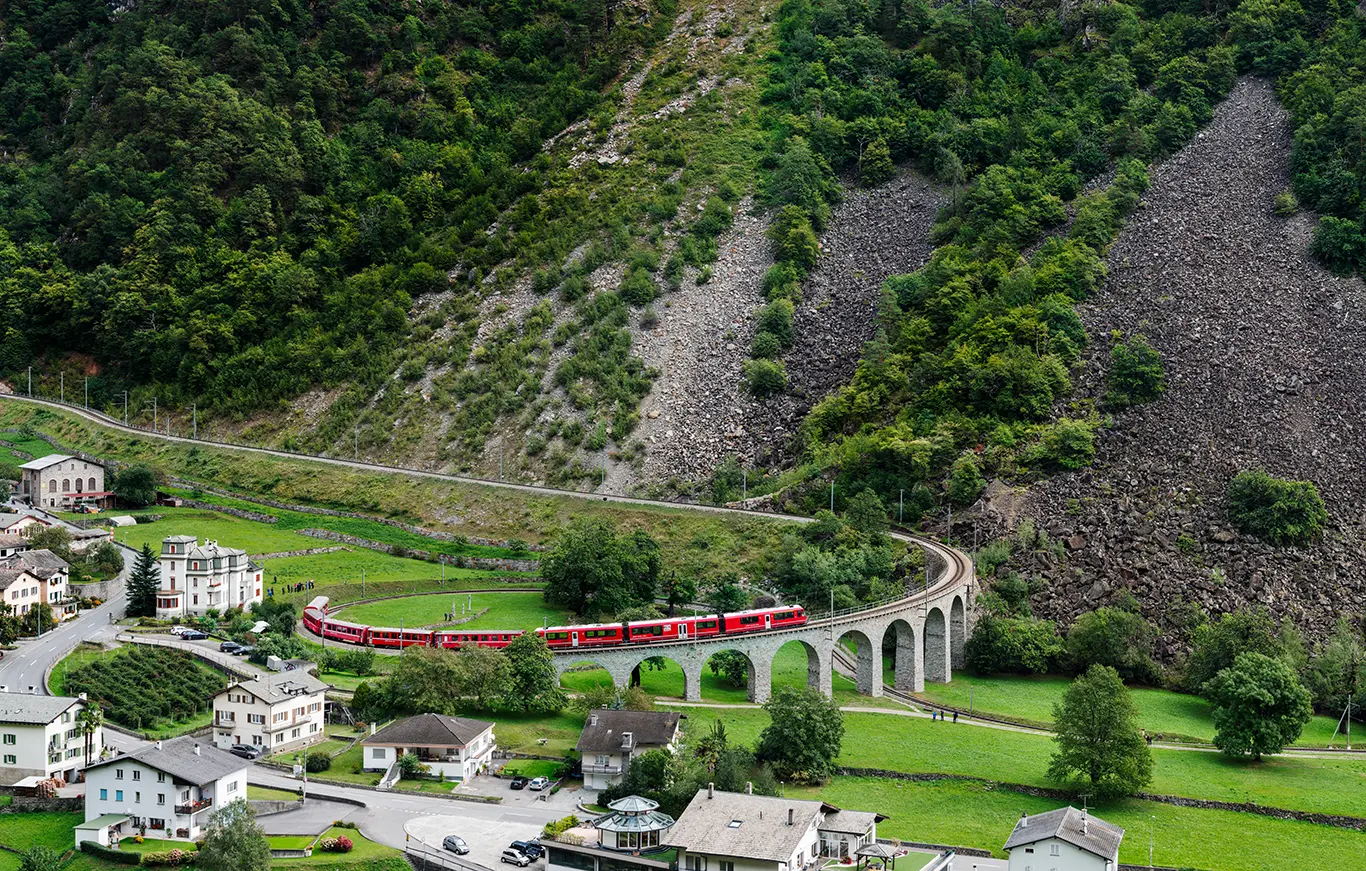
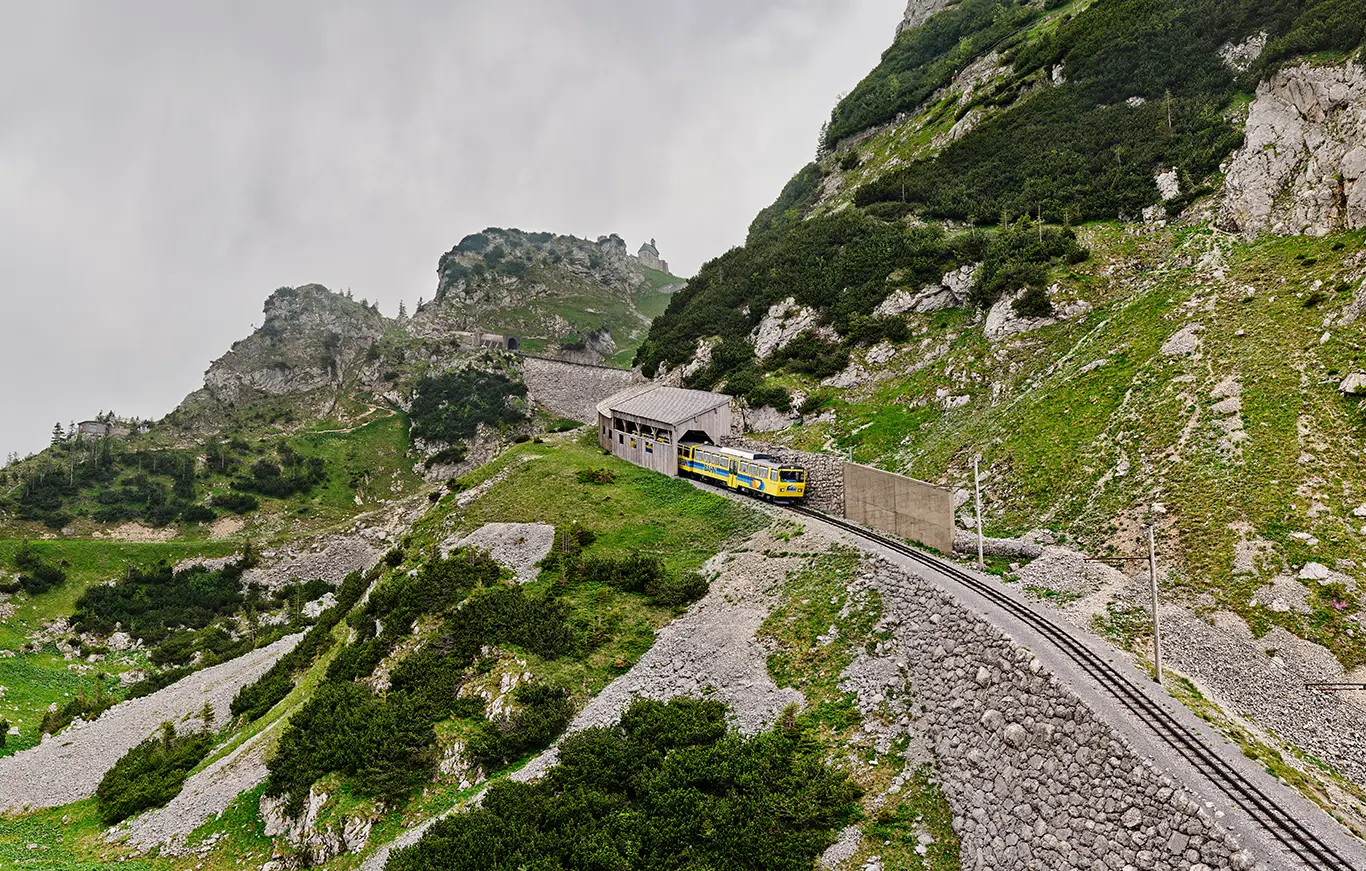
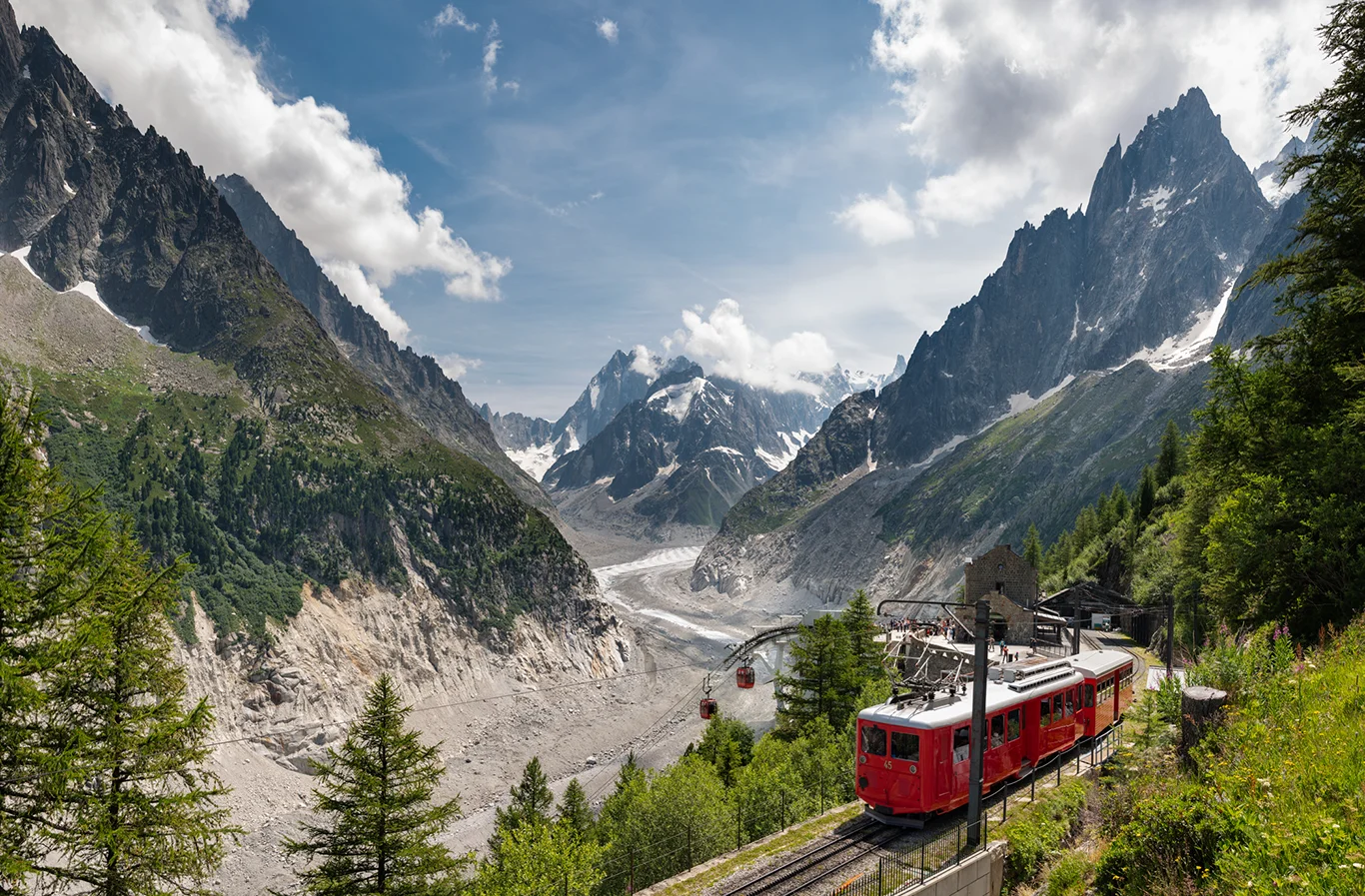
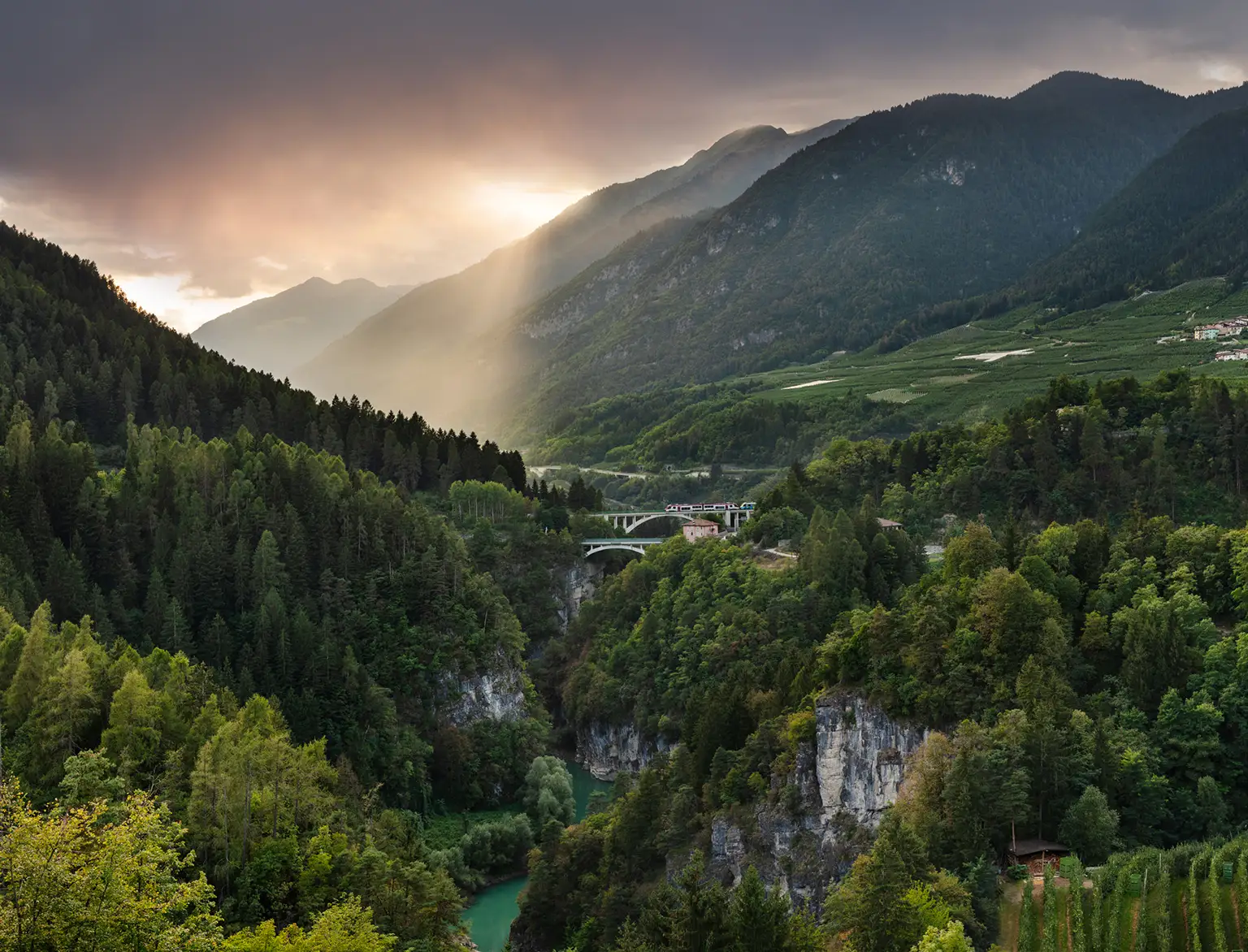
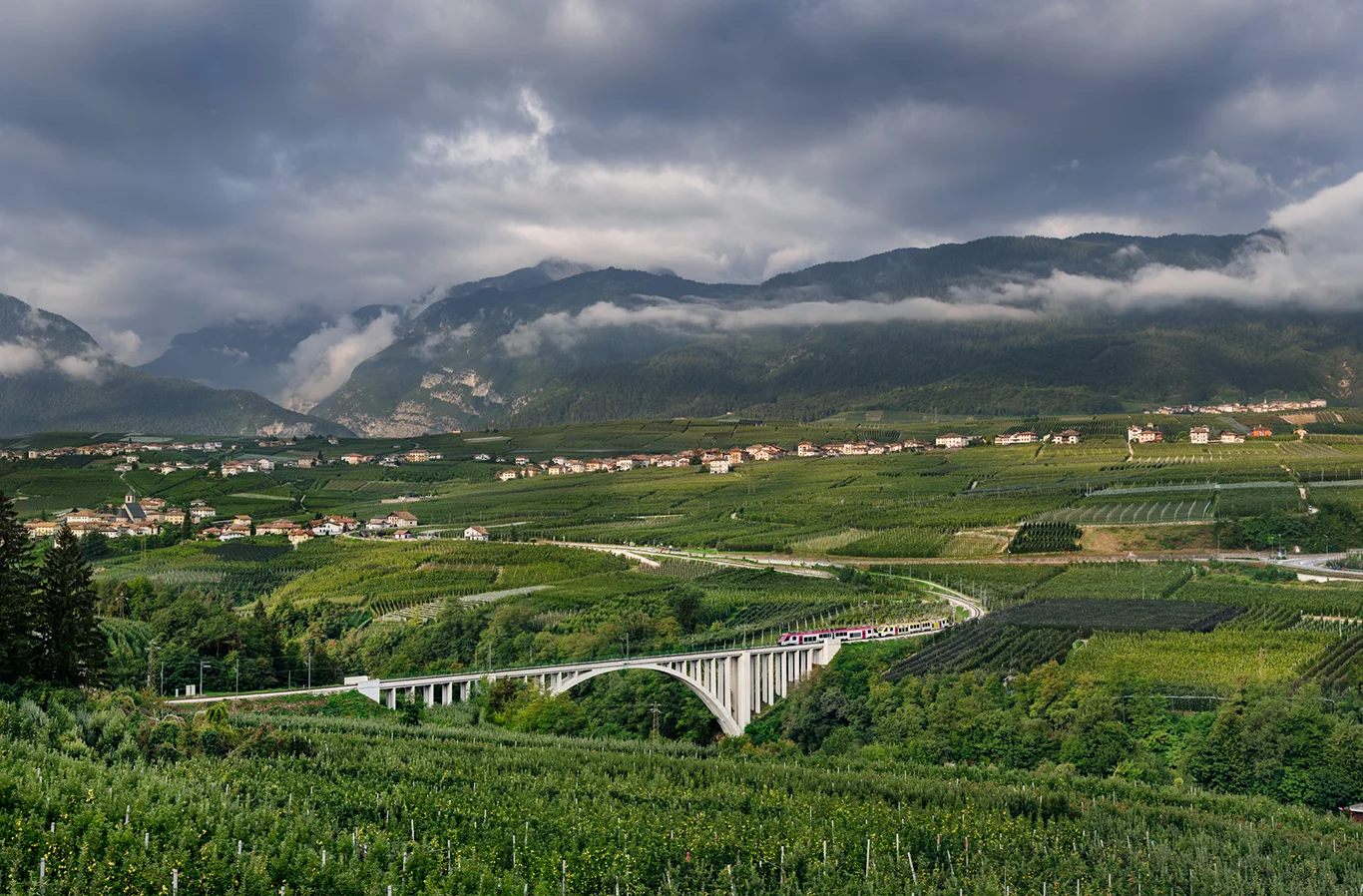
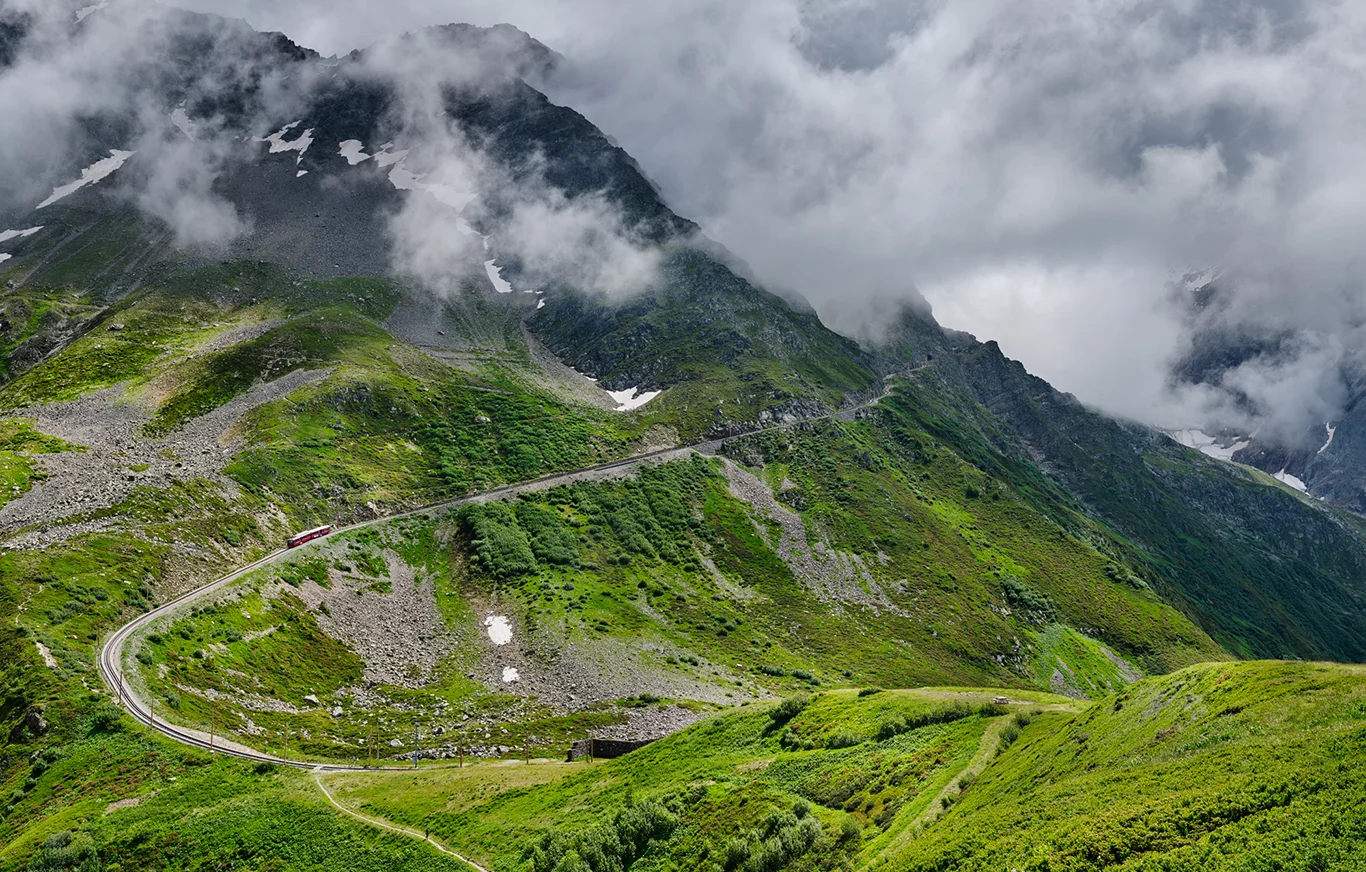
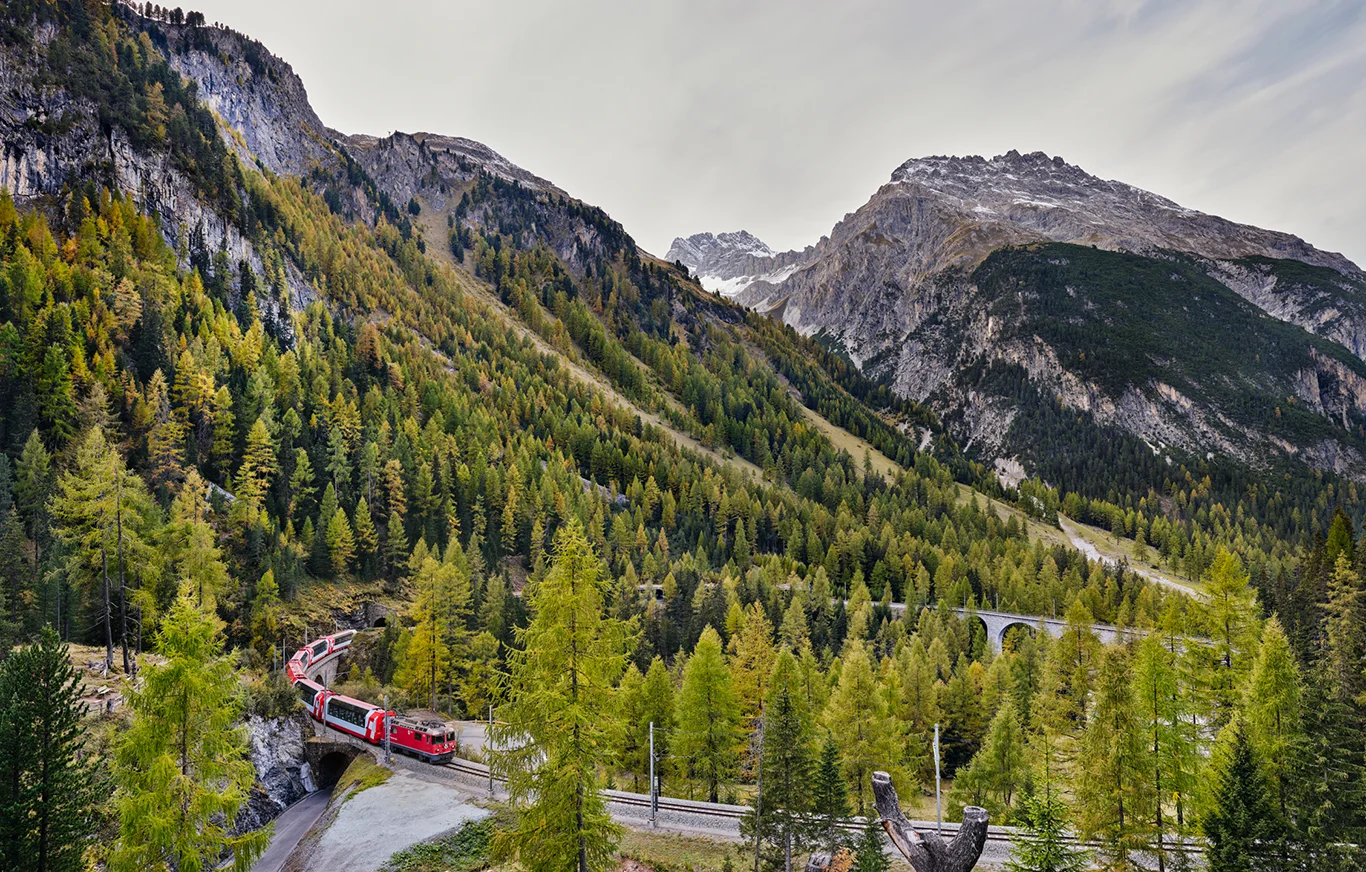
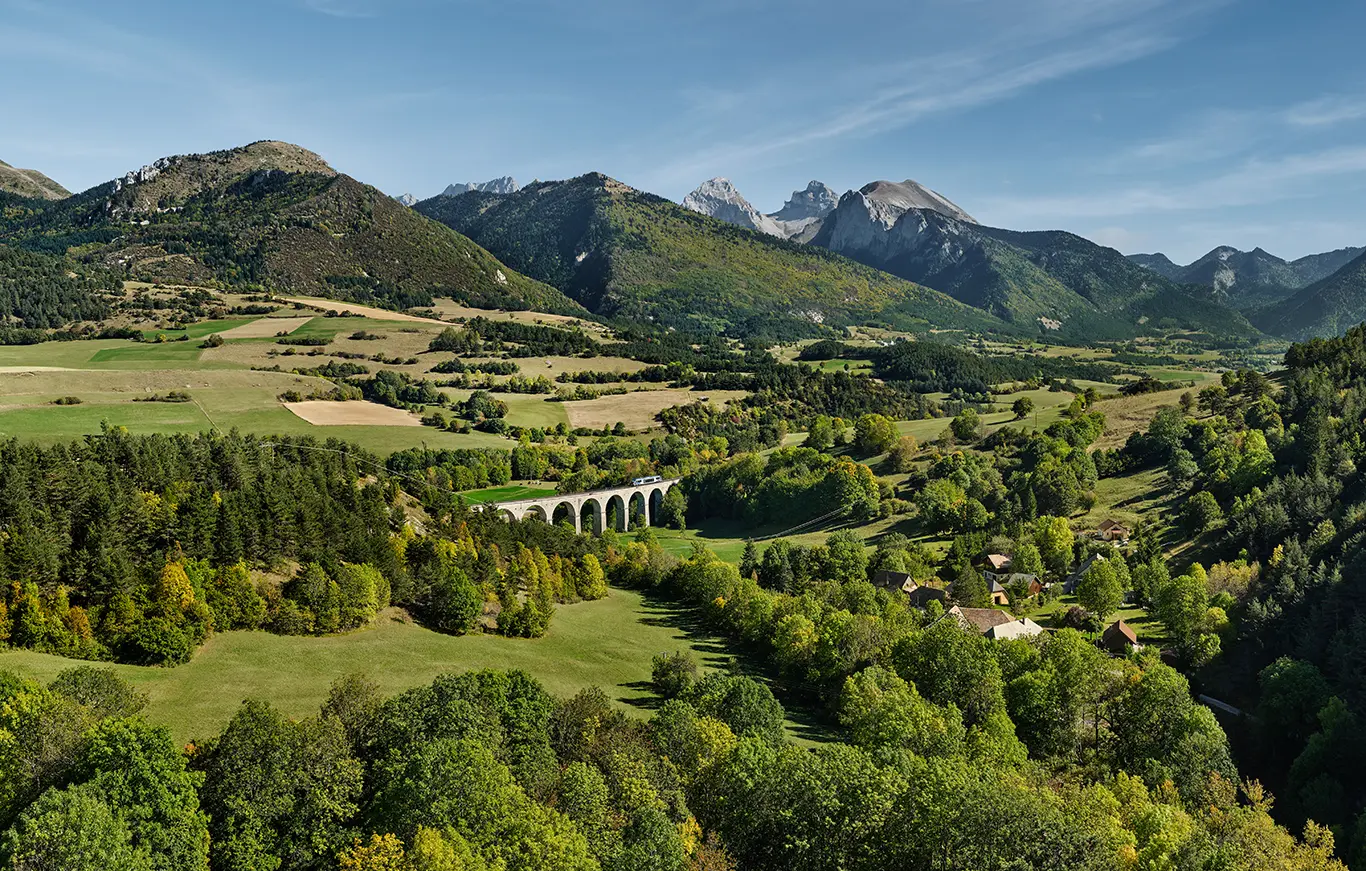
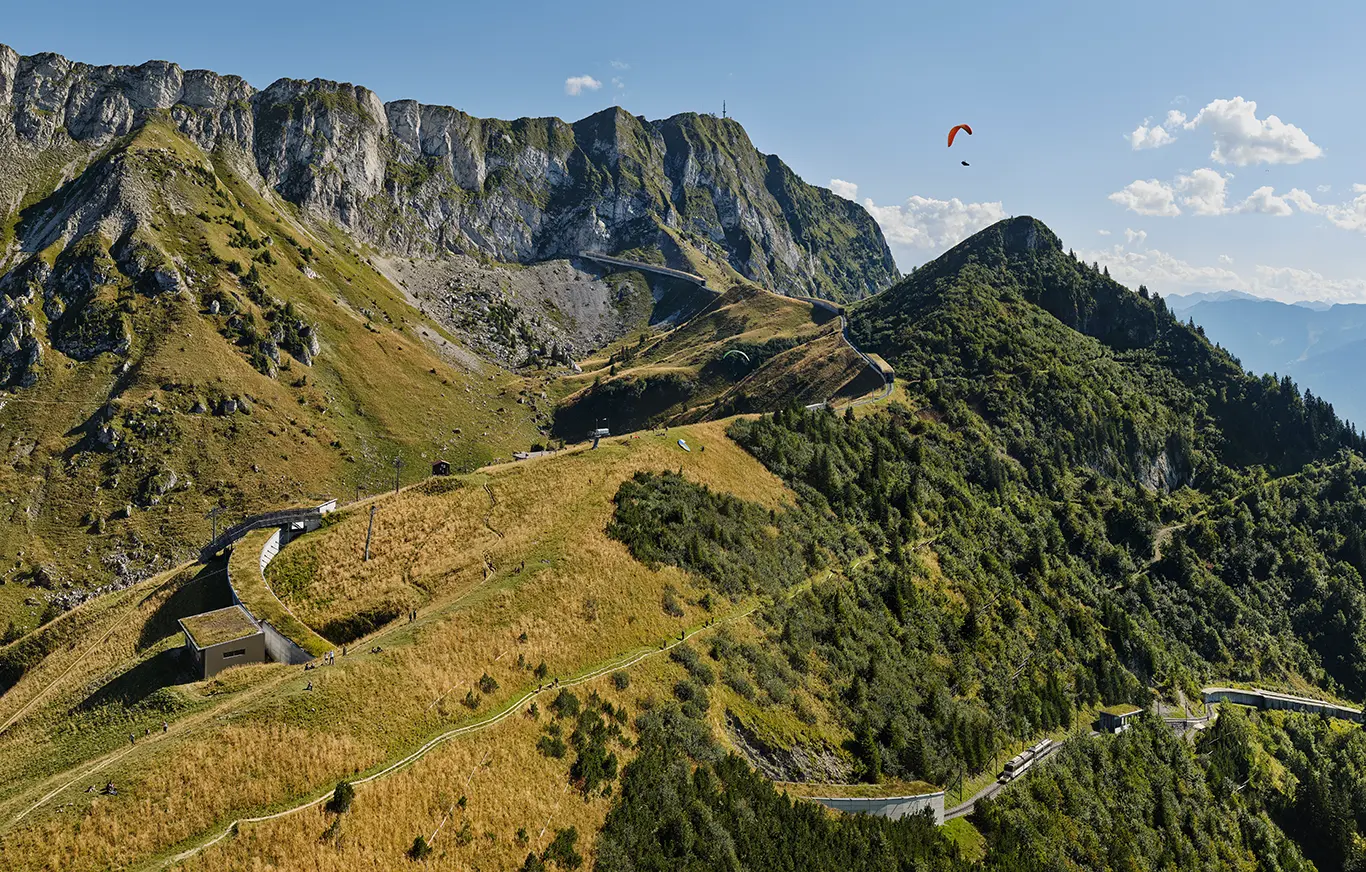
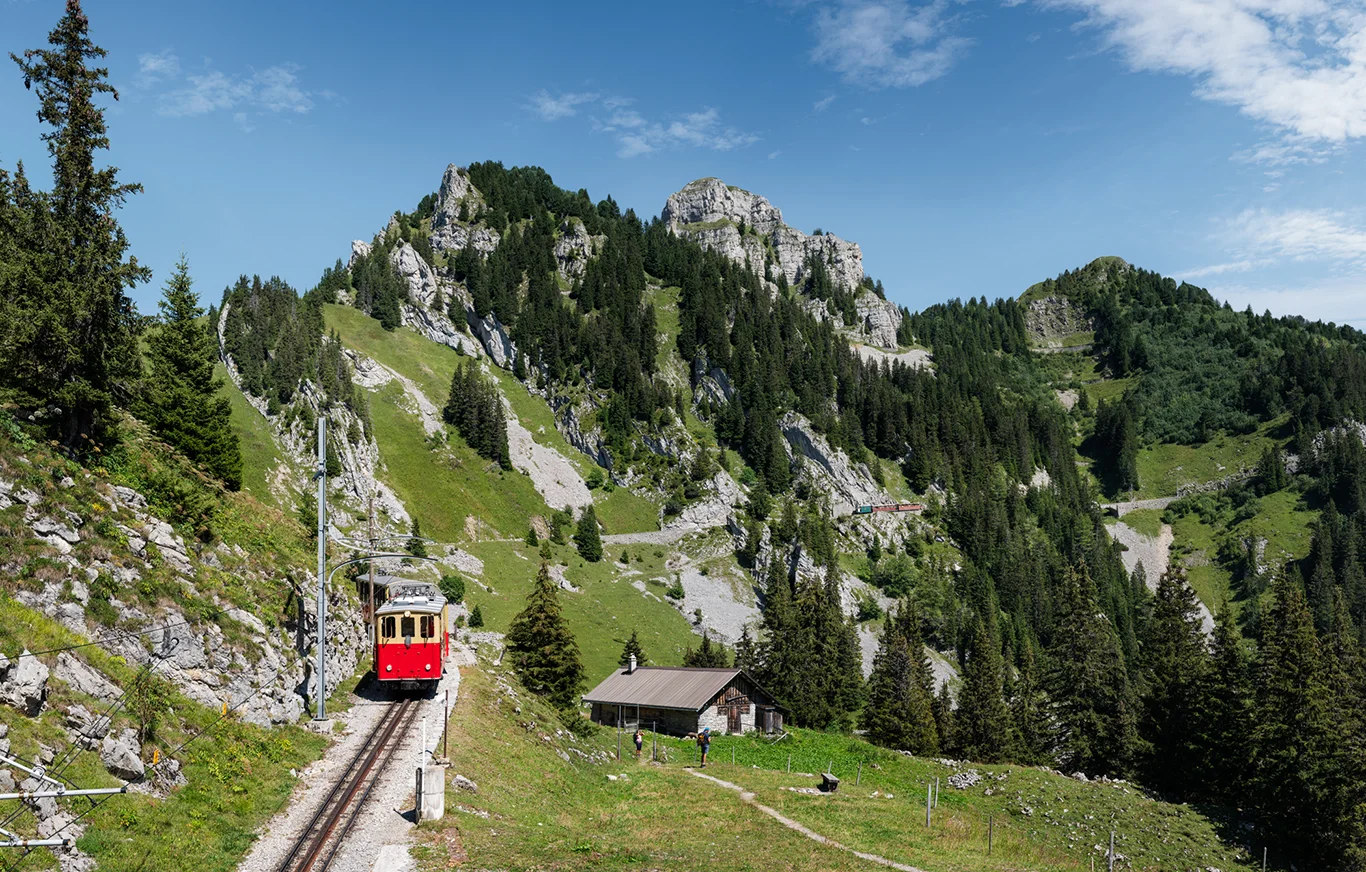
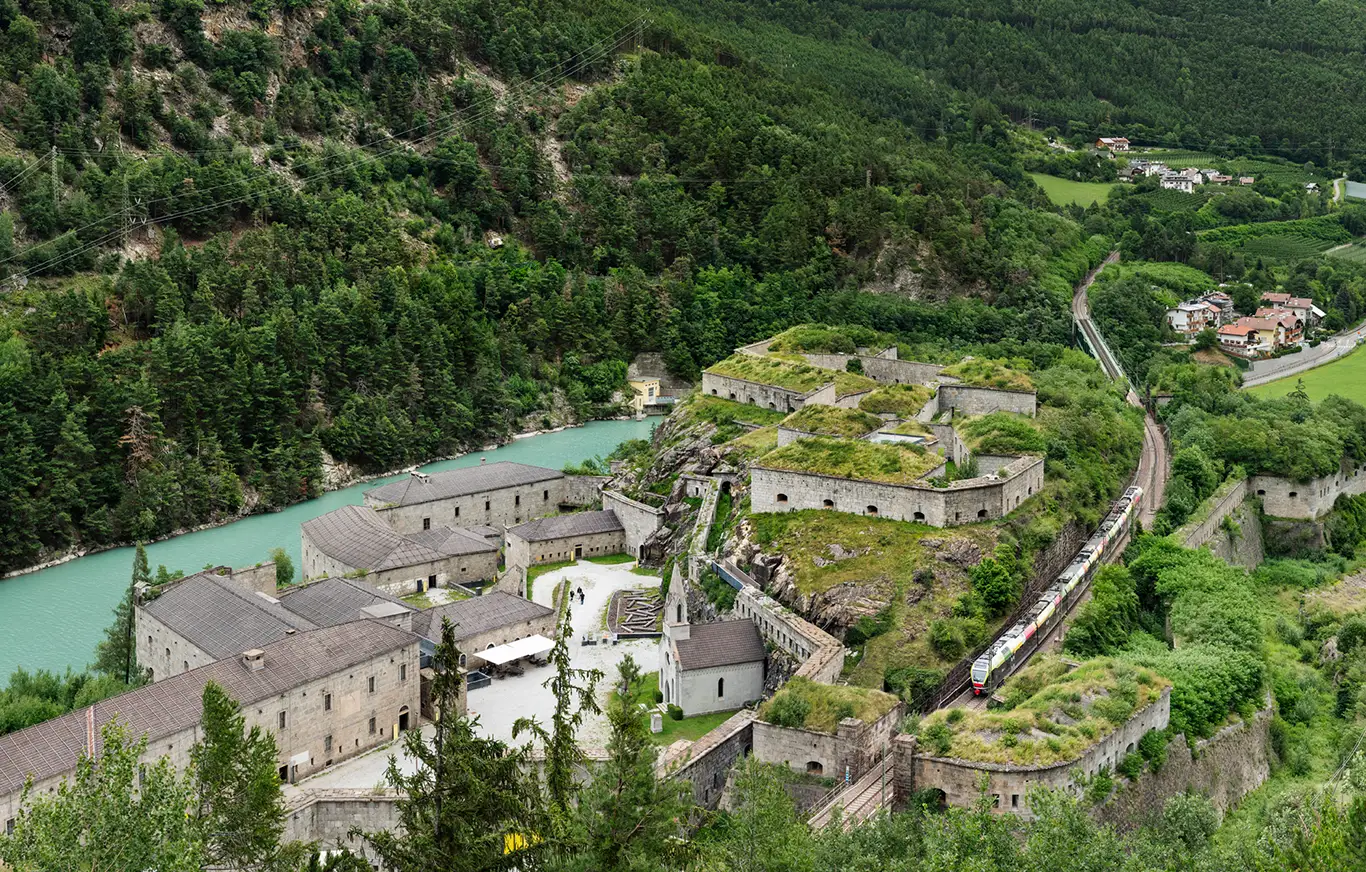
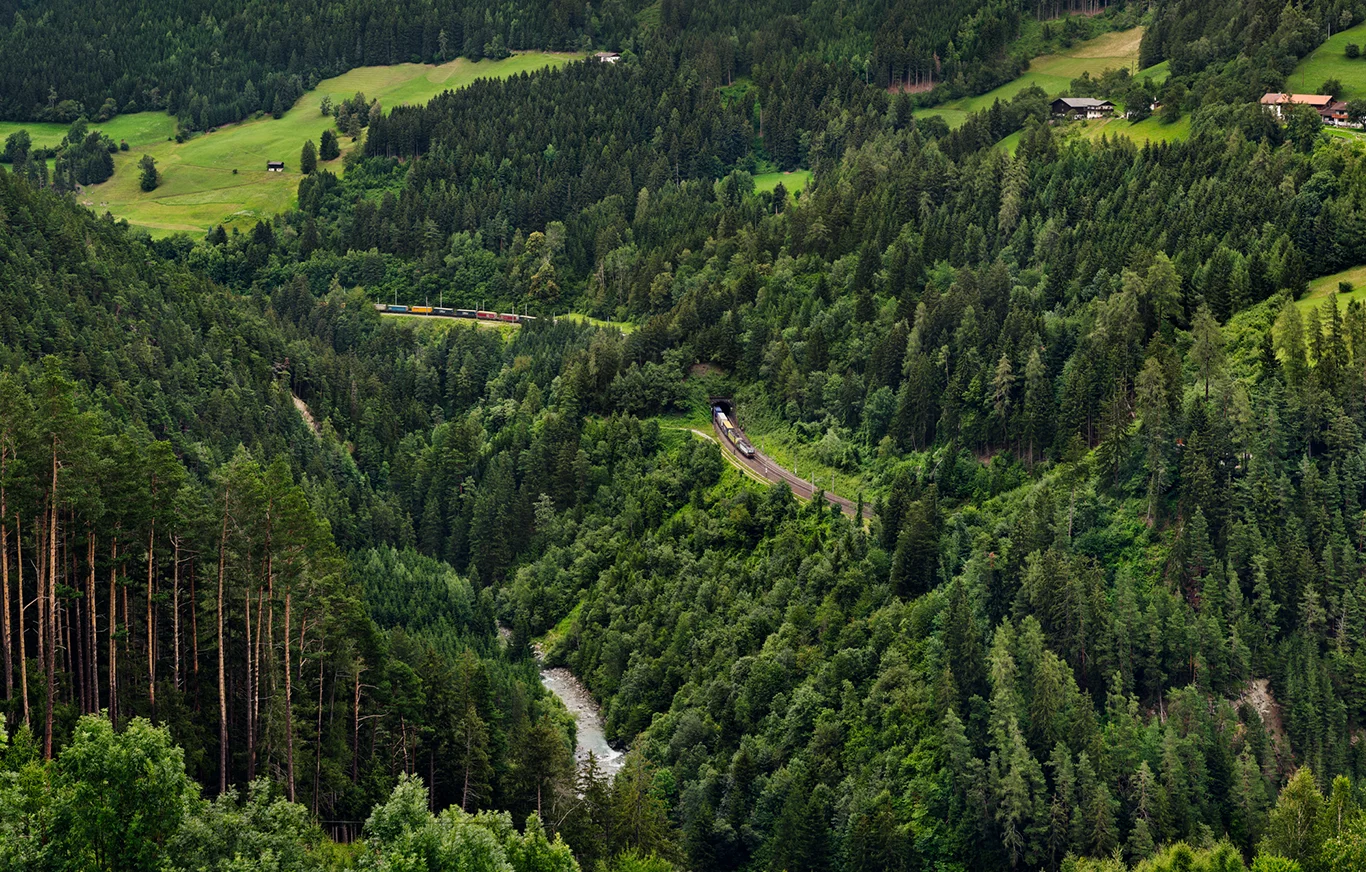
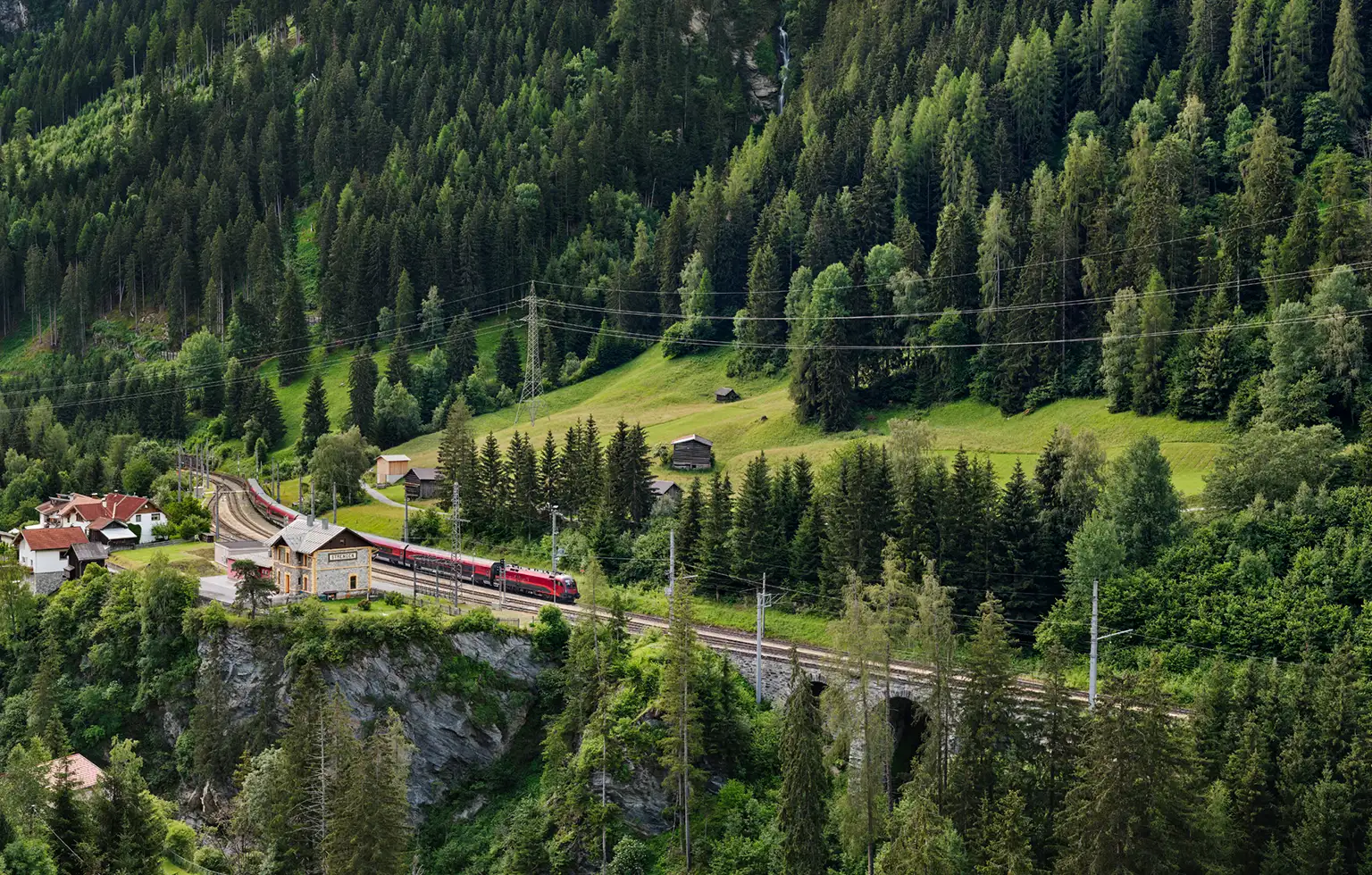
Photographs from my work on the landscapes of the Alpine railways. The railways in the Alps are unique, and their route planning represents a pioneering technical achievement. Very often, the railways share a narrow, steep valley with a river, mountain tracks, country roads and motorways. Above, beside and below them lie villages, farmsteads, mountain meadows, forests and rocks. All these elements are interwoven to form a distinctive landscape and, together, create an image that I wanted to capture in a photograph alongside a railway.
That is why there are no close-ups of locomotives and trains, even though they are such an important part of these landscapes.
The result is this book, featuring photographs of all the mountain railways in the Alps. From the Tenda Railway in the French Maritime Alps, via the Gotthard Railway and other Swiss routes, to the Semmering Railway in the east of the Alps. The gallery shows a selection of around 50 of the more than 200 photographs of the various Alpine railways.
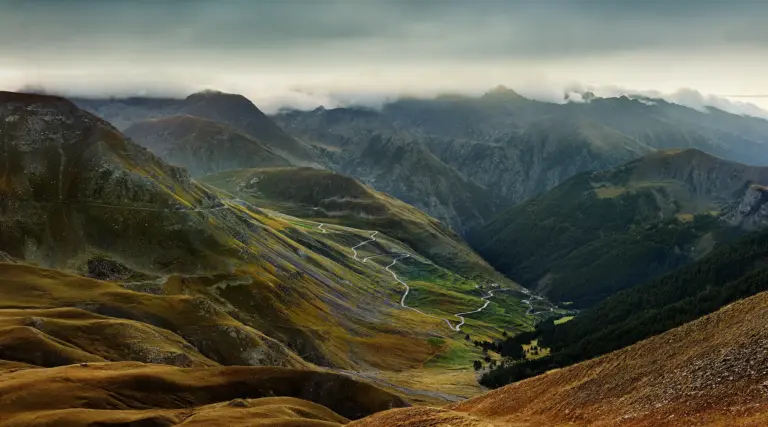
It did not turn out to be easy. It was not clear from the beginning whether this idea could be realised everywhere. Most of the locations are on opposite slopes or above the railway line. I regularly reached a vantage point after an arduous climb, which then turned out not to be optimal after all. A second attempt on the other side of the valley almost became the „norm“. But then there was almost always an alternative panorama that had all the desired attributes, as the views of the Albula railway or the Tenda railway in the Maritime Alps show.
I took these photographs specifically for the very large format of the first edition, 37 x 58 cm. At this size, more is revealed than the eye can take in on the spot. Every tiny detail of the railway line and the landscape comes into focus. Even those who think they know a railway well will still discover something new in these images.
When you’re out and about in the Alps working on a project like this, history is with you every step of the way. The world’s first mountain railway was opened in 1854 on the Semmering in the eastern Alps, based on plans by Carl von Ghega. The Austro-Hungarian Empire built further railways, and in 1867 the Brenner Railway was completed under the supervision of the Stuttgart engineer Karl Etzel.
In 1871, the first trains crossed the Alps via Mont Cenis; in the same year, the Alps’ first rack railway climbed the Rigi, the most famous of Switzerland’s scenic mountains. The technical concept was devised by Niklaus Riggenbach, a native of Olten.
In France, the Ligne des Alpes began operating in 1878, and in Switzerland one of the most famous lines was opened in 1882: the Gotthard Railway. The Austrian Arlberg Railway followed in 1884. Services to Mount Pilatus began in 1889, and to the Gornergrat in 1898. For the first time, these were not steam-powered but electric rack railways. Two of the most beautiful routes in the Alps followed in 1903 and 1910: the Albula Railway and the Bernina Railway.
It is a tribute to the good book.
Further down, after the pictures, you will also find:
• Information about the book and how to order it
• Information about the fine art prints
• Background on the book’s creation and how this project came about
• A personal selection of train songs: music on the theme of railways
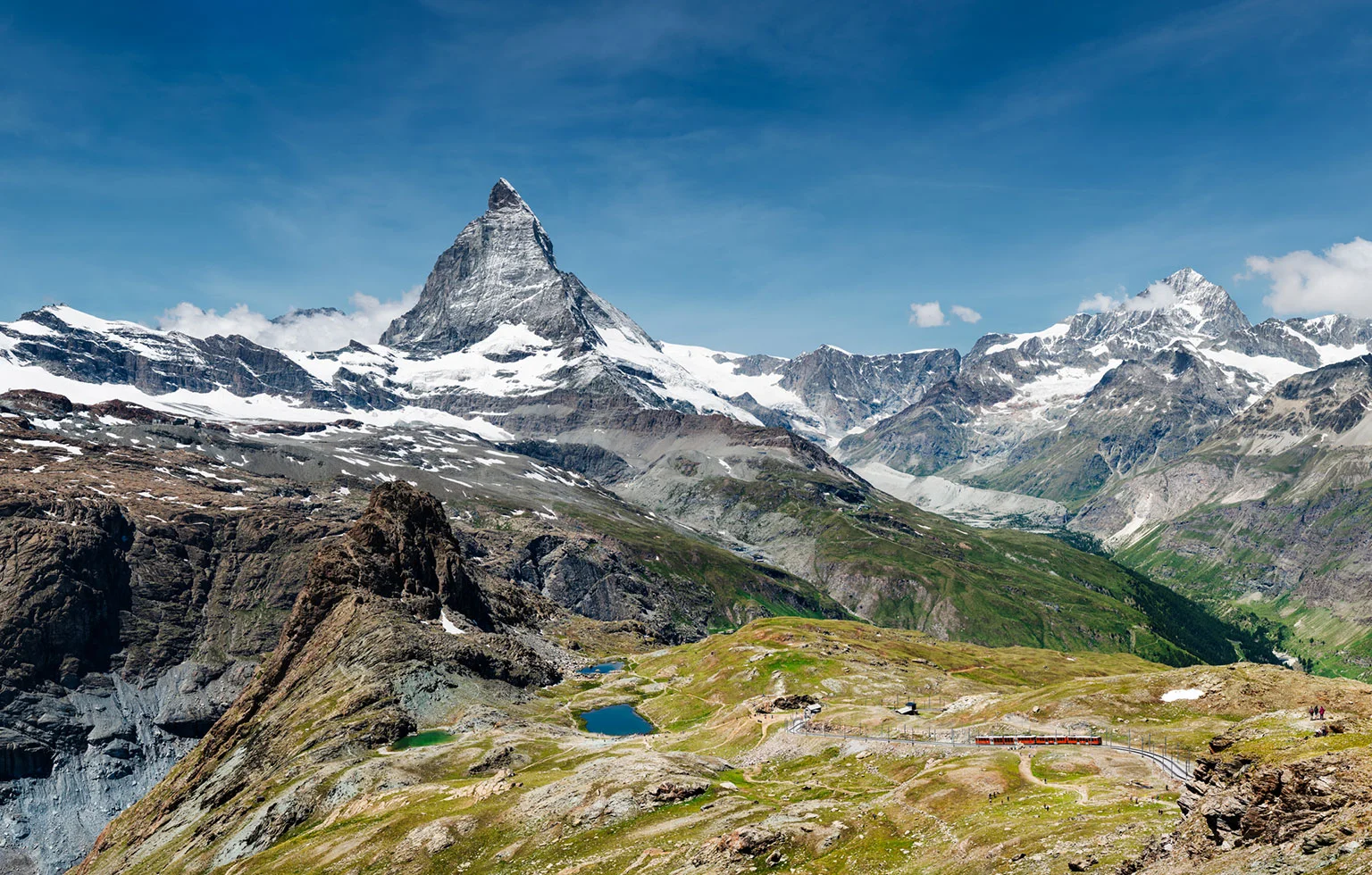
Gornergrat Railway, Switzerland
Mountain rack railway from Zermatt to the Gornergrat. Railway line between the stations Rotenboden and Gornergrat, view of the Matterhorn and Riffelsee lake.
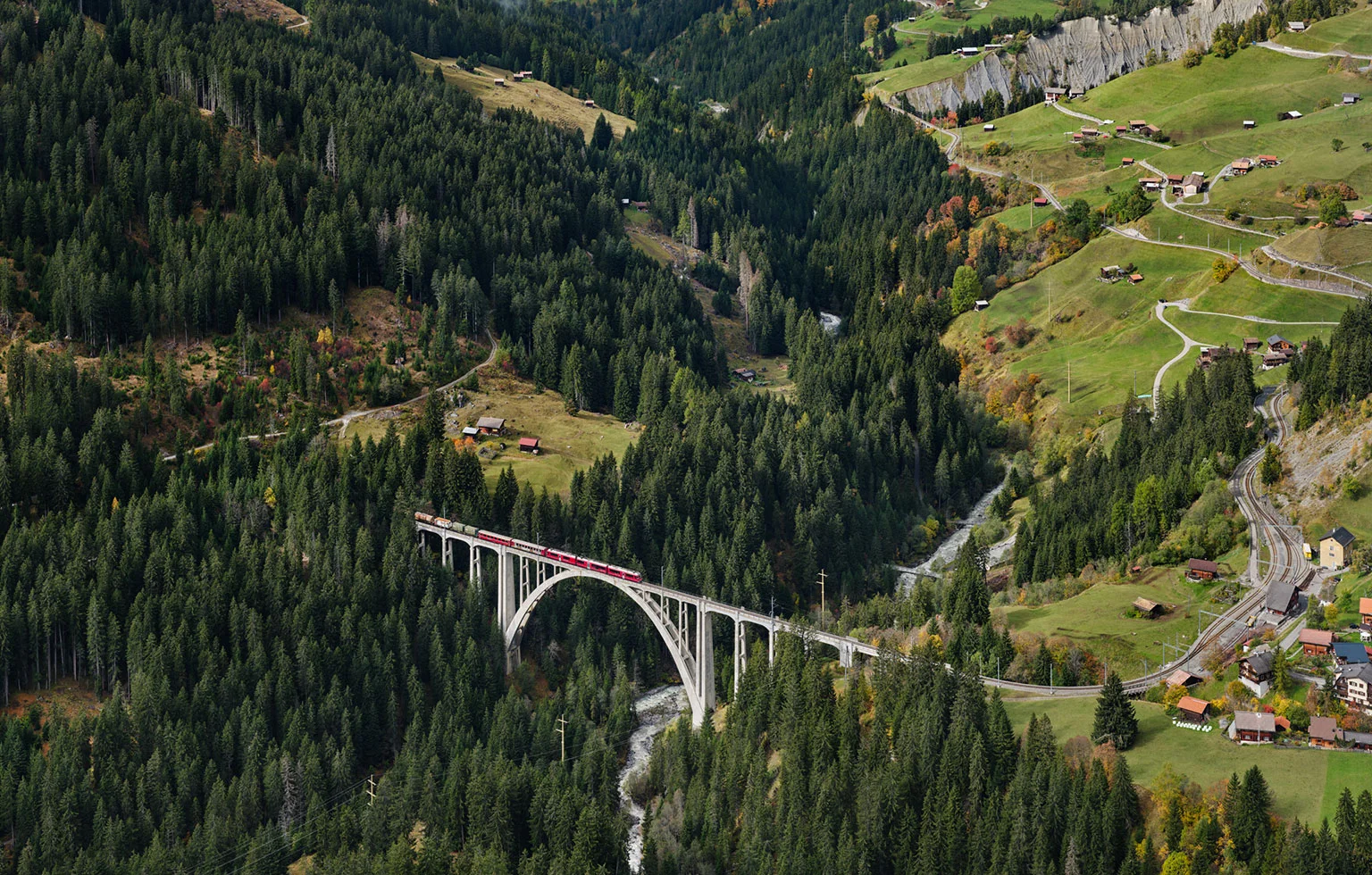
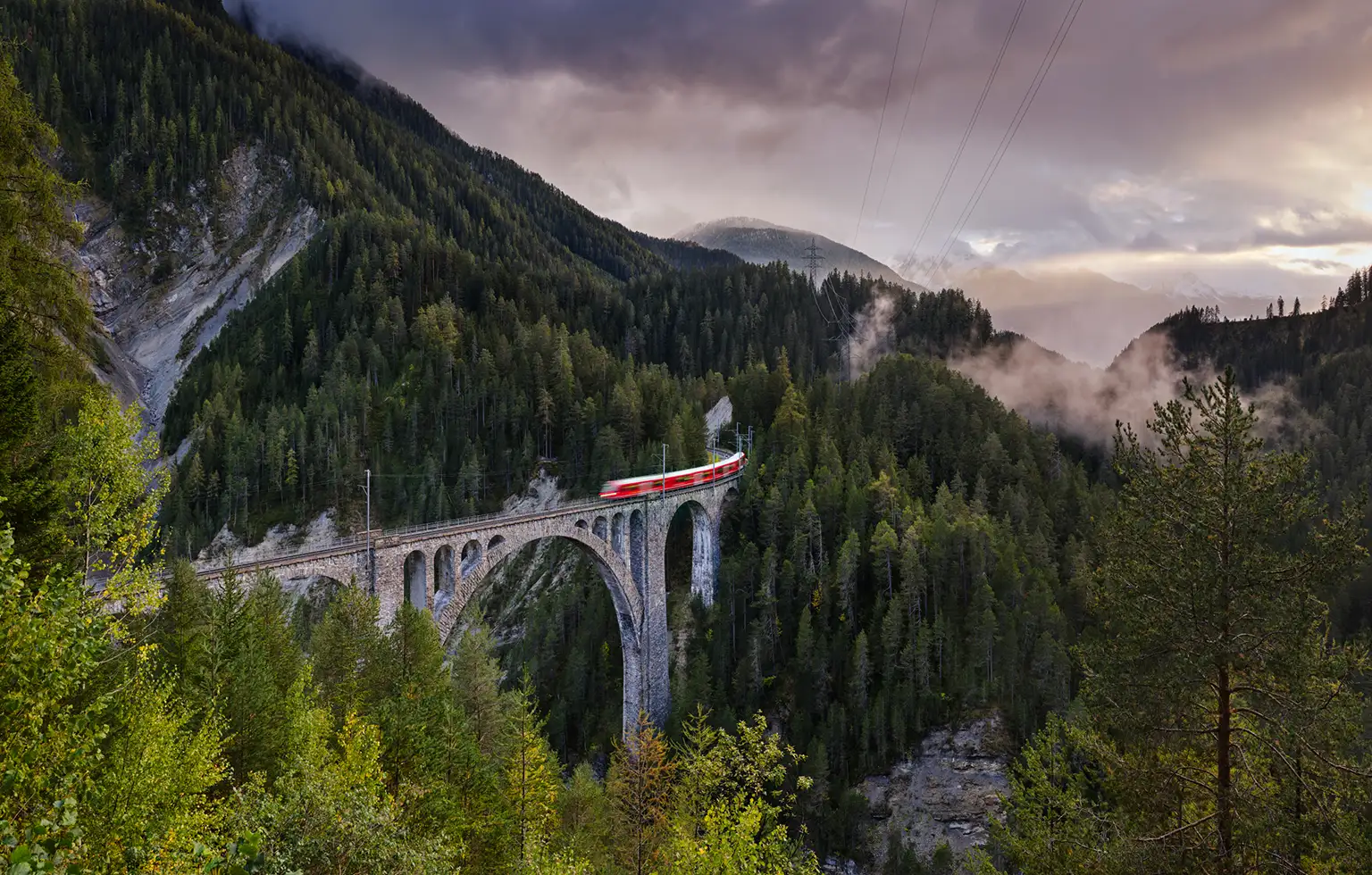
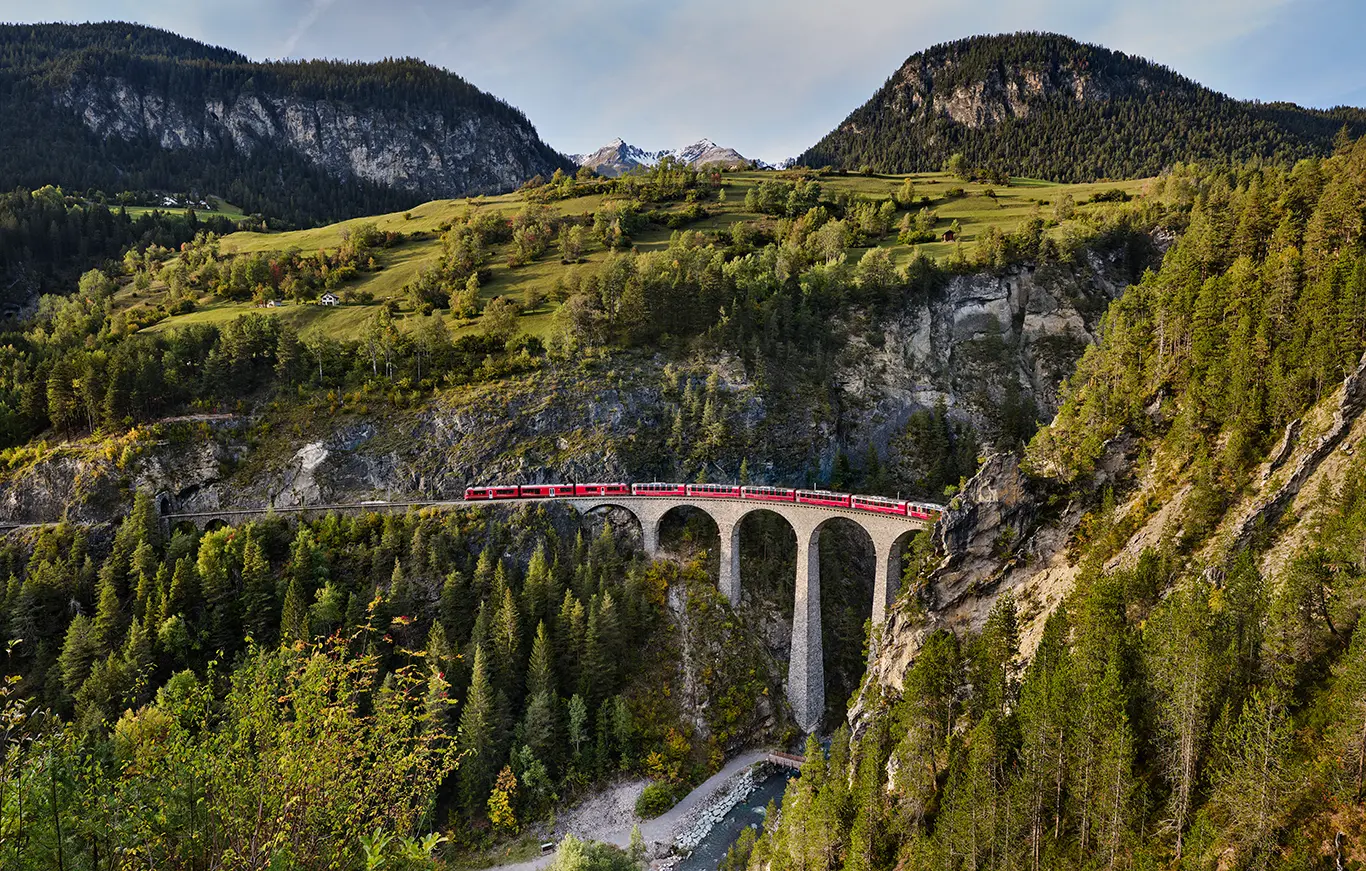
Chur-Arosa Railway, Switzerland
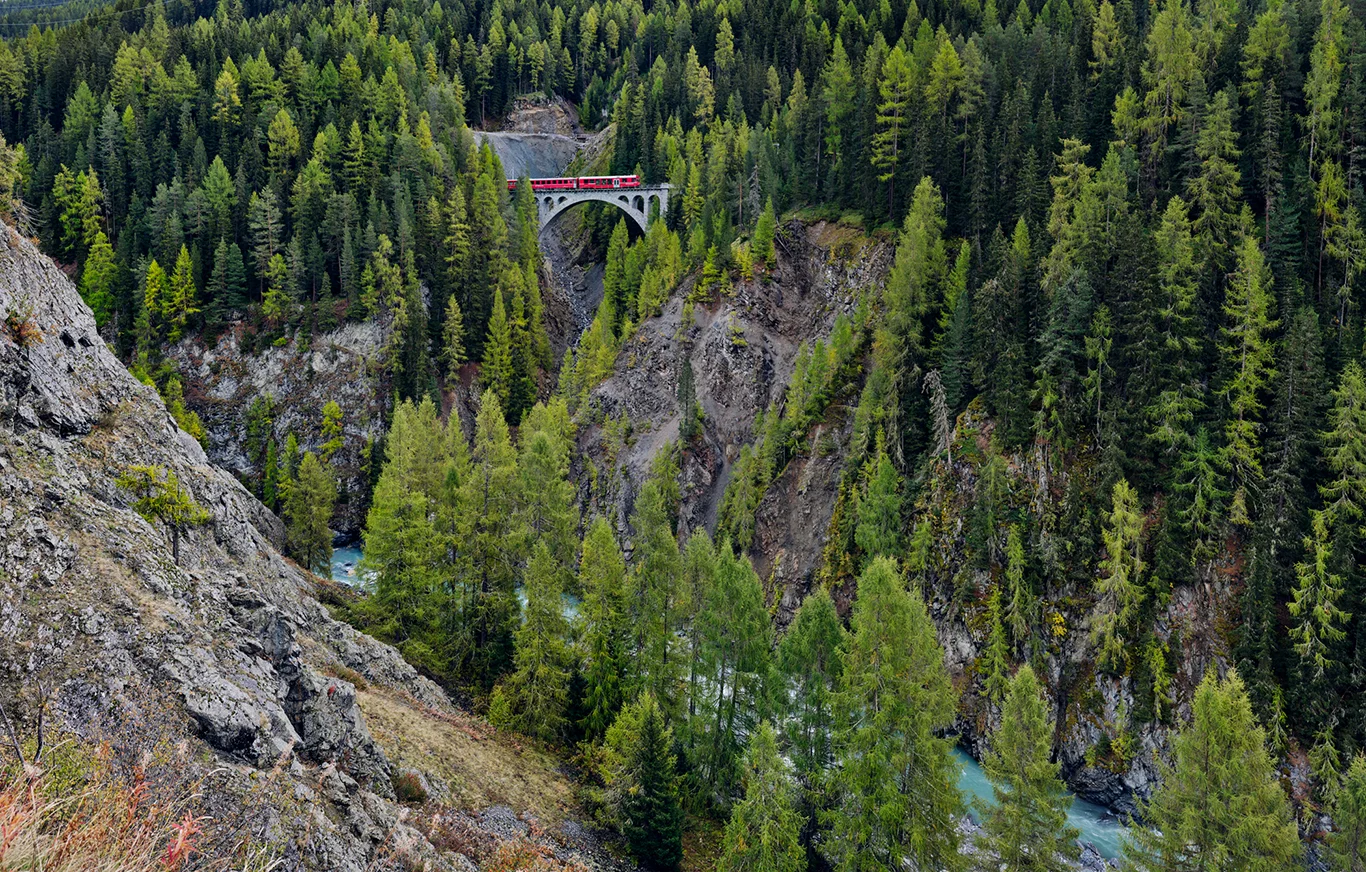
Langwieser Viaduct, railway bridge of the Rhaetian Railway near Langwies.
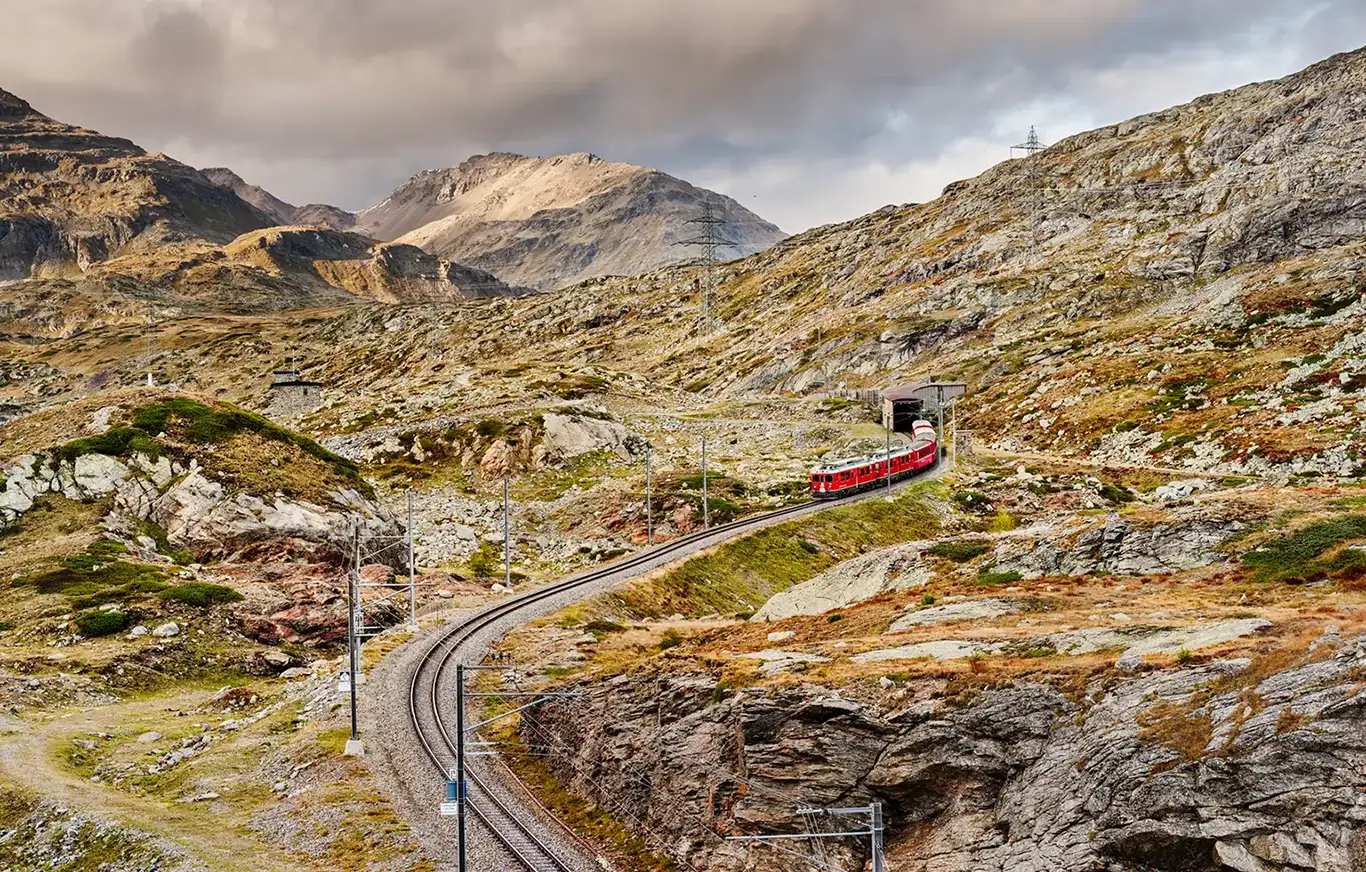
Bernina Railway Line
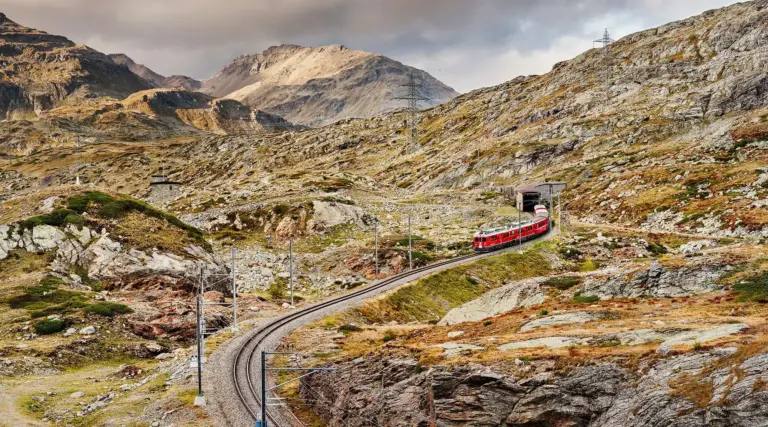
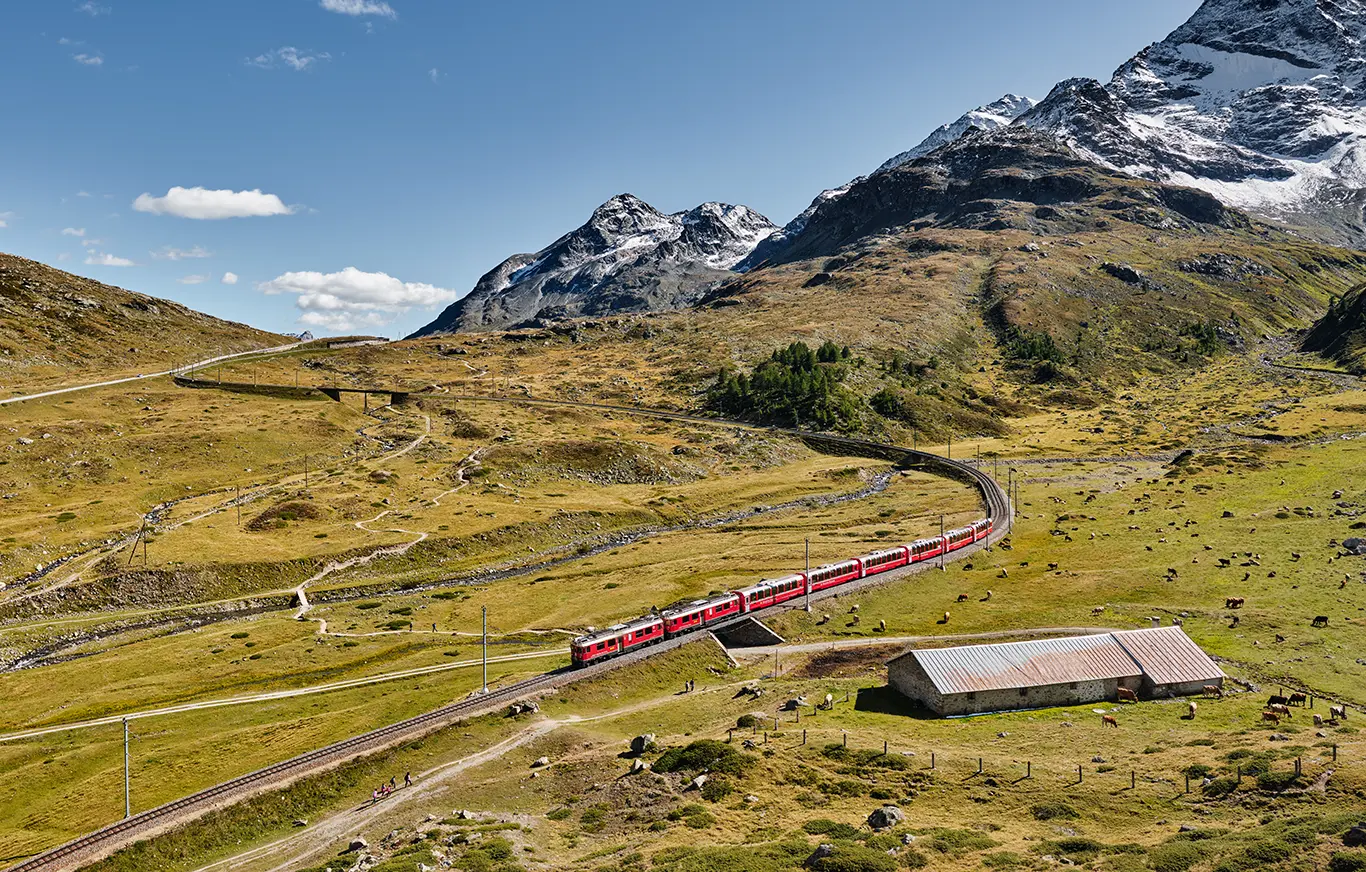
After leaving Ospizio Bernina – the highest point of the route at 2,253 metres – the railway turns towards Alp Grüm, passing through the Scala Gallery.
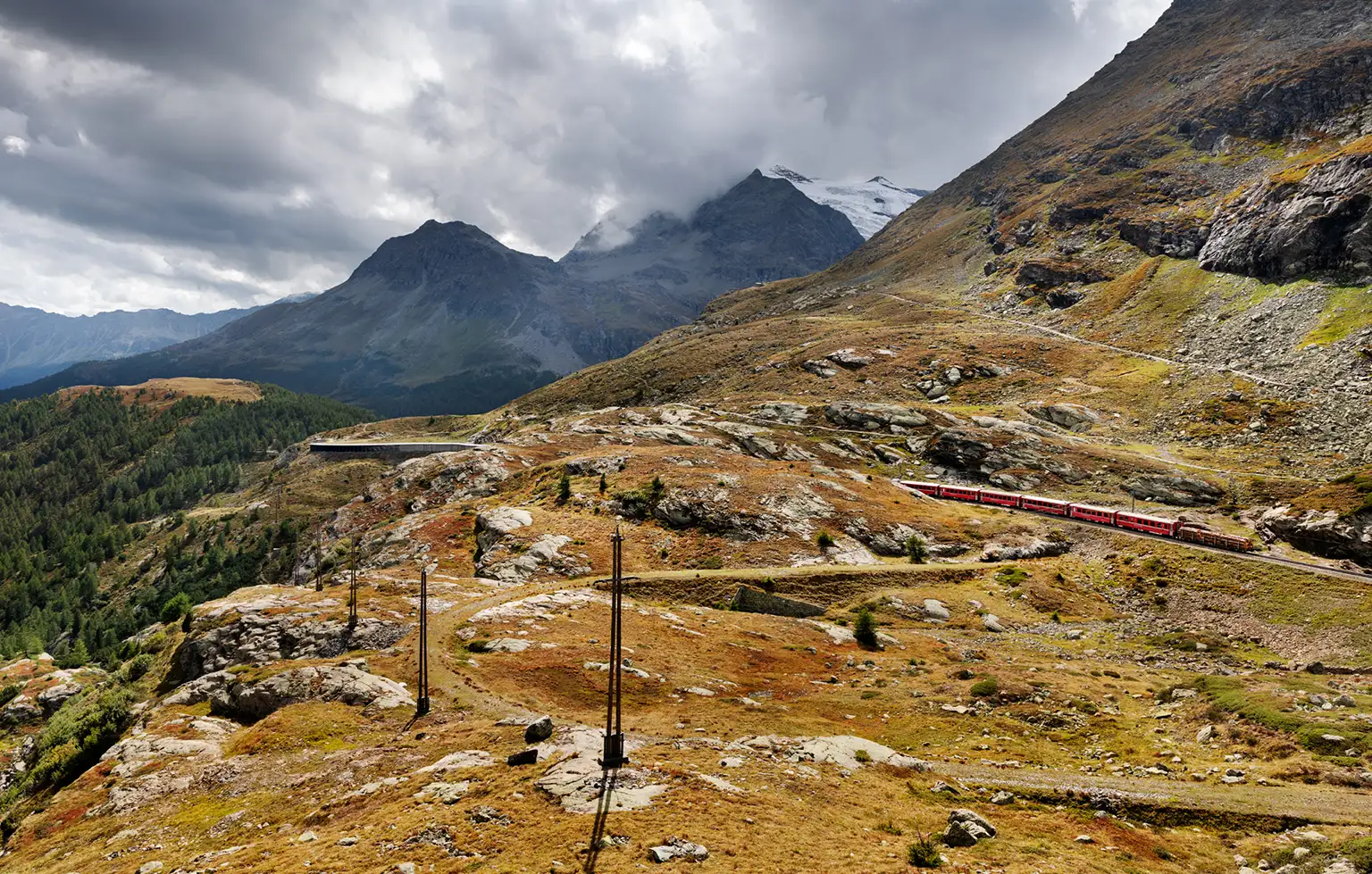
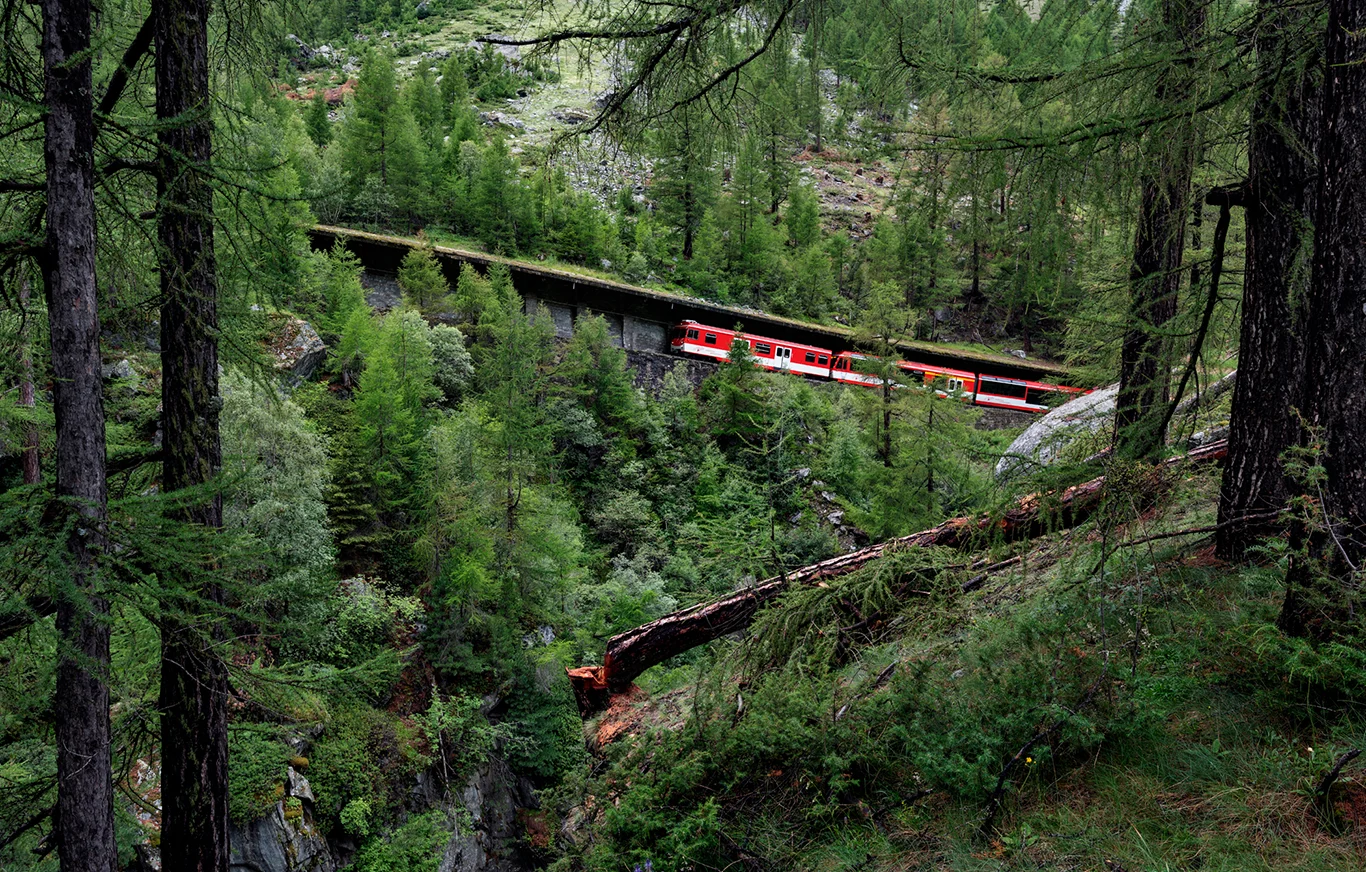
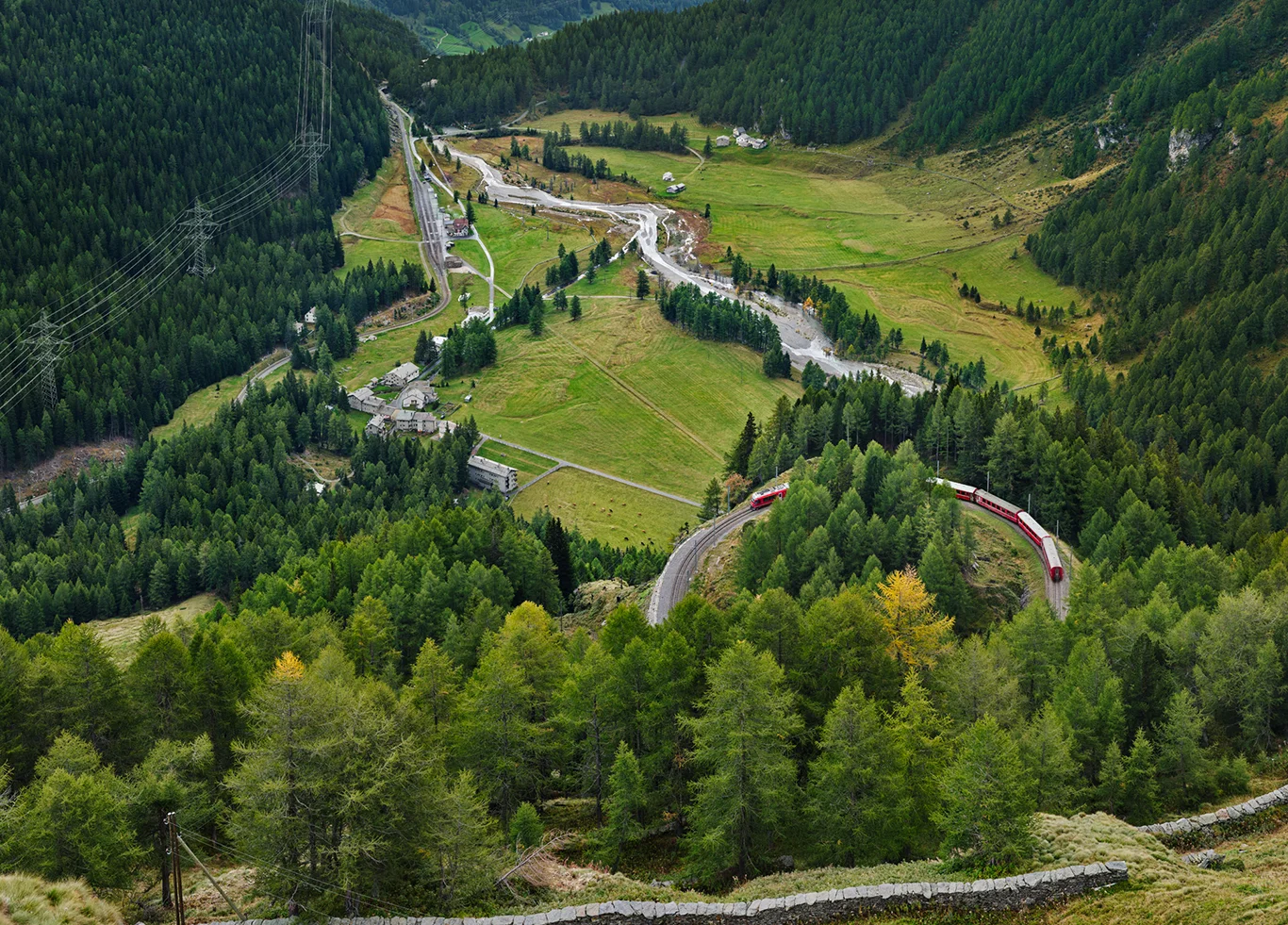
Albula Railway Line, Switzerland
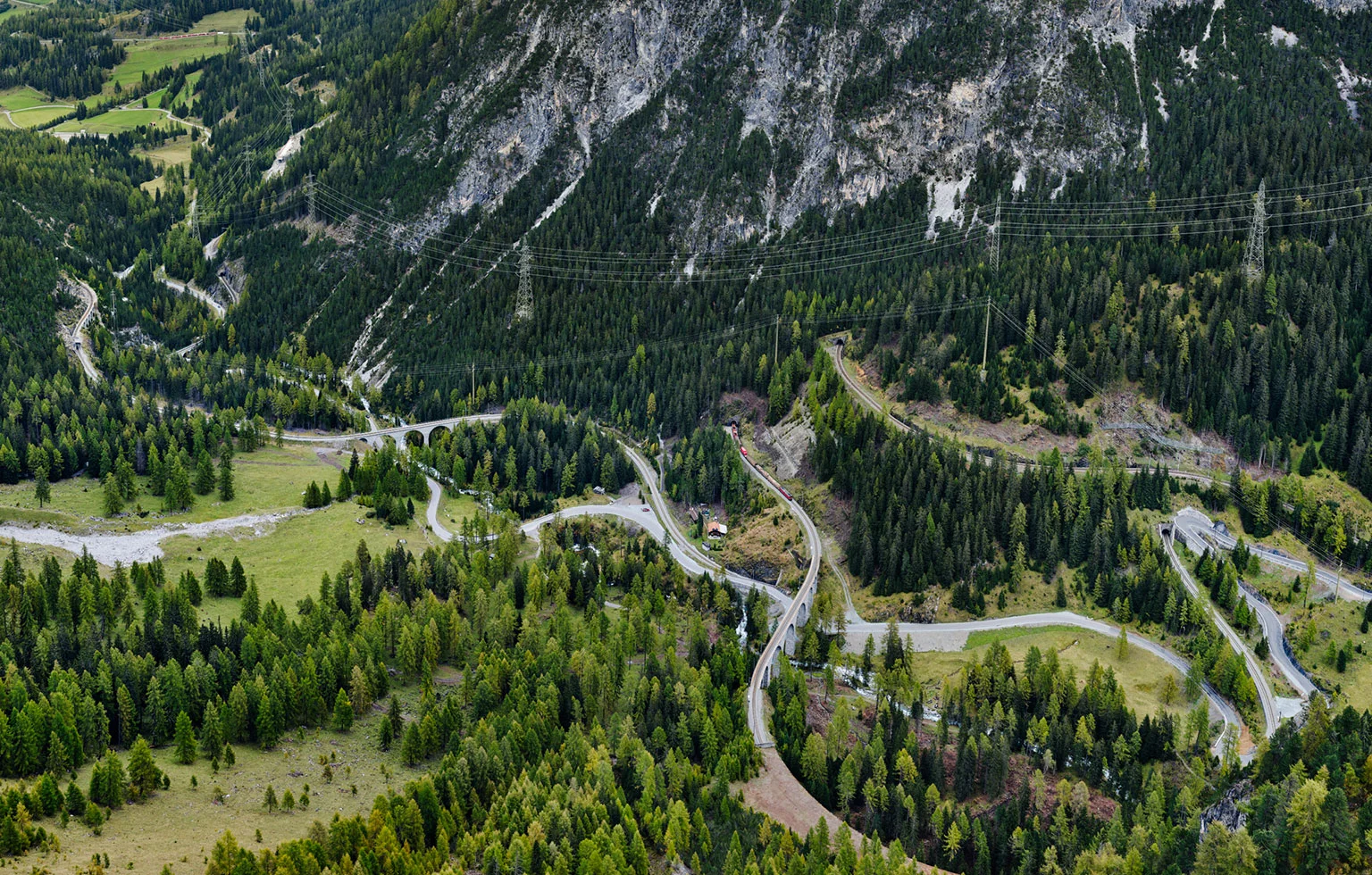
Mountain line between Bergün and Preda. Rugnux viaduct, Rugnux spiral tunnel (left), Albulaviaduct II, Toua spiral tunnel (centre with train), Albulaviaduct III (centre), Zuondra spiral tunnel and Albulaviaduct IV.
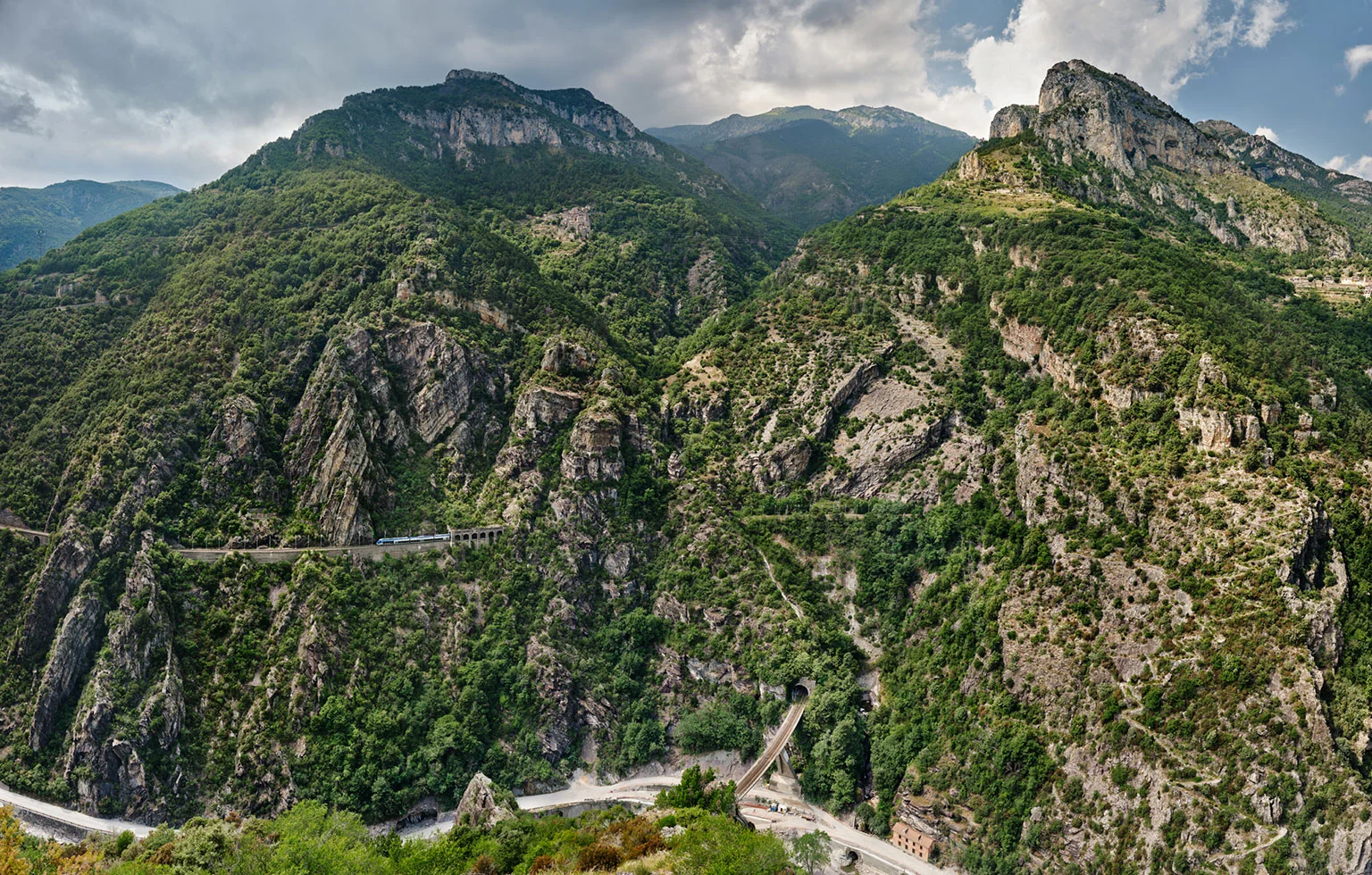
Tenda Railway, France
Line through the Roya valley between Fontan and Saint-Dalmas-de-Tende. Train des Merveilles on its way to the Berghe spiral tunnel, the portal of which is located in front of the Scarassoui viaduct.
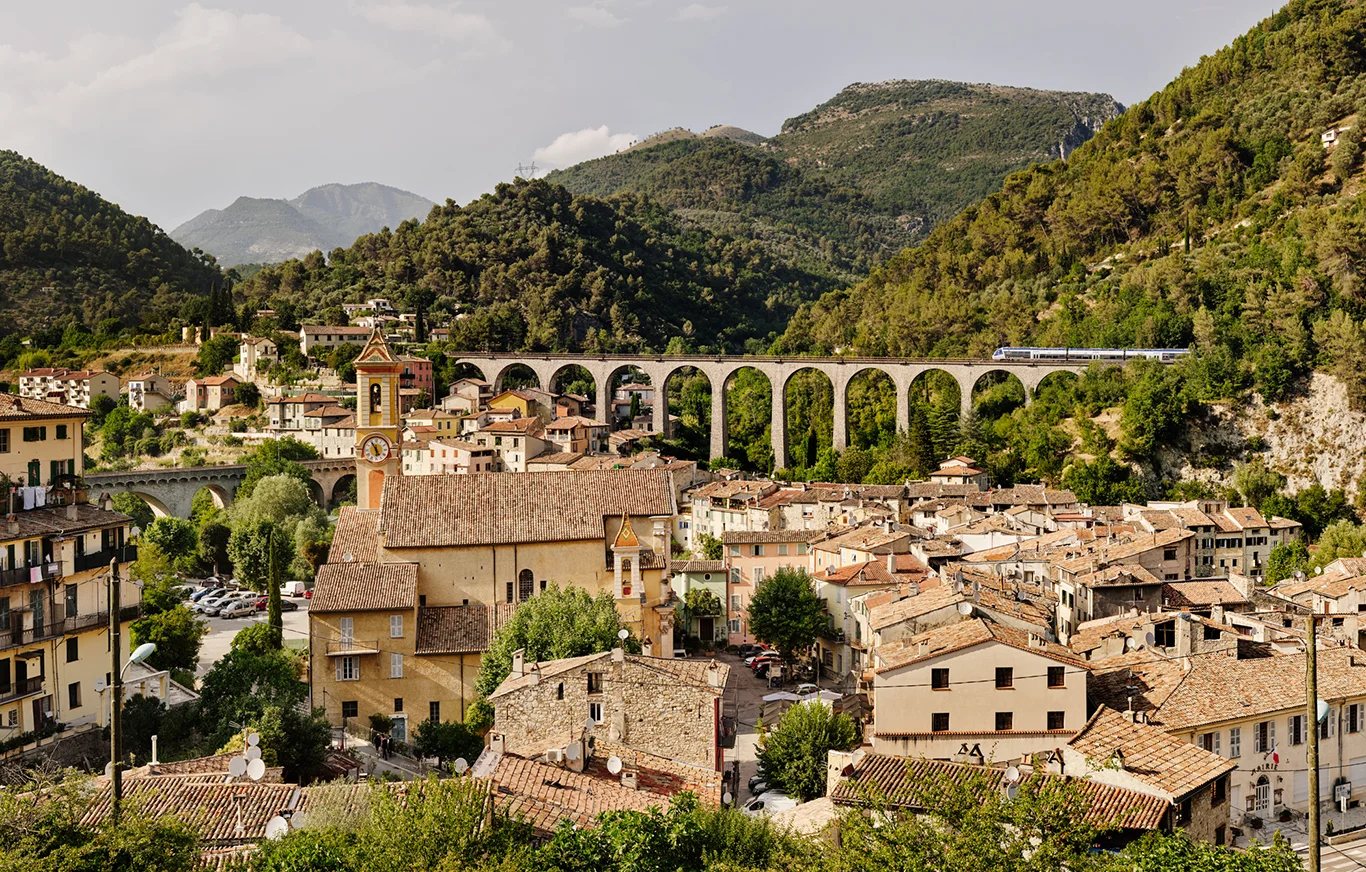
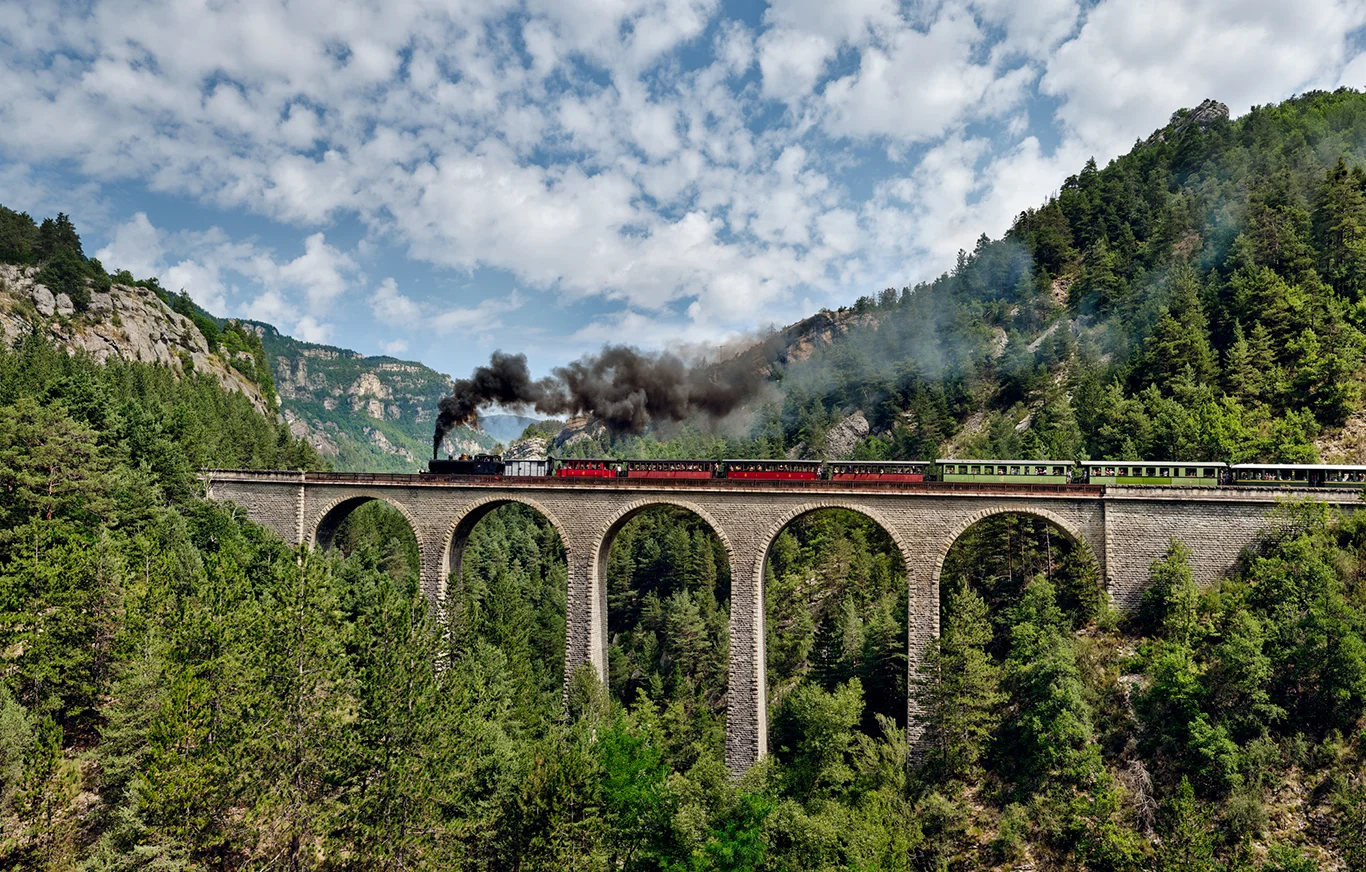
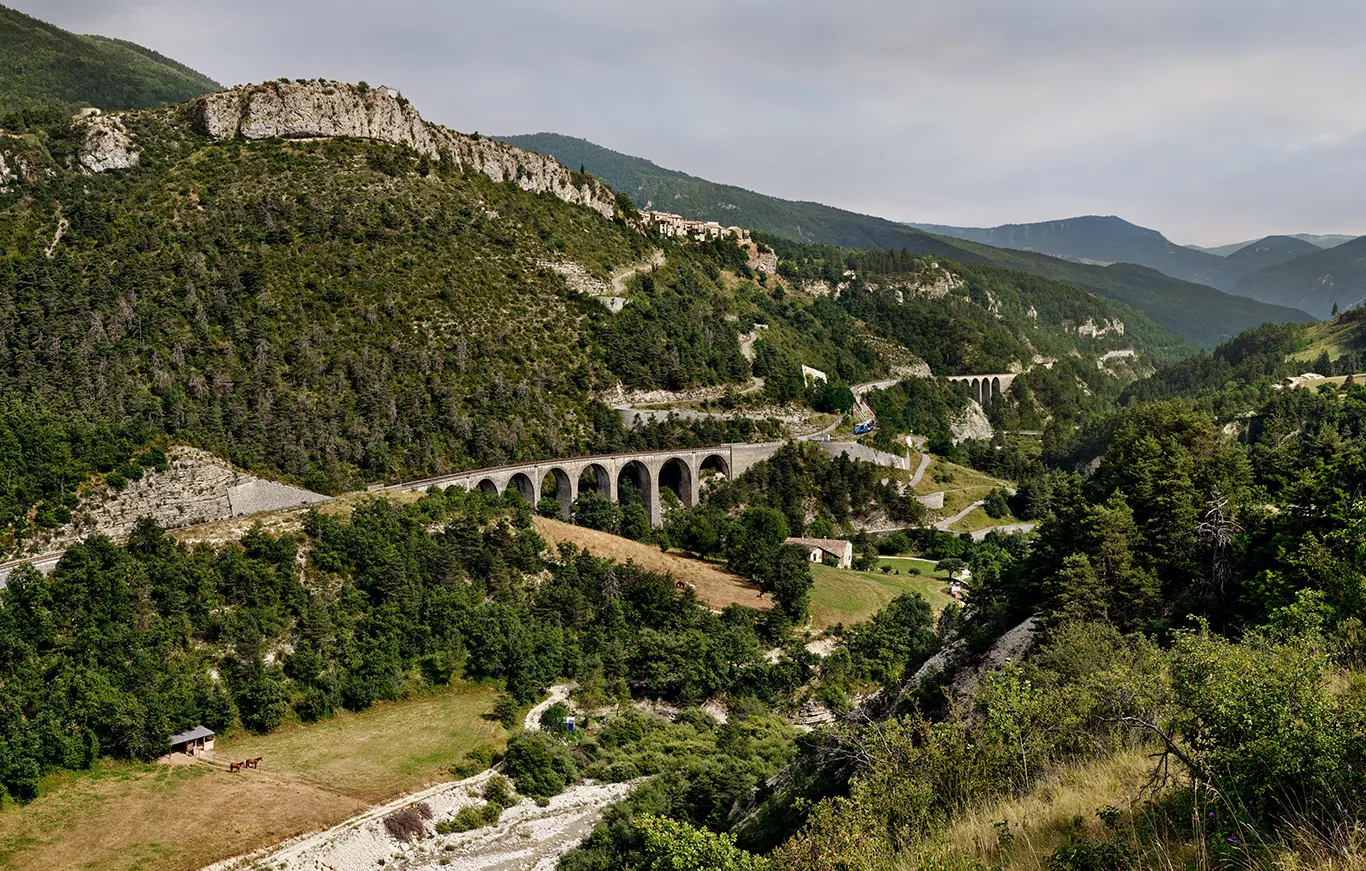
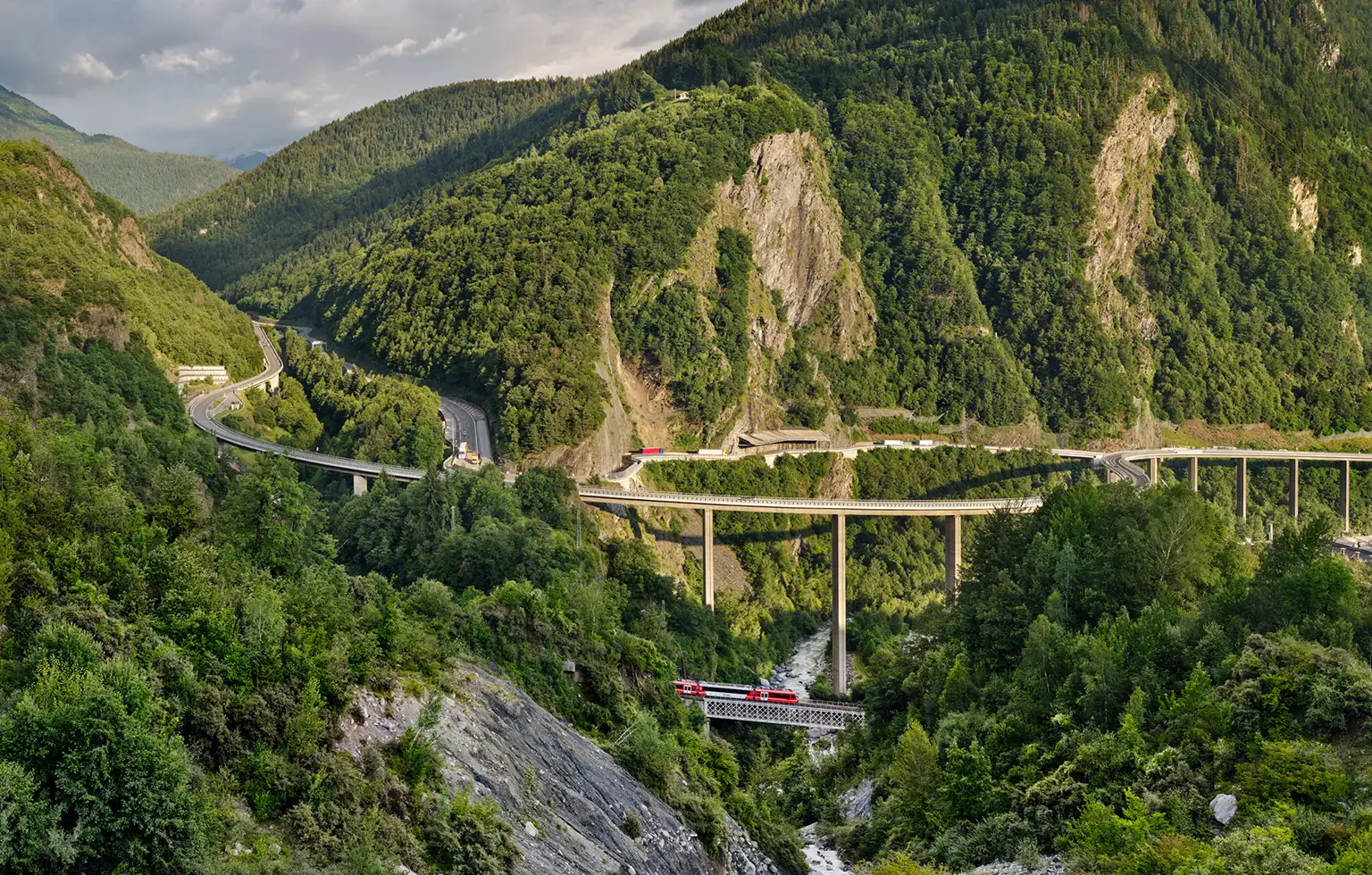
Schöllenen Railway Line, Switzerland
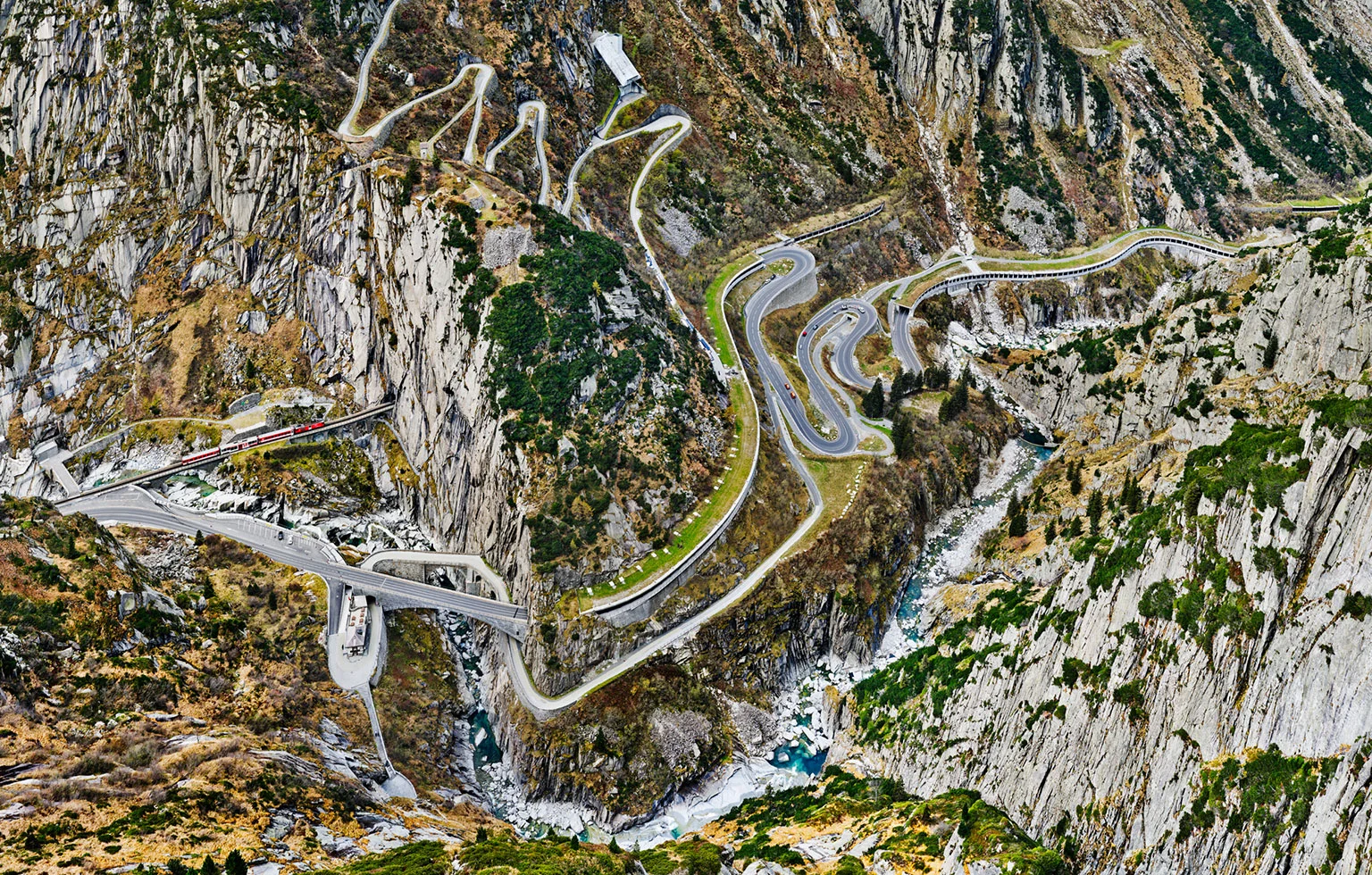
View into the Schöllenen Gorge. The rack railway shares the narrow valley with the road between Andermatt and Göschenen.
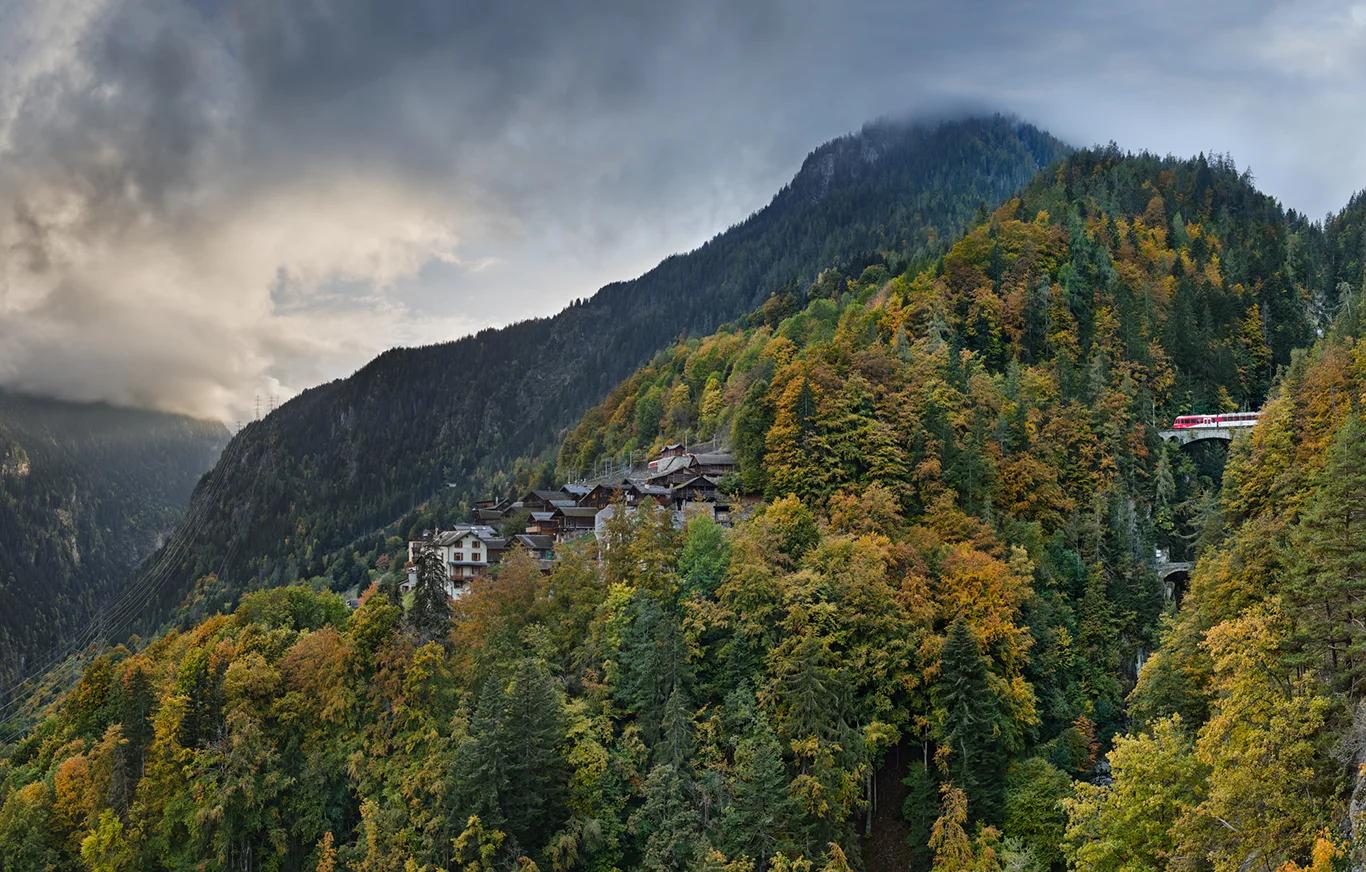
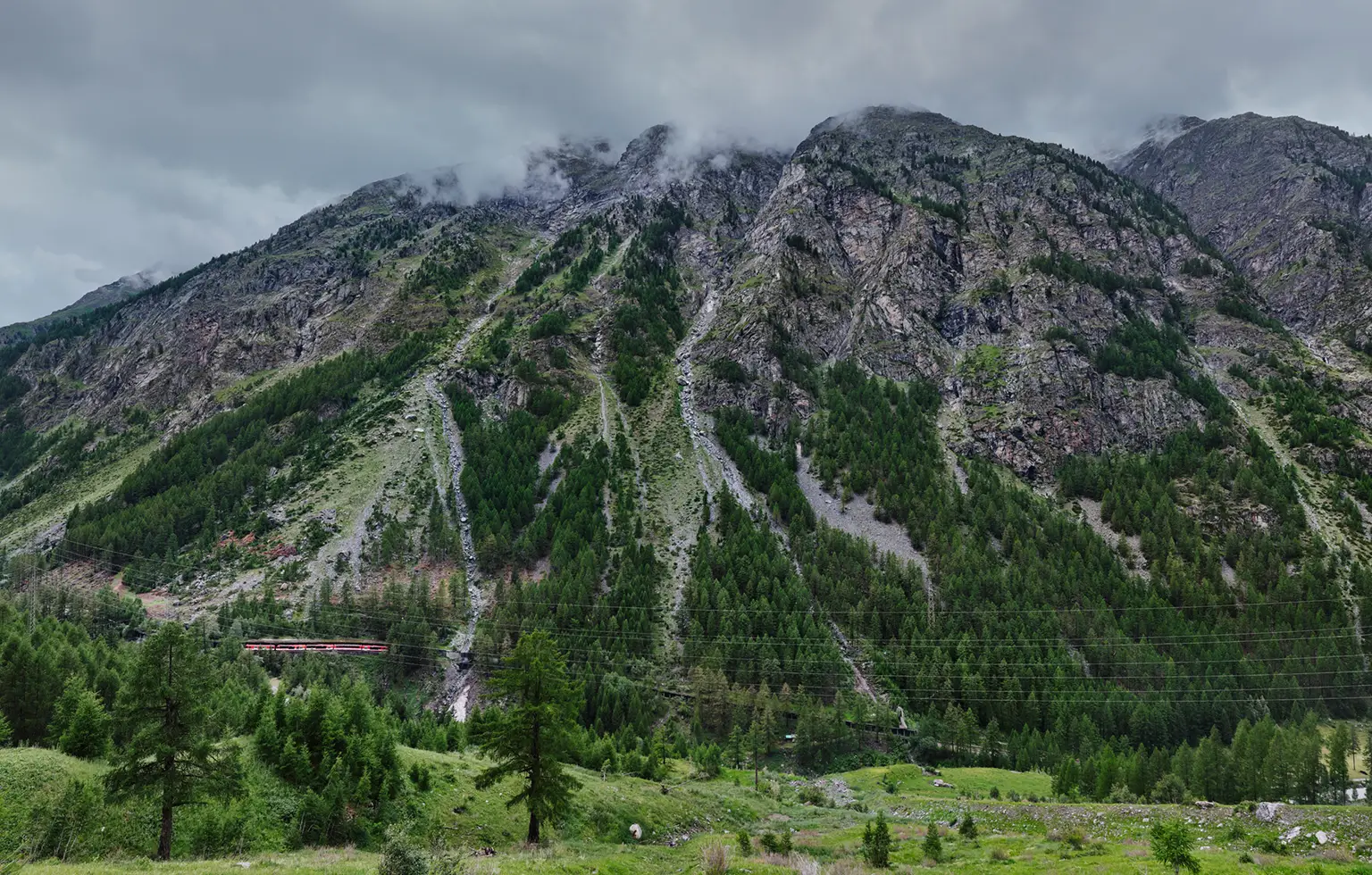
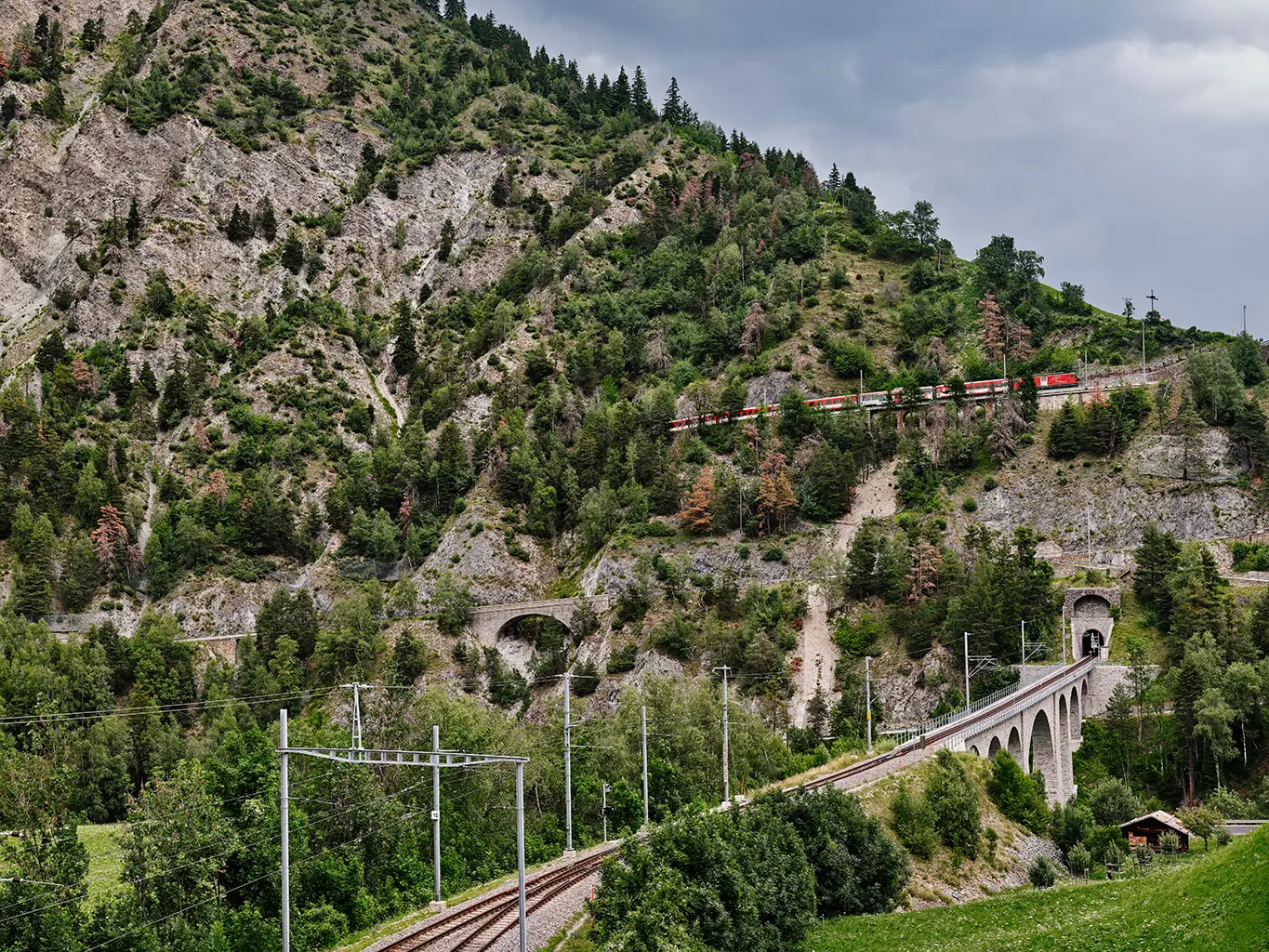
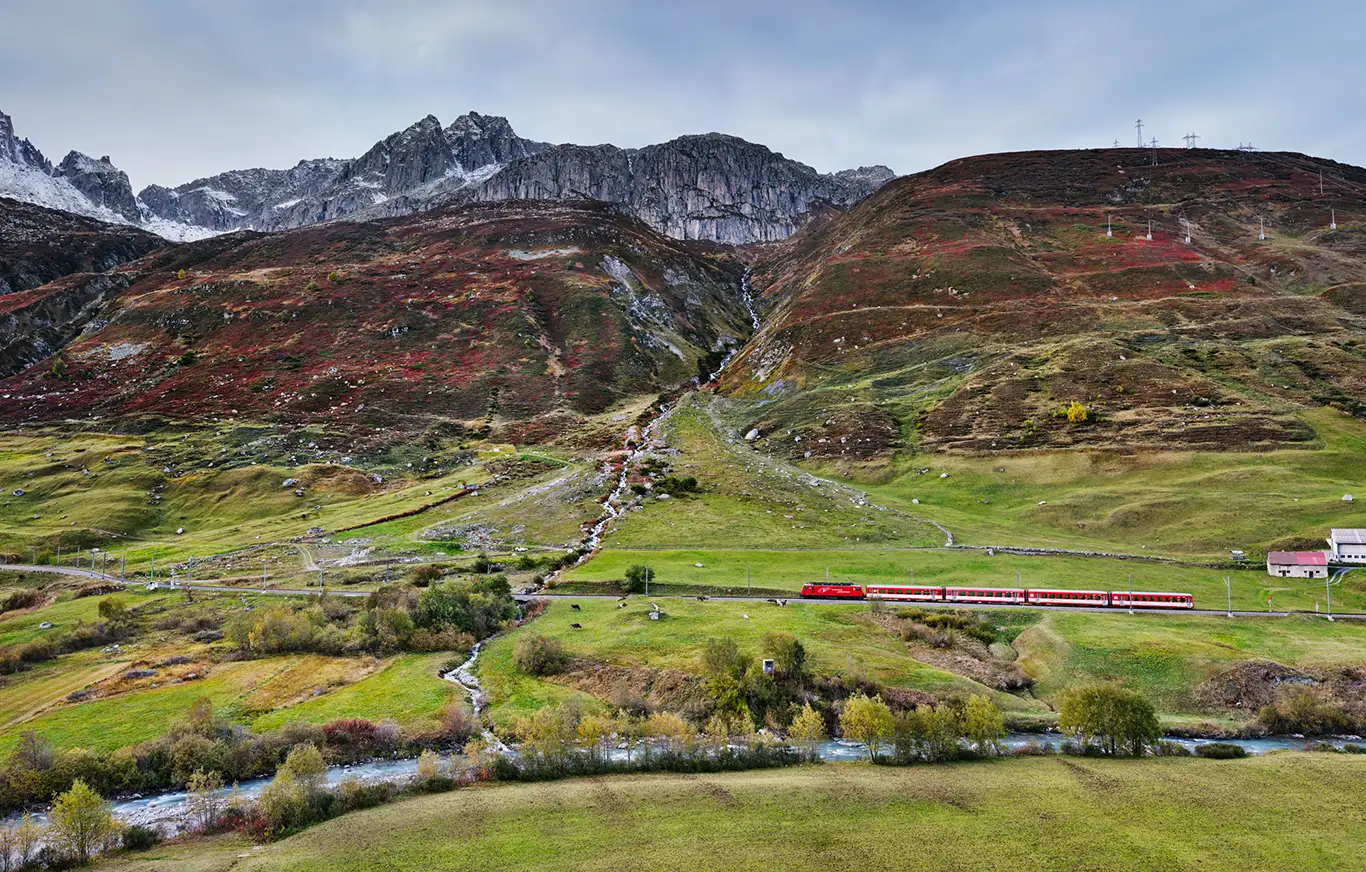
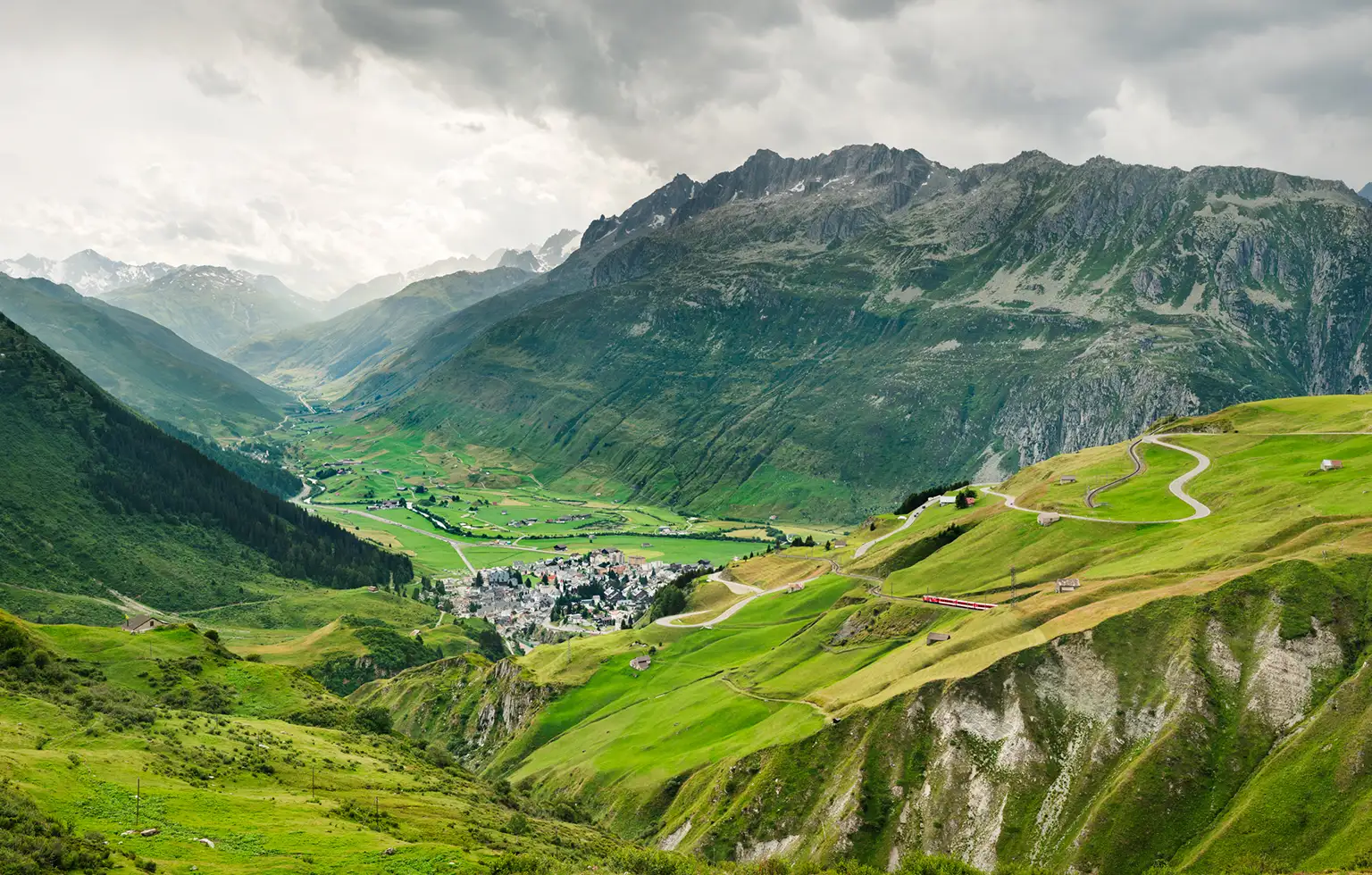
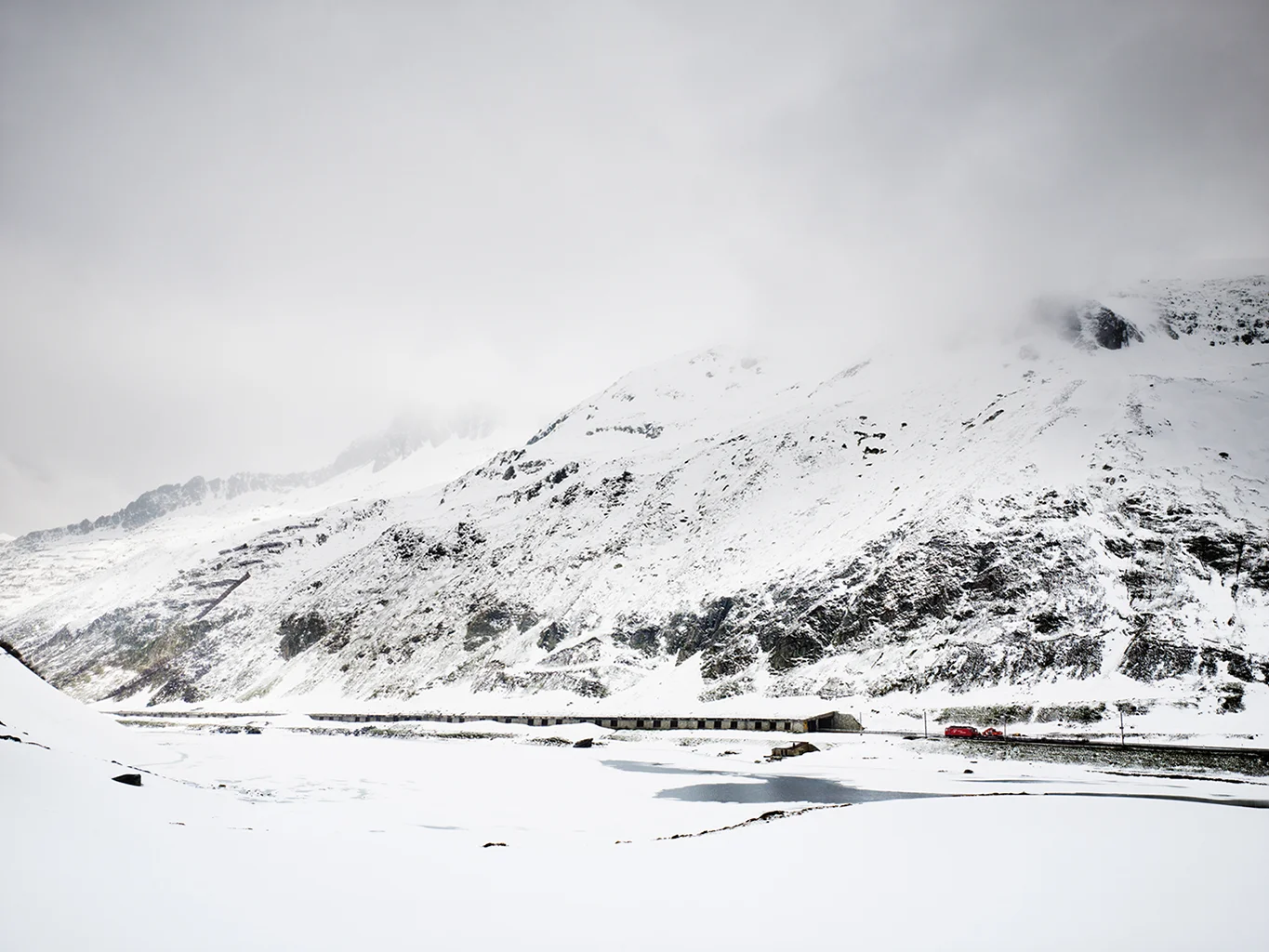
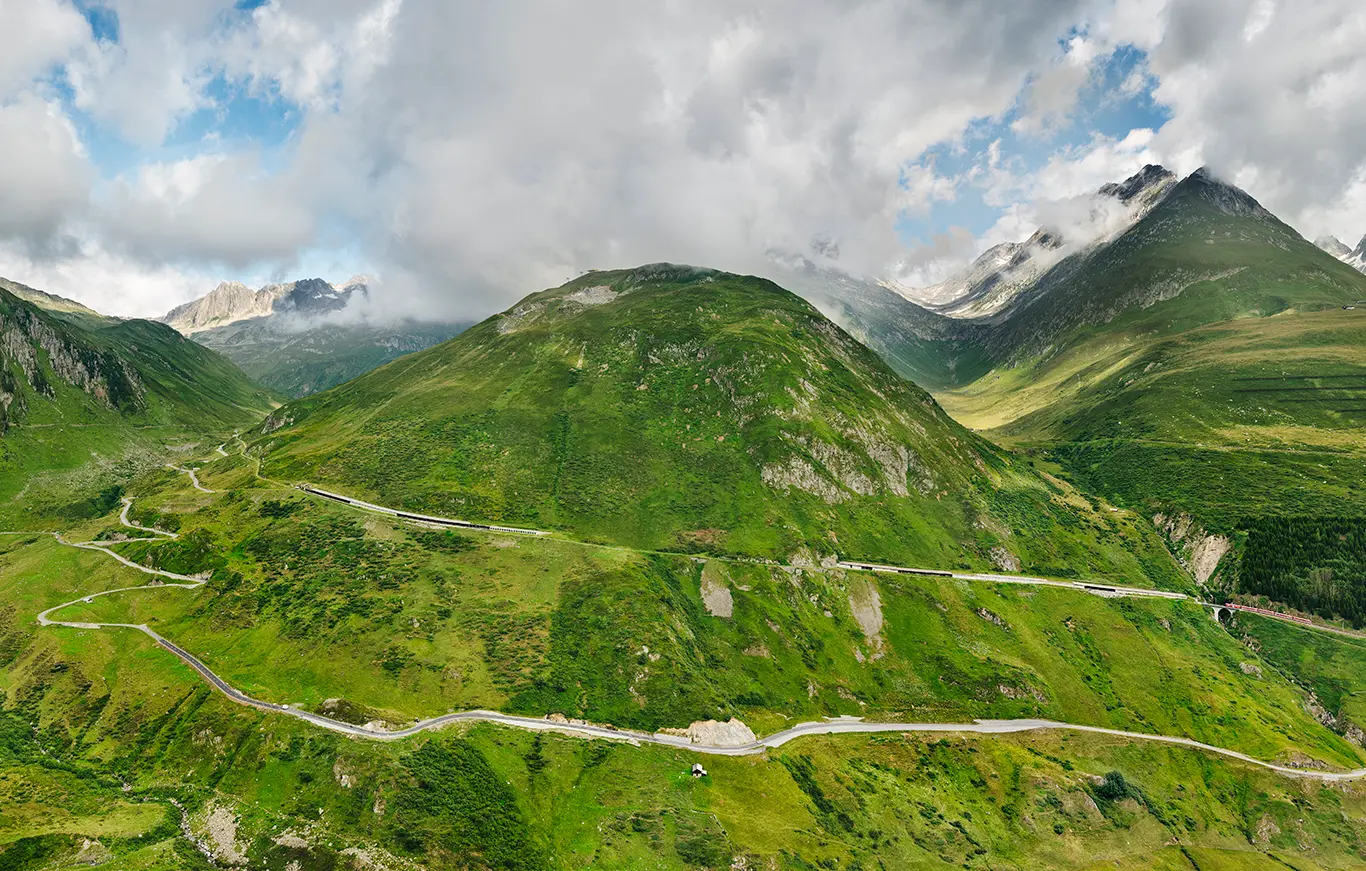
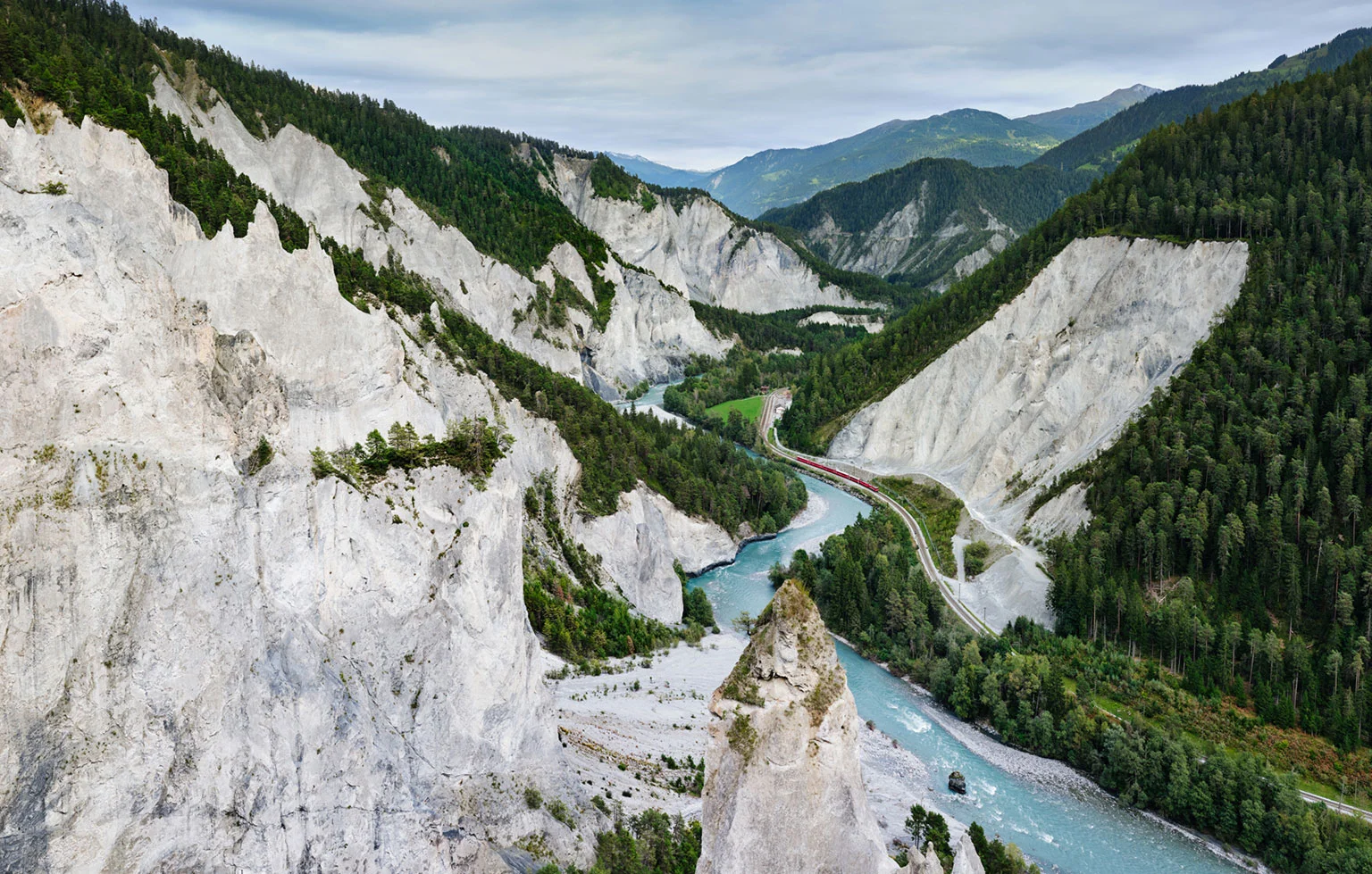
Railway Line of the Glacier Express
Railway line through the limestone cliffs of the Ruinaulta, the gorge of the Vorderrhein. In the background, Versam-Safien railway station, operated by the Rhaetian Railway.
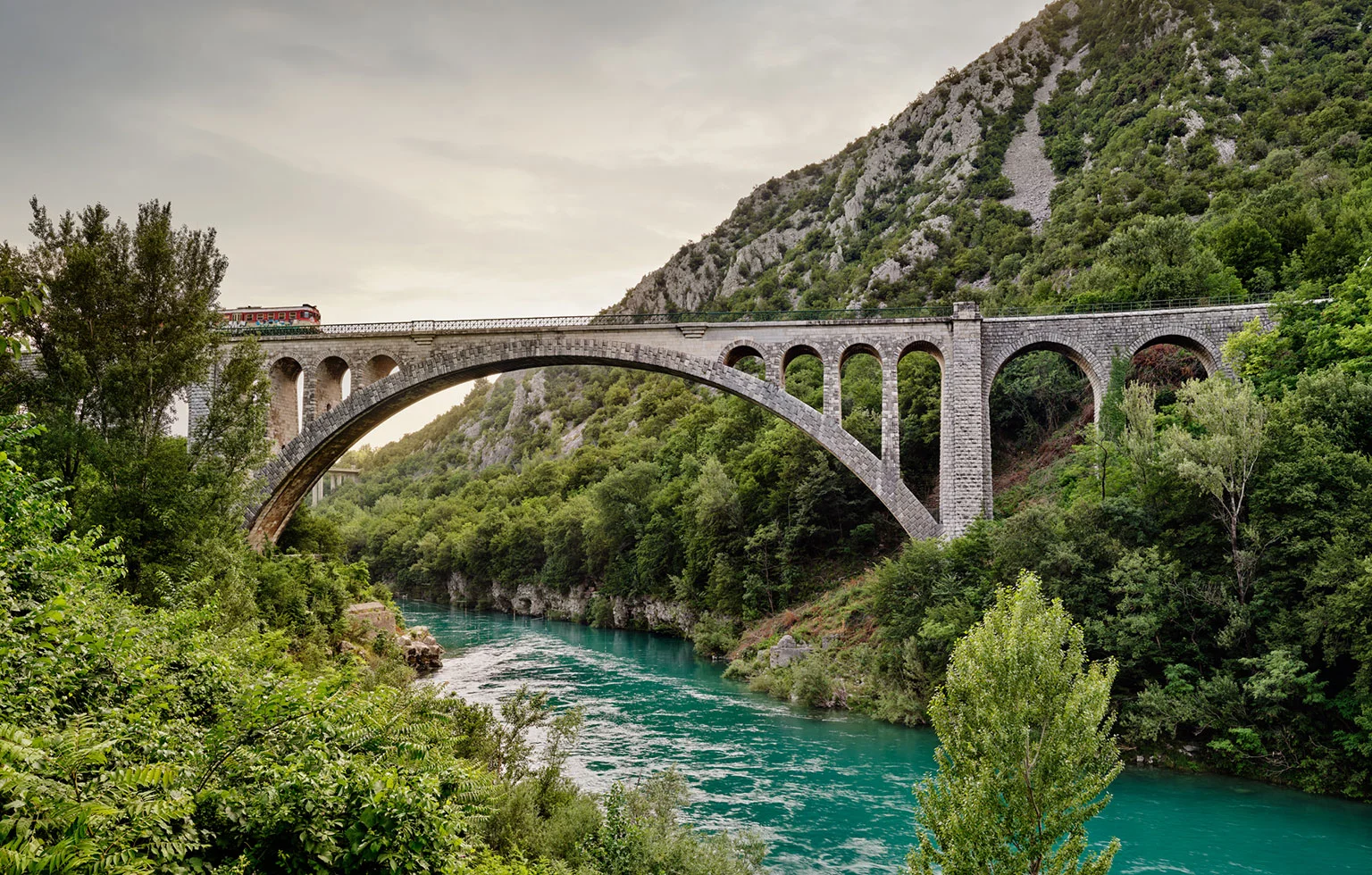
Bohinj Railway, Slovenia
The Salcano Bridge crosses the Soča (Isonzo) river near the border town of Nova Gorica. Opened in 1906, it is still considered the largest brick arched railway bridge in the world.
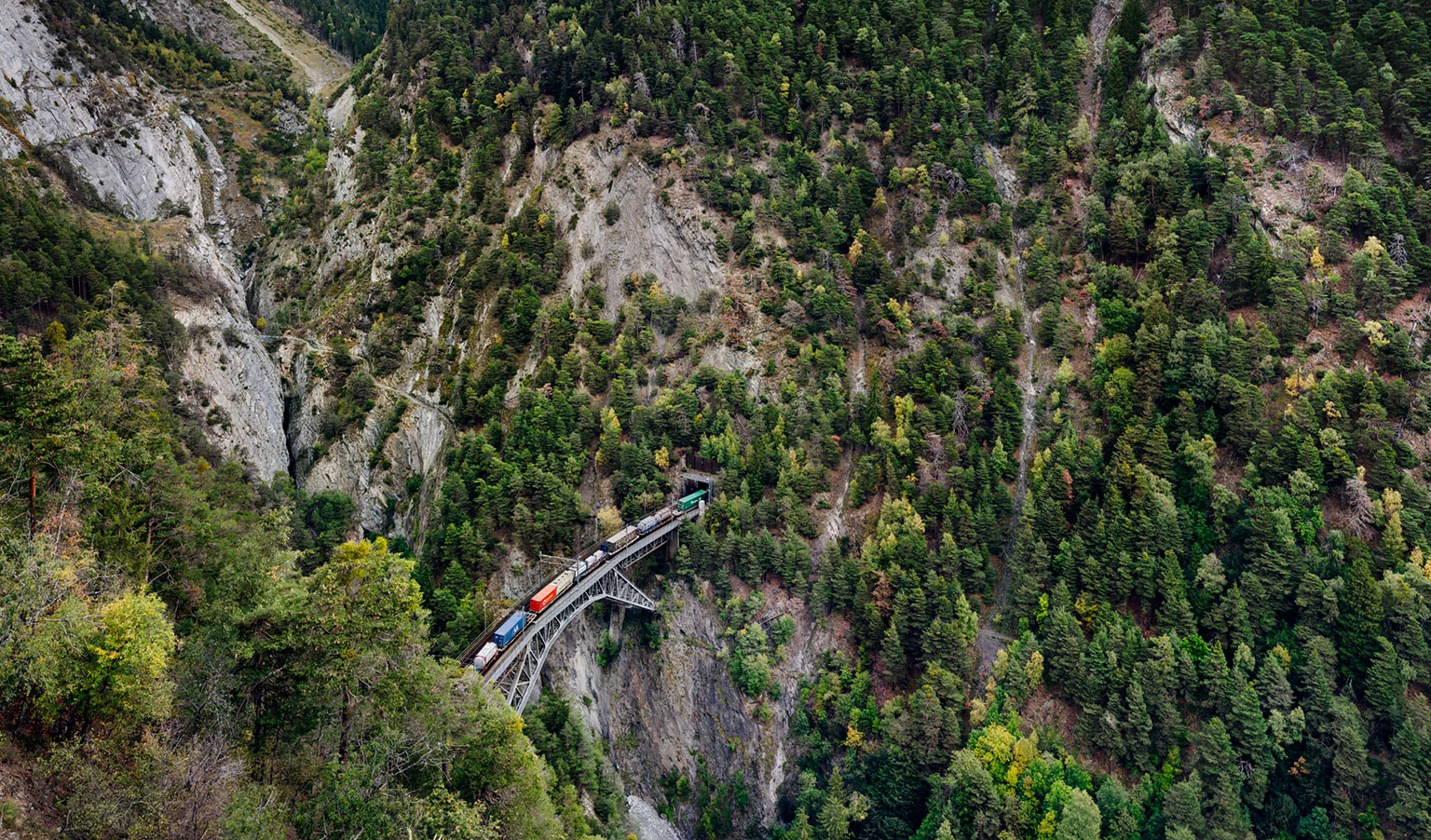
Lötschberg Railway Line, Switzerland
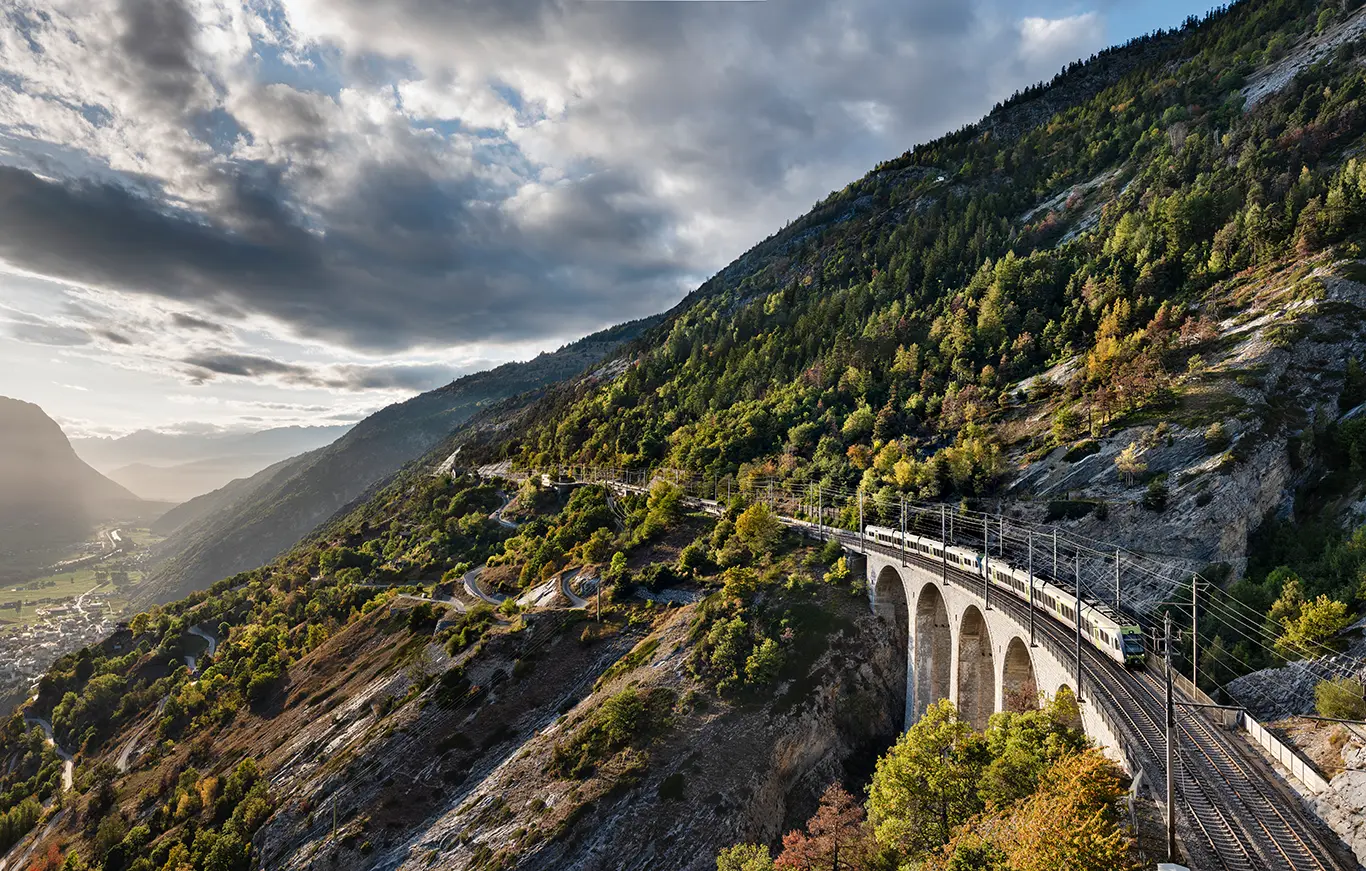
The old Mountain line of the Lötschberg Railway. Freight train on the Bietschtal viaduct on the southern ramp.
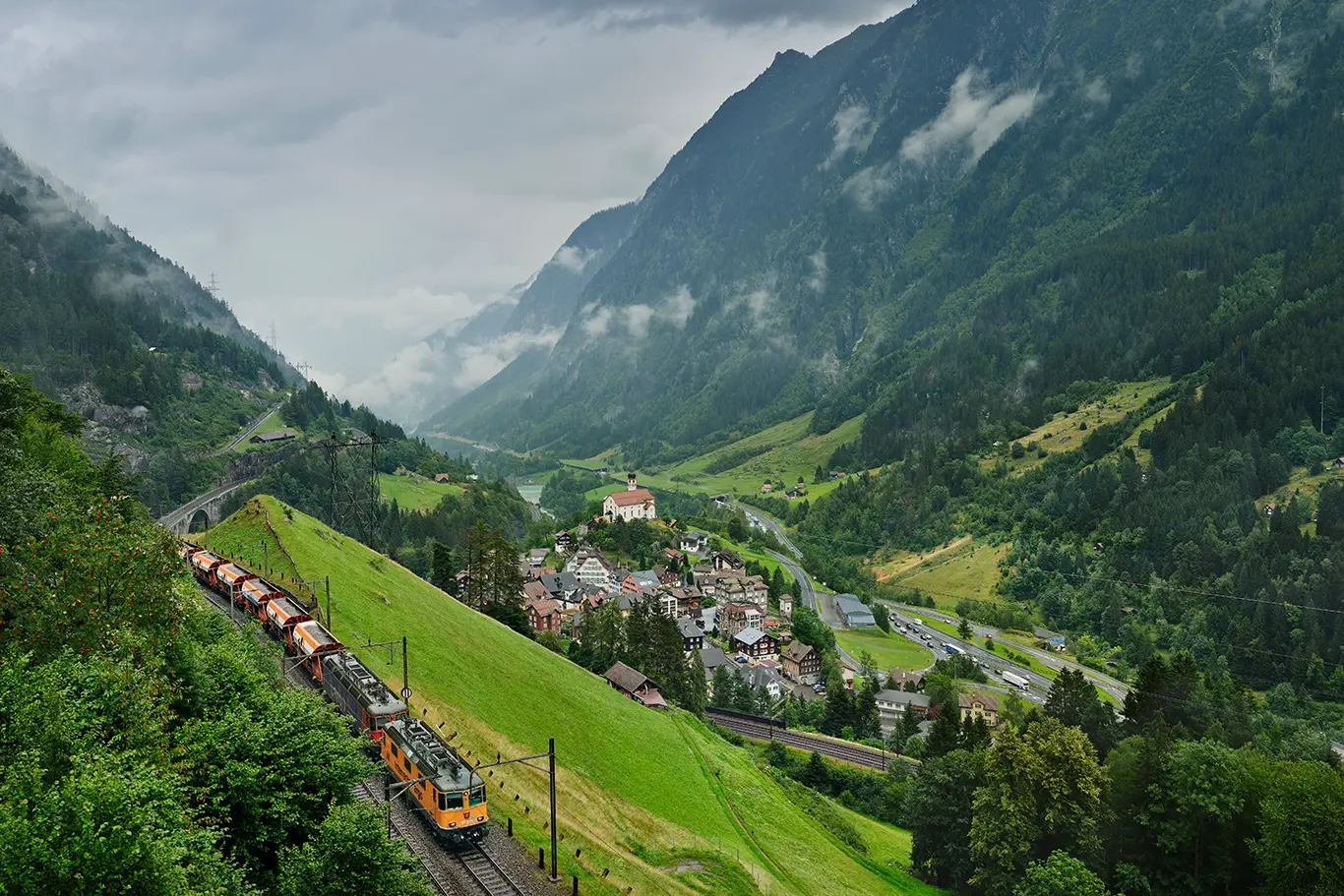
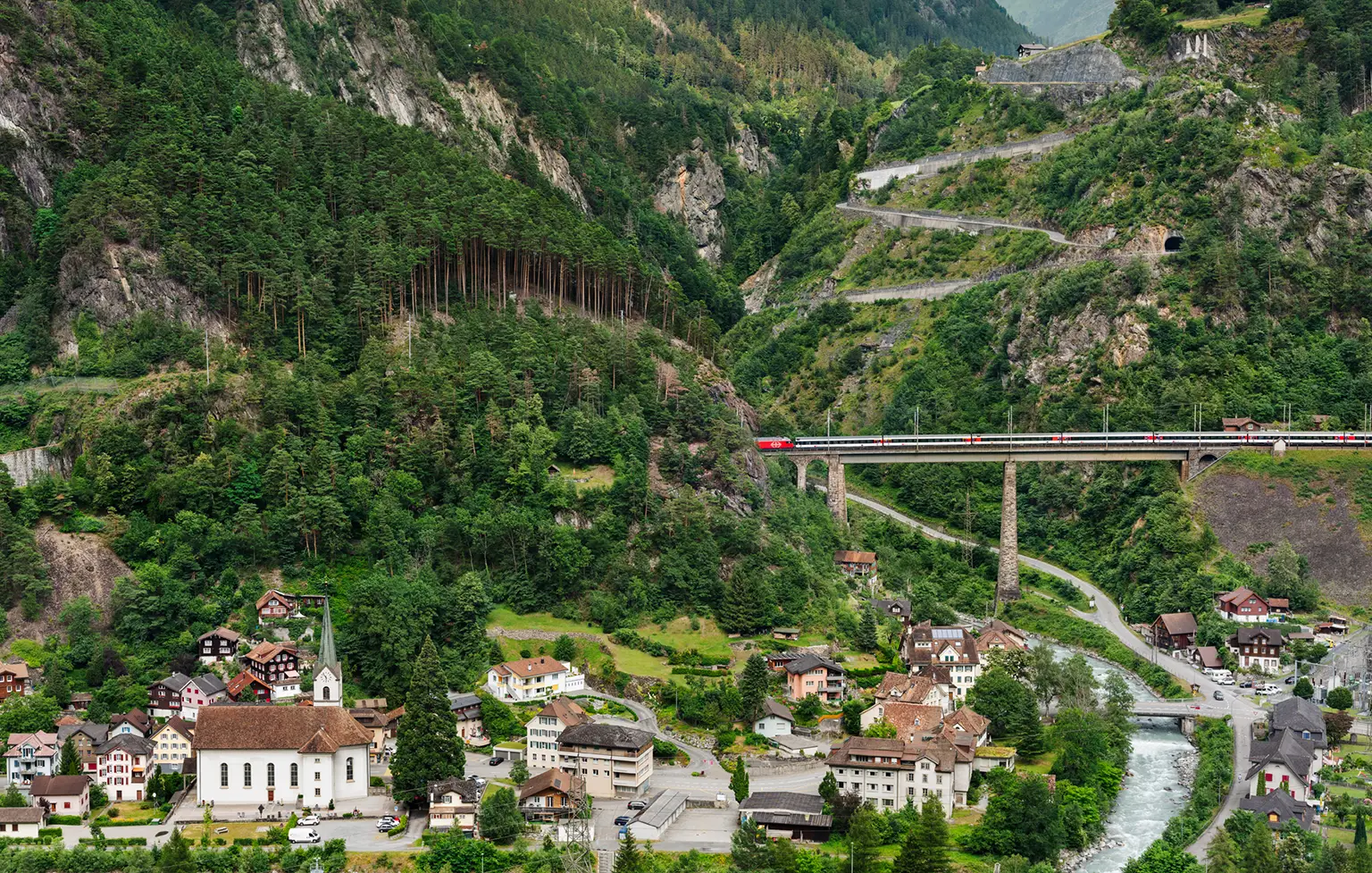
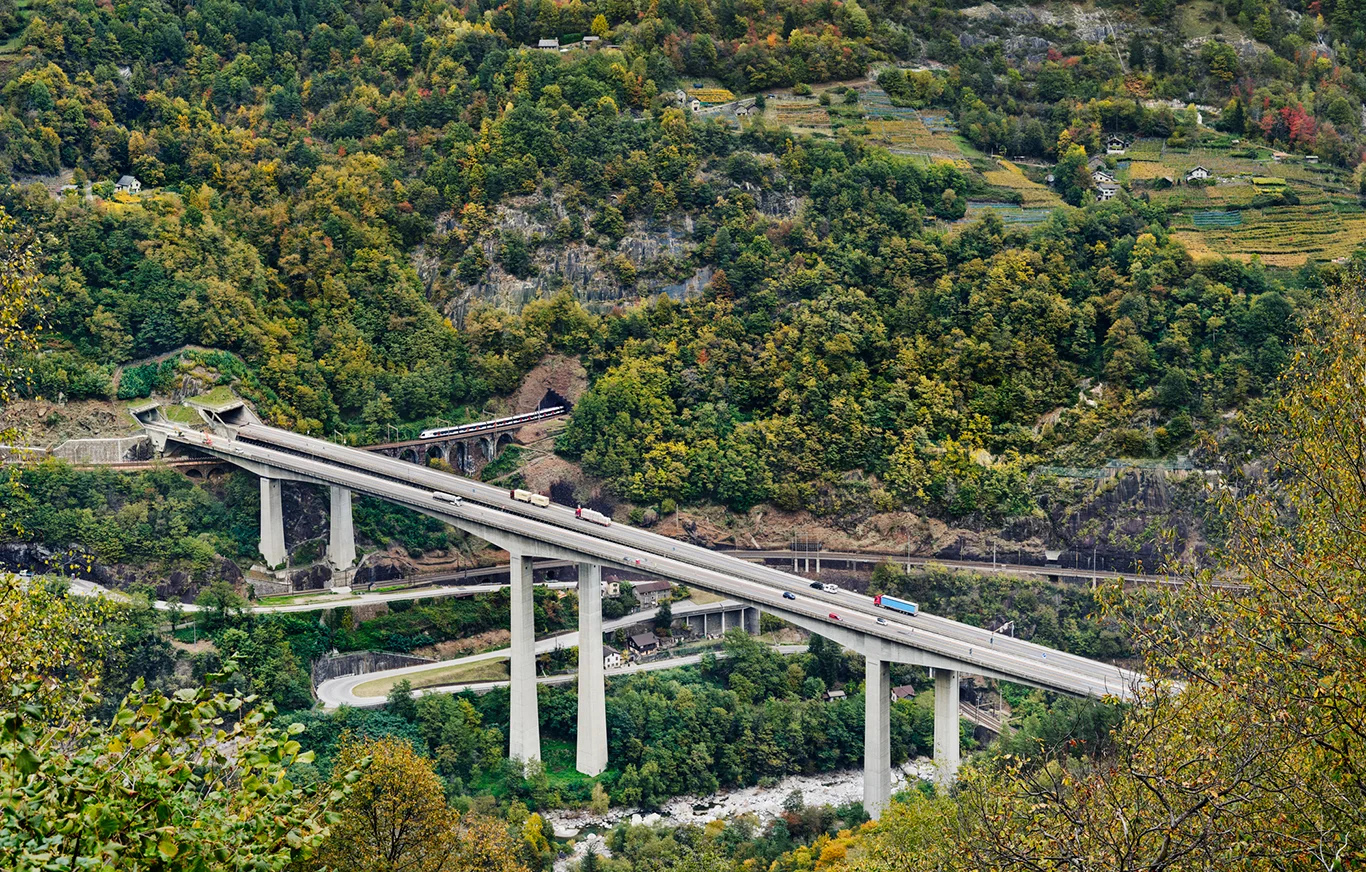
Semmering Railwayline, Austria
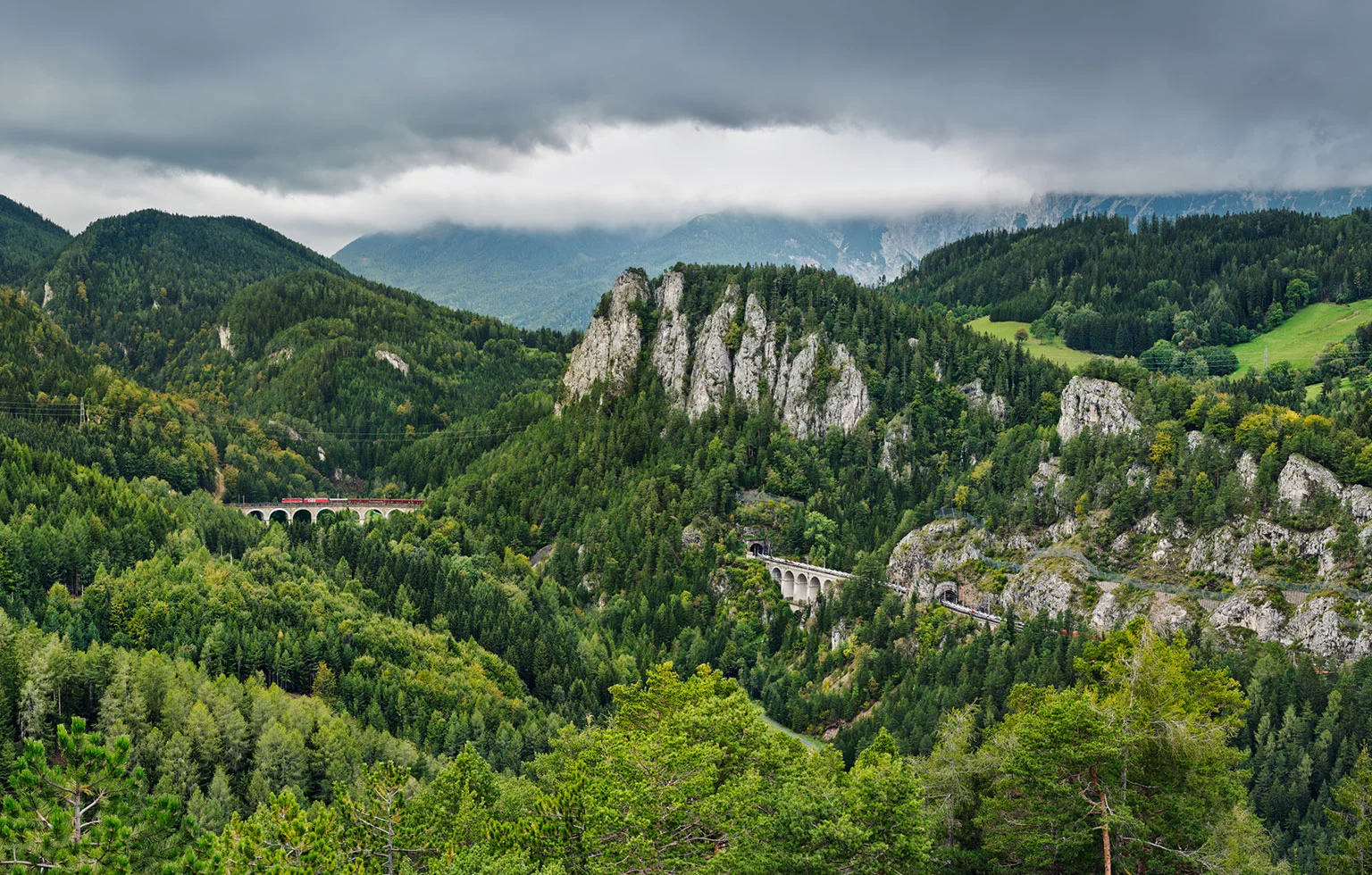
A particularly beautiful view of the Semmering Railway and the double-storey Kalte Rinne Viaduct is offered by the “20 Schilling View” on Wolfsbergkogel. The famous structure was depicted on the back of the 20-schilling banknote, hence the name. On the right, below the Polleros wall, the Krauselklause Viaduct.
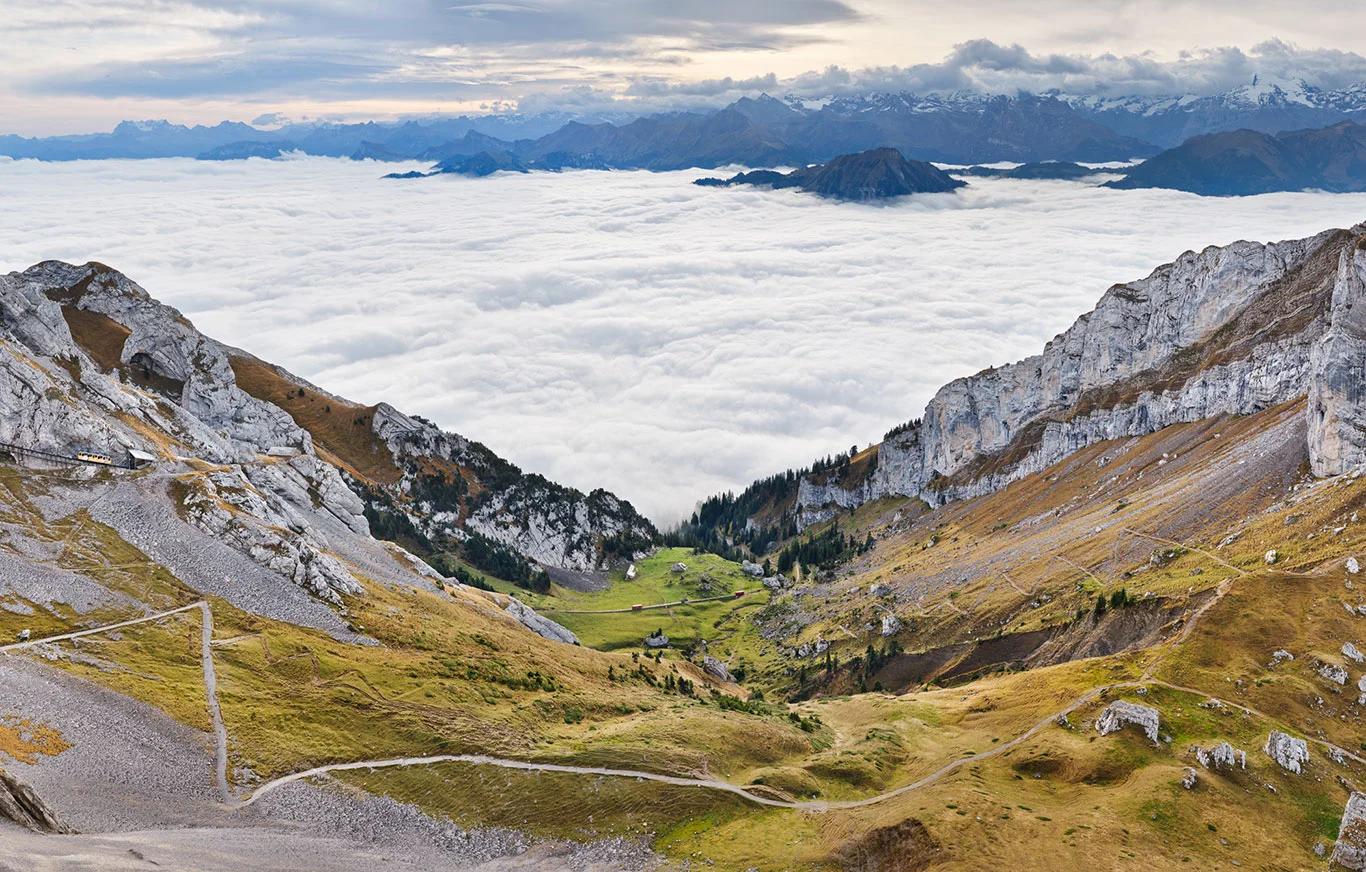
Pilatus Railway line, Switzerland
The world’s steepest rack railway climbs Lucerne’s local mountain, Mount Pilatus. To overcome the enormous gradient, engineer Eduard Locher invented a rack-and-pinion railway system with horizontal tooth engagement. As early as 1889, the first passengers were able to ride the railway to the top station.
The Books

Alpenbahnen
Texte von Eugen E. Hüsler
Neuauflage des Buch über die Eisenbahnlandschaften der Alpen von der Tendabahn in den französischen Seealpen über die beeindruckenden Schweizer Bahnen bis zur Semmeringbahn im Osten der Alpen.
Etwas kleinere und leichtere Ausgabe (1,7kg) und günstiger als die Original XXL Ausgabe.
Frederking & Thaler Verlag, München
2025 Neuauflage
Gebundene Ausgabe
180 Fotografien, Sprache: Deutsch
Format 29, 5 x 23,2 cm (H x B), 320 Seiten,
ISBN: 978-3-95416-449-3
49,99 Euro
kostenloser Versand in Deutschland
Alpenbahnen
Texte von Eugen E. Hüsler
Buch über die Eisenbahnlandschaften der Alpen von der Tendabahn in den französischen Seealpen über die beeindruckenden Schweizer Bahnen bis zur Semmeringbahn im Osten der Alpen.
Frederking & Thaler Verlag, München
2022
Großer Bildband im XXL Format, Hardcover in schönem Leinenumschlag
180 Fotografien, Sprache: Deutsch
Format 29, 7 x 37, 5 cm, 320 Seiten,
ISBN: 978-3954162819
Ausverkauft
Fine Art Prints
Selected images from this series are available as limited edition fine art prints. In various formats and finishes, each produced in a small edition. At bertholdsteinhilber.art you will also find motifs from other series.
A visit is worthwhile, beyond this series as well.
How it all started
As the idea for the book on Alpine railways began to take shape, I wanted to make sure that I would be able to turn my vision into reality. In late summer 2018, I took some photographs along the Gotthard and Bernina lines; the majority of the photographs were then taken between 2019 and summer 2021.
The basic concept is based on the photographs of the Furka Steam Railway that I took whilst working on the book “Passbilder – Landschaften der Alpenpässe”, as well as on images of railway landscapes in Canada.
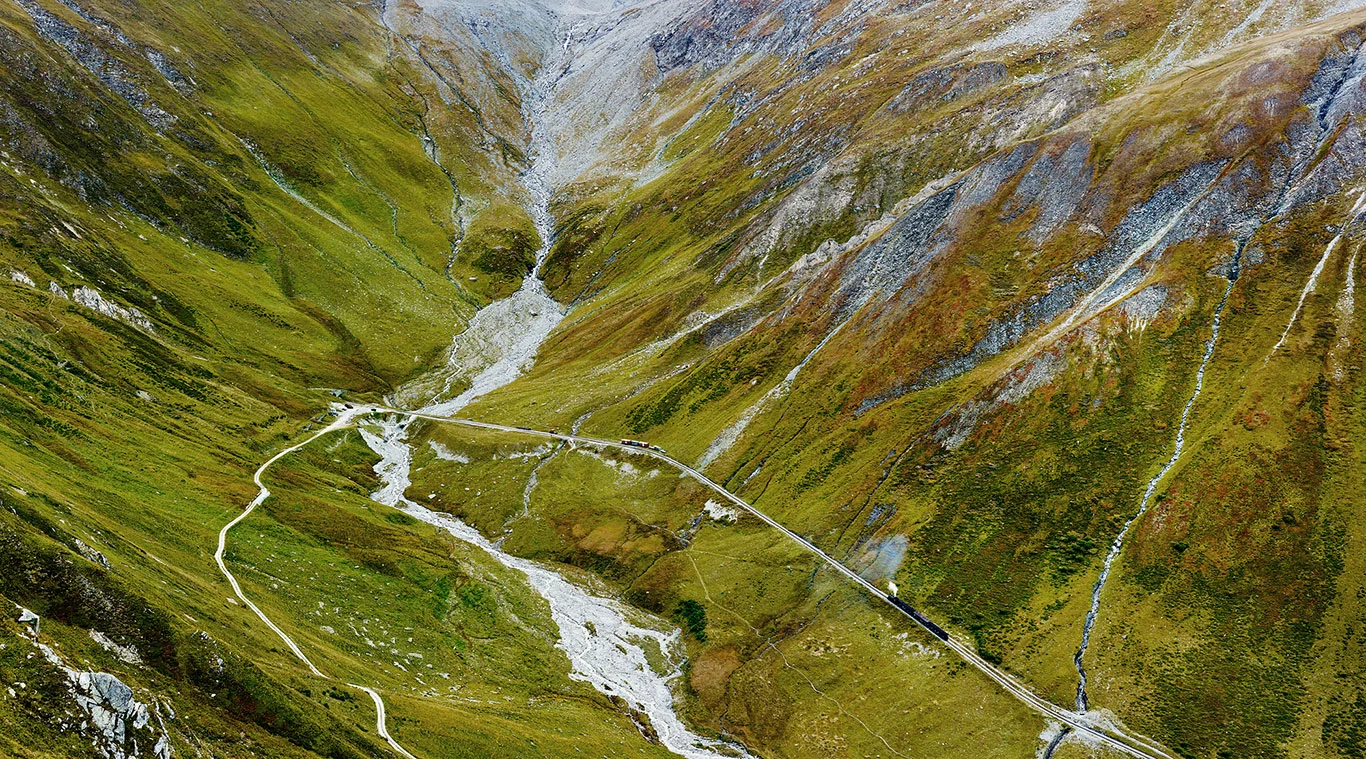
Furka Railway line, Switzerland
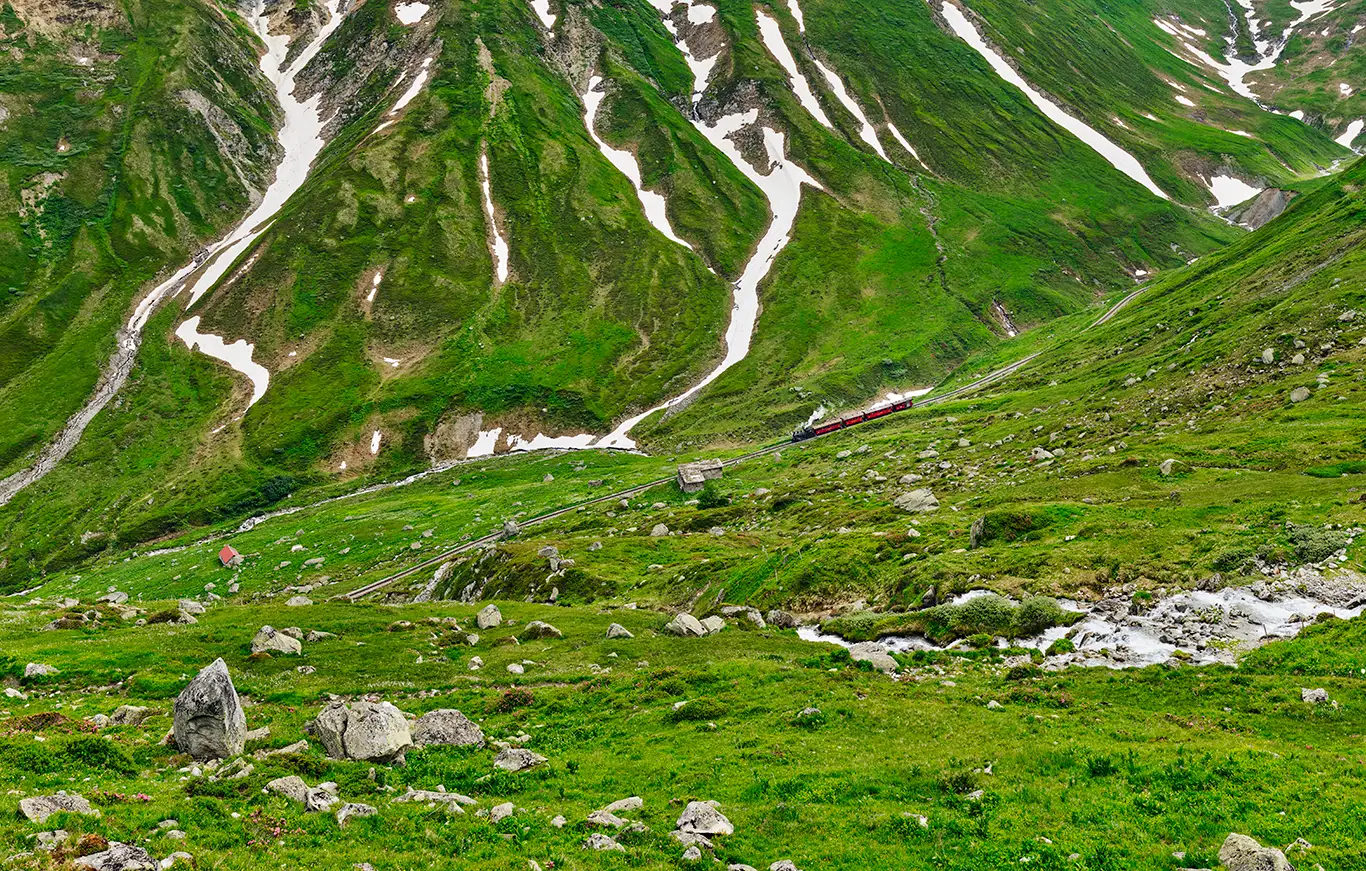
Railway line of the Furka mountain steam railway, Muttbach-Belvédère stop before the Furka summit tunnel below the Muttenhörner rock ridge.
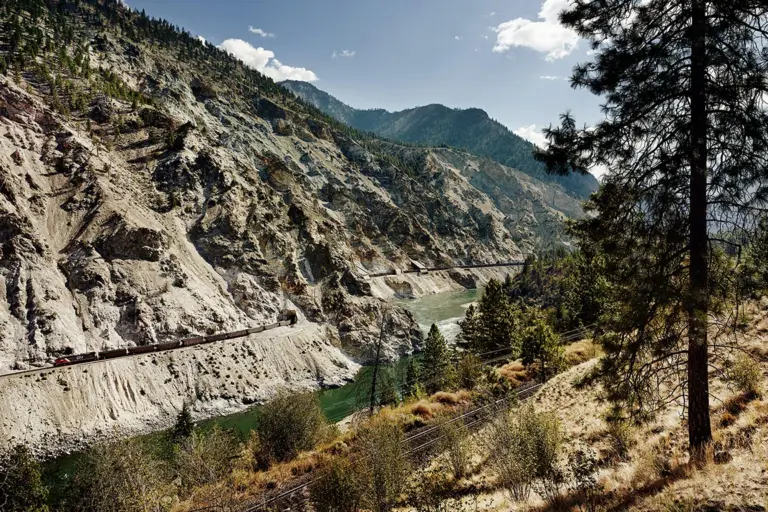
Thompson River
Railway lines along the Thompson River in British Columbia, 2013.
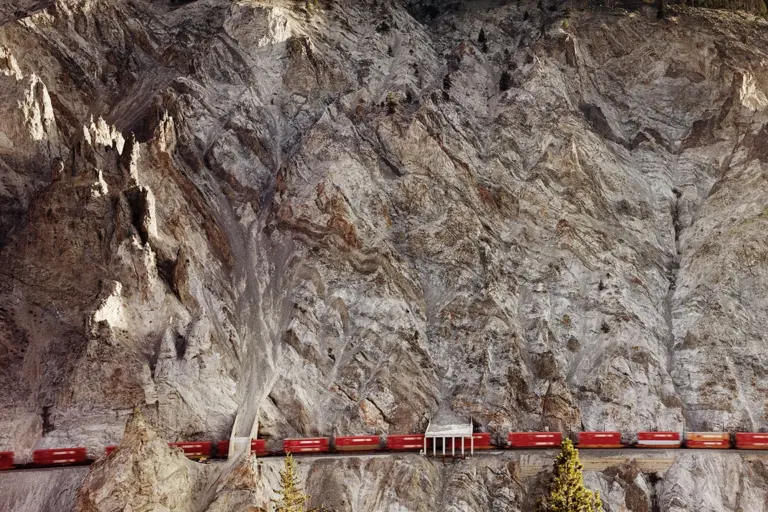
Thompson River
Railway line along the Thompson River in British Columbia, 2013.
Looking back, I did end up having to take a few unintended detours because I was curious to see whether there might also be an interesting view of the railway line from the mountain opposite. How could I have known that I would need far more time for these photographs than was the case, for example, with the book on Alpine passes? Since the trains were meant to be visible in the photographs, the lighting conditions at the right vantage point had to be just right as the trains passed by. Good planning, preparation and flexibility were an absolute must. Complemented by that one element that everyone needs when photographing across different seasons and changing weather conditions, with unscheduled trains or, at times, unknown departure times: luck.
When I’d compiled various facts after taking the final shots, I was astonished to discover that all these hikes along the tracks and through the mountain landscapes had totalled a good 1,500 kilometres over the course of two and a half years. That’s one and a half times the length of Germany on foot. If someone had told me that at the start… but no need to worry: it didn’t turn me into an athlete.
However, there were also some routes that simply couldn’t be photographed. How was I supposed to photograph the railways to the Jungfraujoch or the Zugspitze? On both, the final few kilometres run through tunnels. The Laas Marble Railway and the Achensee Railway were taken out of service whilst I was working on the project, their futures uncertain; in contrast, the French La Mure Railway awoke from a long slumber. Although I had photographed the Zillertal, Pinzgau and Aosta Valley railways, these could not be included due to lack of space and because they are not strictly speaking mountain railways. The Lauterbrunnen–Mürren mountain railway also failed to find a place in the book.
In the spring of 2020, the global coronavirus pandemic struck, and no one really knew how the situation regarding travel in the Alps would develop. The winter months were lost due to travel restrictions, even though I would have liked to have photographed more winter scenes. So the coronavirus has also left its mark on this book, just as it has influenced our entire lives ever since.
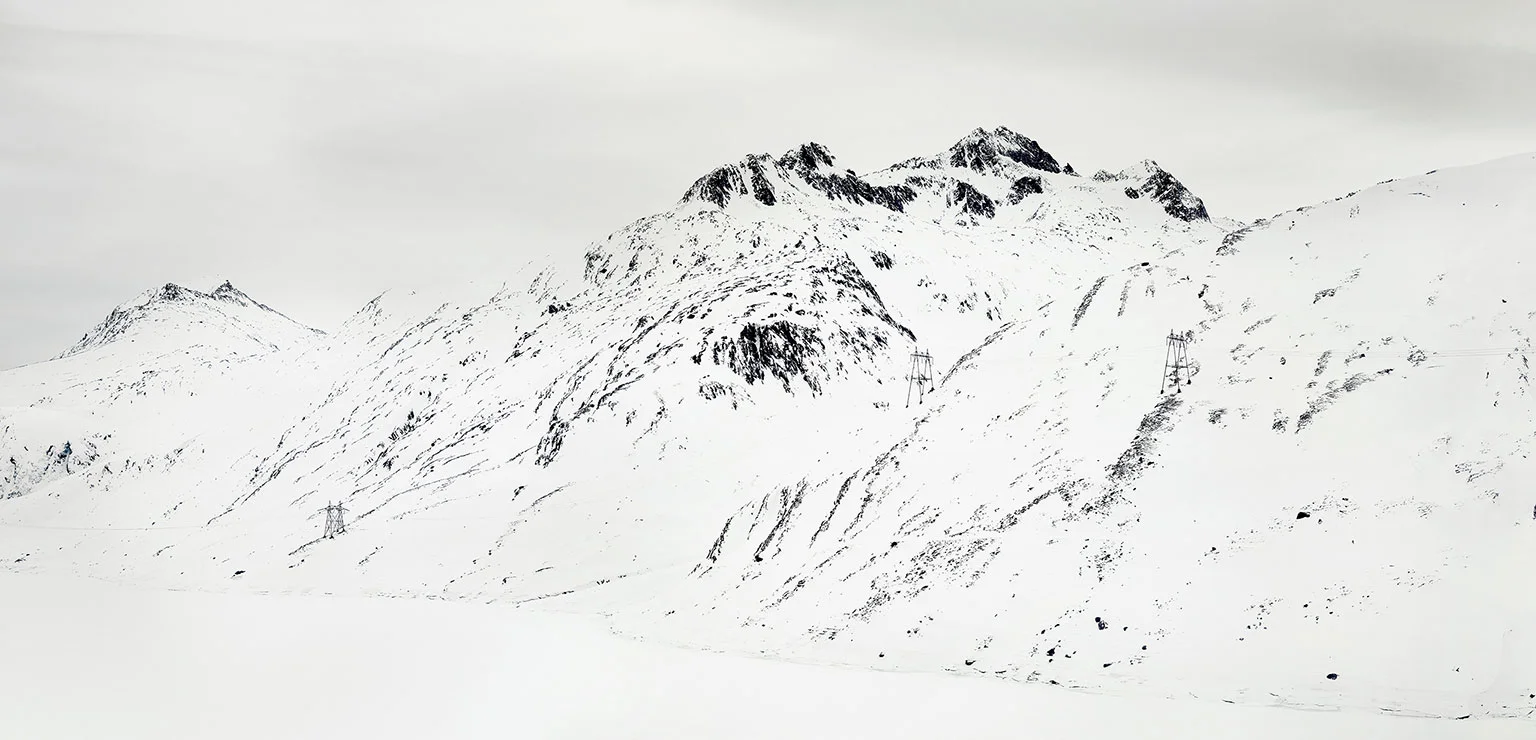
Lukmanier Pass
Just below the mountains runs the Gotthard base tunnel
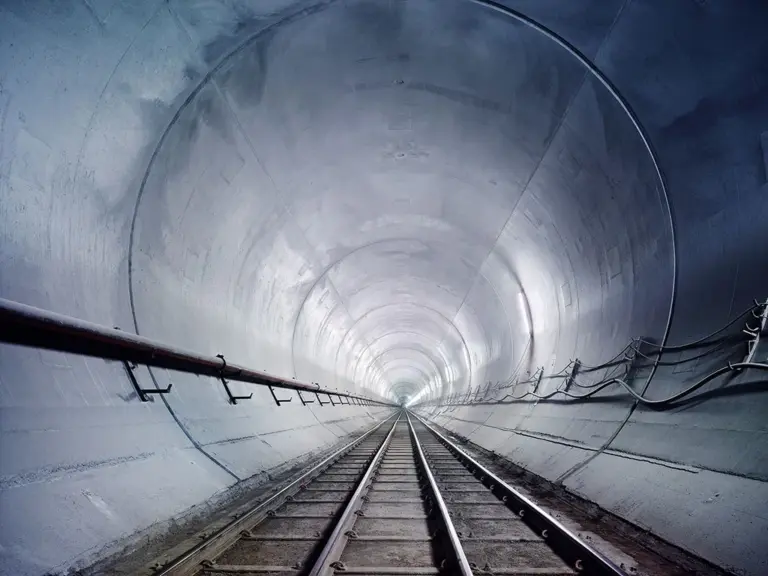
Gotthard base tunnel
East tunnel of the Gotthard base tunnel during construction.
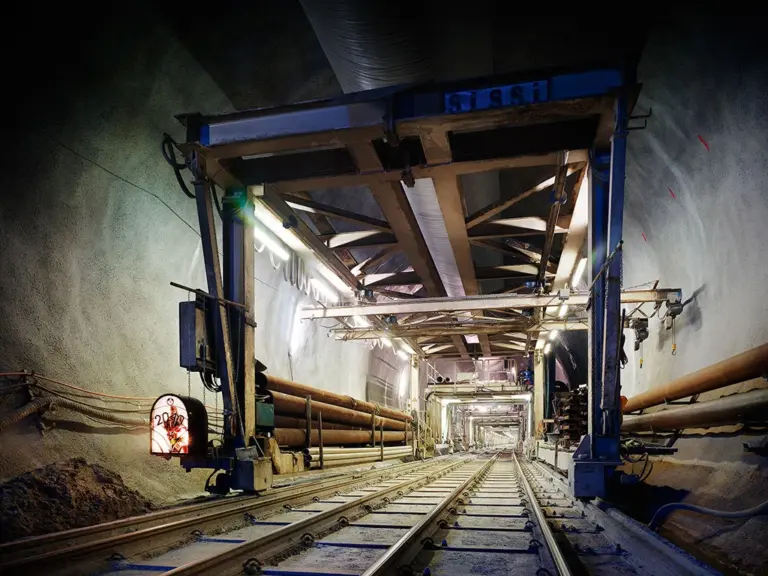
Gotthard base tunnel
Tunnel boring machine “Sissi” form Herrenknecht in the eastern tunnel.
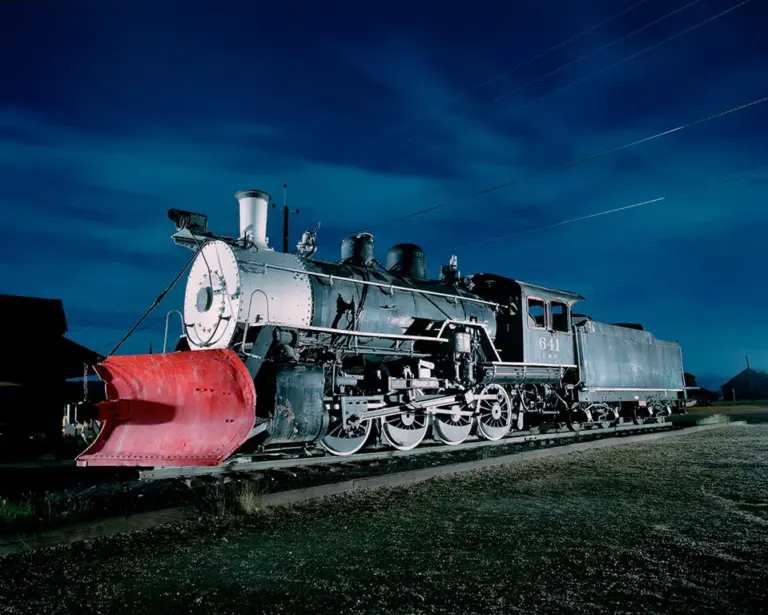
Steam train in Leadville, Colorado, USA.
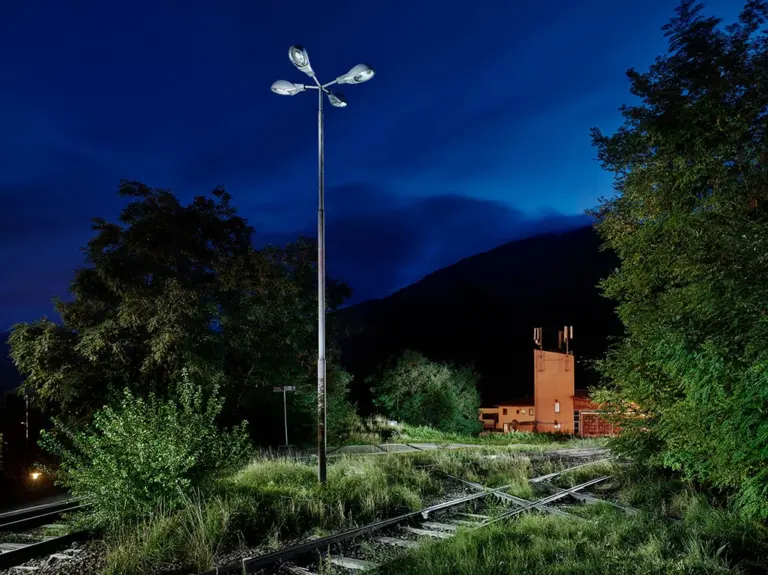
Historical railway reversing star in Mals of the Vinschgau Railway line in Italy.
In retrospect, I had to take a few involuntary detours because I was hoping and curious whether there might not also be an interesting view of the railway line from the opposite mountain. It was not always „fun“ and „easy going“. How could I have known that I would need much more time for these photographs than was comparably the case with the „Alpine Passes“ book. Since the trains were to be seen in the pictures, the right lighting conditions had to be available at the right vantage point just as the trains were passing. Good planning, preparation and flexibility were an absolute must; but also supplemented by that element that every person needs who takes photographs in different seasons and weather changes, with trains that are not on schedule or sometimes unknown times of travel: Luck.
When I had gathered various facts after the last shots I had to realise to my great astonishment that all these walks along the tracks and through the mountain worlds added up to a good 1500 kilometres in the course of the two and a half years. That is the equivalent of walking one and a half times the length of Germany. If someone had told me that at the beginning…but no need to worry – it didn’t make me an athlete.
But there were also tasks that I couldn’t do, or better: shots that were simply not possible to make. How could I photograph the railways to the Jungfraujoch or the Zugspitze mountain? The last kilometres of both run in tunnels. The Laas Marble Railway and the Achensee Railway were closed down during my work with an uncertain future, but the French La Mure Railway awoke from a long slumber.
I had photographed the Zillertal, Pinzgau and Aosta Valley railways, but these could not be included due to lack of space and because they are not explicitly mountain railways. The Lauterbrunnen-Mürren mountain railway also no longer found a place in the book.
In spring 2020, the worldwide Corona pandemic hit and no one really knew how travel in the Alps would develop. The winter months were lost due to travel restrictions, and I would have liked to photograph more winter photographs. So Corona has also left its mark on this book, just as it has influenced all our lives since then.
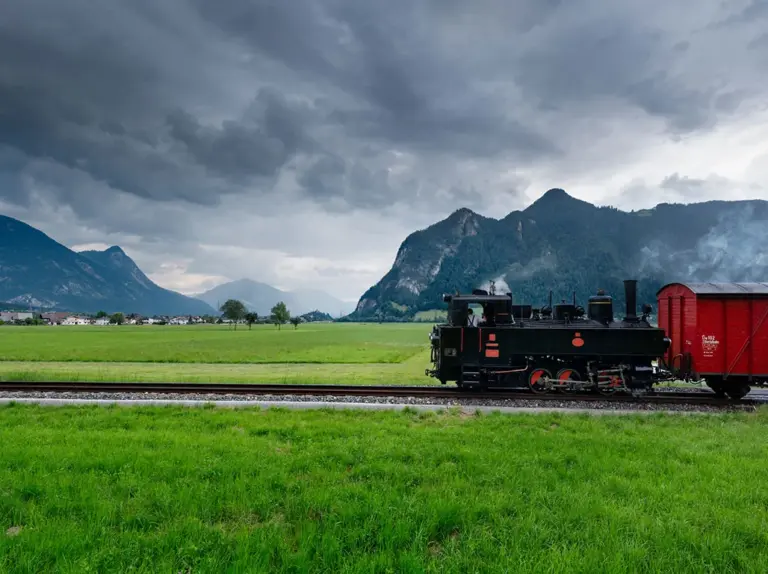
Zillertal Railway
Steam train near Astholz at the entrance to the Zillertal.
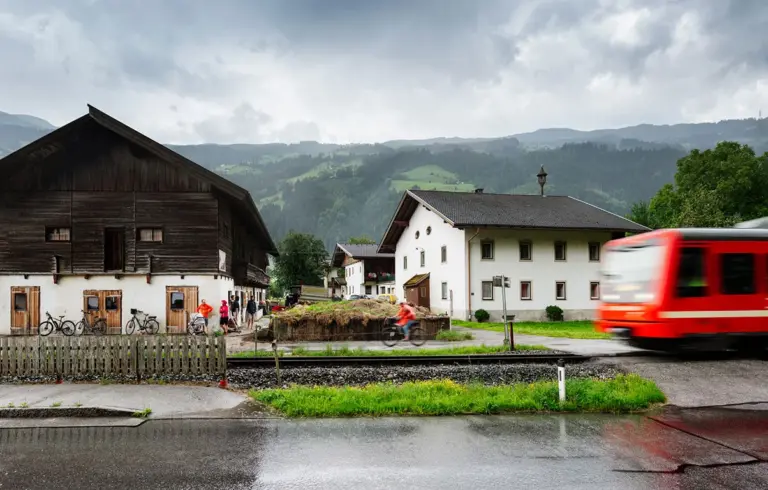
Zillertal Railway
Route along the village street of Aschau im Zillertal.
Train Songs
„… I’ve taken the low road and if you’ve done the same Meet me down there by the train Down there by the train Down there where the train goes slow.“
„Down there by the train“ - Tom Waits
This book opens with a quote from Tom Waits. He wrote the song for Johnny Cash’s first ‘American Recordings’ album (1994) and later released it on his own compilation ‘Orphans: Brawlers, Bawlers & Bastards’.
In this and most of his lyrics, trains are metaphors for one’s own life, for the chances of a different or better life, for joy, farewell, grief, death, depression, redemption, salvation, human greed, and so on.
I remember very well a Saturday morning in summer up on the Oberalp Pass near Andermatt, when the wind carried the sounds of an alphorn player across to me and I thought to myself, ‘That sounds just like a tribute to this beautiful railway line.’ Perhaps something like that already exists somewhere?
On my travels through the Alps, I always took a selection of songs from my analogue music collection with me, and so, little by little, a list of tracks on the theme of trains and railways grew. A very personal selection. No wonder I ended up focusing primarily on the musicians who have been with me since my youth – and now, too, in a book about railways in the Alps.
Tom Waits has written over two dozen songs about trains, Johnny Cash has sung dozens, Bruce Springsteen has conjured up beautiful images (“… a freight train running through the middle of my head….”), the Cowboy Junkies have sung a beautiful ballad about structural change, Element of Crime have written the most eloquent German-language song on this subject, and the trio Ambros-Tauchen-Prokopetz have sung the most beautiful German-language ballad.
I’m particularly drawn to the melancholic songs time and again. I find it hard to resist these sad songs, such as those by Marianne Faithfull, Van Morrison or the Eels. Among my favourite pieces on this theme are the instrumental works by Warren Ellis, Michael Nyman, Brian and Roger Eno, Steve Reich and the Kronos Quartet, and, last but not least, Kraftwerk.
Not to be missed are the classics by Duke Ellington, Ella Fitzgerald, Aretha Franklin and Glenn Miller, and the many tracks from the history of the blues (including ‘Love in Vain’ as performed by the Rolling Stones or ‘Mystery Train’).
‘Princess of the Night’ is now a classic of the heavy metal genre; however, this song by the British band Saxon is not an ode to a seductive beauty of the night, but to the railway.
But sometimes the railway is more of a backdrop, setting the scene, and I have fond memories of some lovely images from such songs (“Waterloo Sunset” by The Kinks, the intro to “Berlin” by the band Ideal, “Ohio” by The Low Anthem or “Kindling” by Elbow).
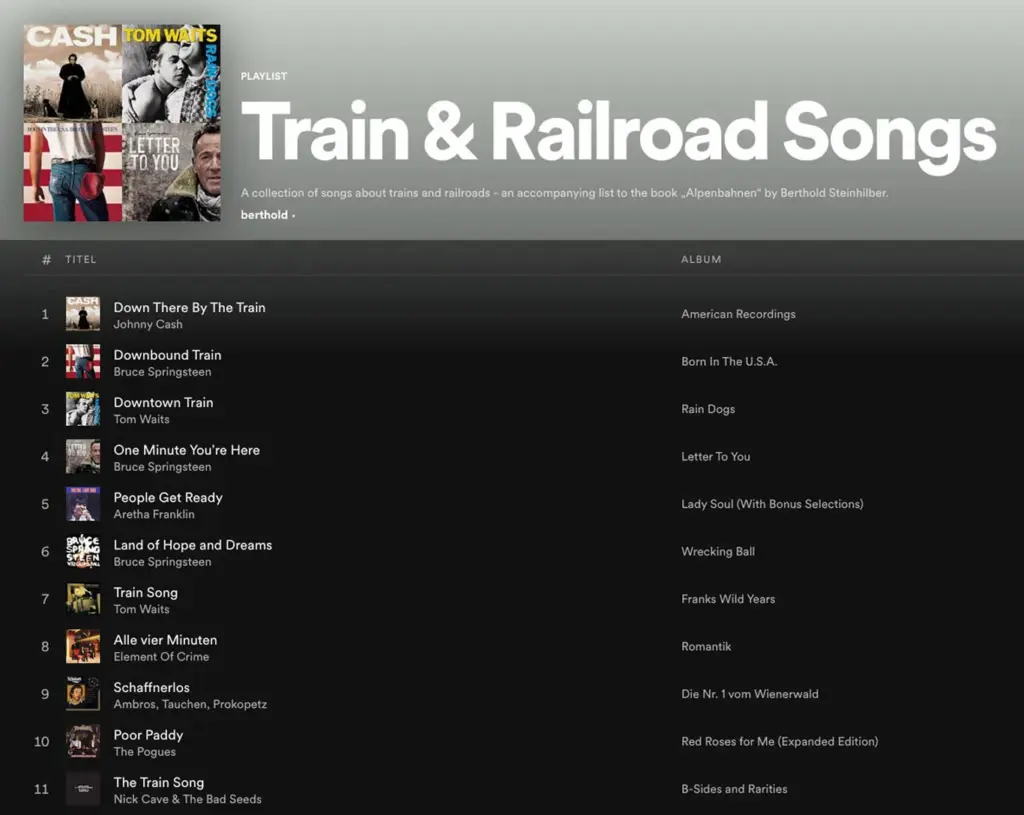
The result is a list of over 300 songs. It takes more than a day to listen to them all. For the sake of simplicity, I’ve created a dedicated Spotify playlist for them. Only Neil Young is missing from it, for obvious reasons. ‘Southern Pacific’ and ‘Train of Love’ still rank right at the top of my collection, though. For those who want to dig deeper: there’s a detailed list of train songs on Wikipedia.
Do you know of any other tracks, particularly from non-English-speaking countries? I’d love to hear from you via email.
All other series
- Info
- Landscapes
- The Lightworks
- Portraits
- Projects
From here, you can navigate to all the other series.