Ghost Towns of the American West
Traces of settlement in the mining and western towns
Photographs from the book “Ghost Towns of the American West,” with a foreword by Wim Wenders. The abandoned mining and western towns are among the most striking traces left by the settlement of the American West.
Ghost towns – in the broadest sense, the term applies to anything that even remotely resembles a settlement or a house and breathes history. Every pile of stones, every crooked shack, even still-inhabited places are quickly declared ghost towns. This is confusing at first. Over time, though, one comes to understand and even appreciate this unusual relationship with history. After all, none of these places is older than 150 years, and none was inhabited for longer than 100 years. The pressure to relocate, to abandon house and home and start over elsewhere, was far greater than in Europe. Traditions and ways of life accordingly had a much shorter lifespan.
The fate of these towns was closely tied to the economic success of the mines. Once the mineral deposits were exhausted, people left. A striking example is the fate of Rhyolite, near Death Valley in Nevada. The story of a classic boomtown. After two prospectors struck a major gold deposit in the desert, one of them gave away the location while drunk on whiskey, and within weeks a makeshift camp grew into the town of Rhyolite. Three years later, more than ten thousand people lived there. When the ore deposits ran out a few years after that, the exodus began.
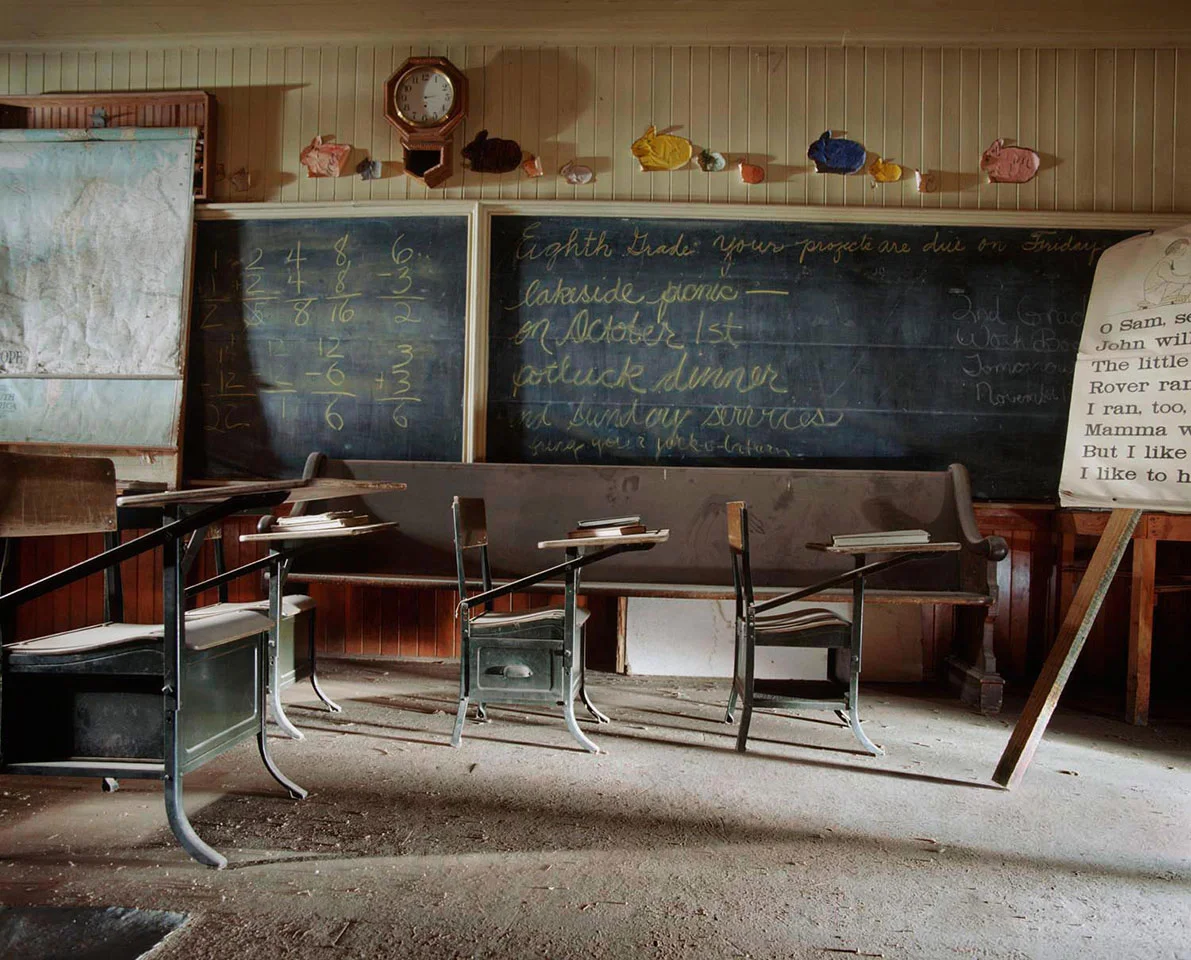
Time to leave, fortune lay elsewhere. People packed up all their belongings and took their houses with them, since wood was scarce and expensive. Today only the concrete skeletons of the bank and the schoolhouse still stand in the desert.
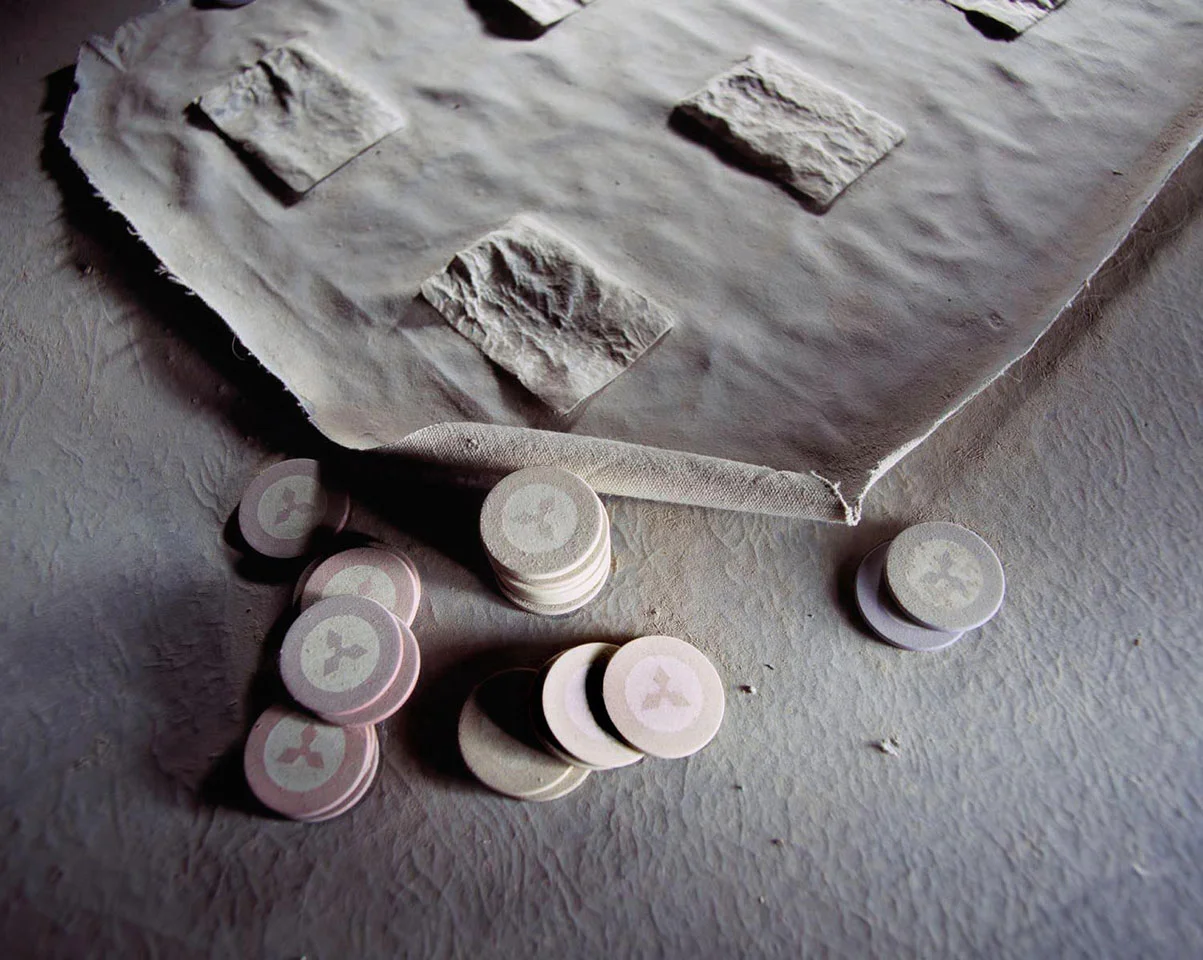
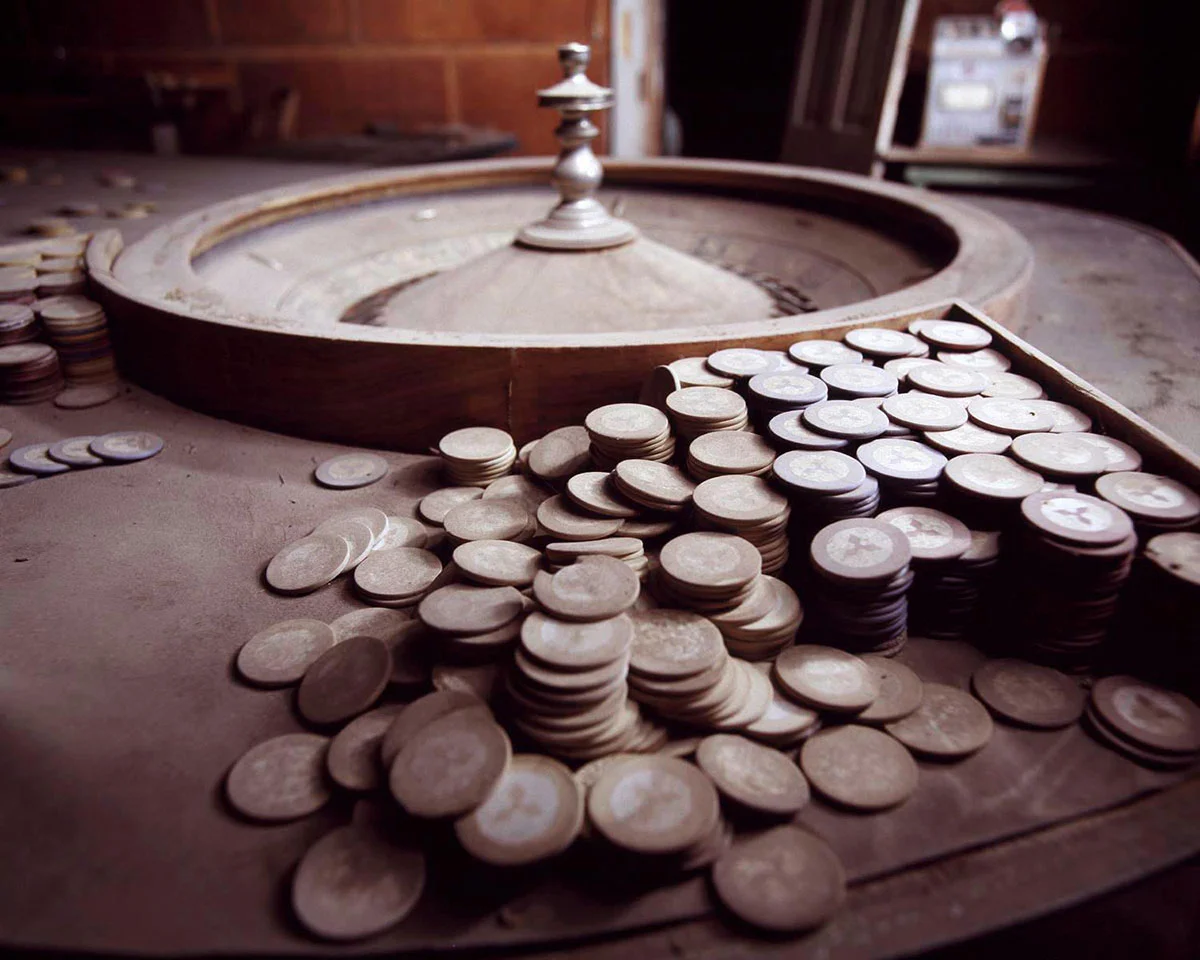
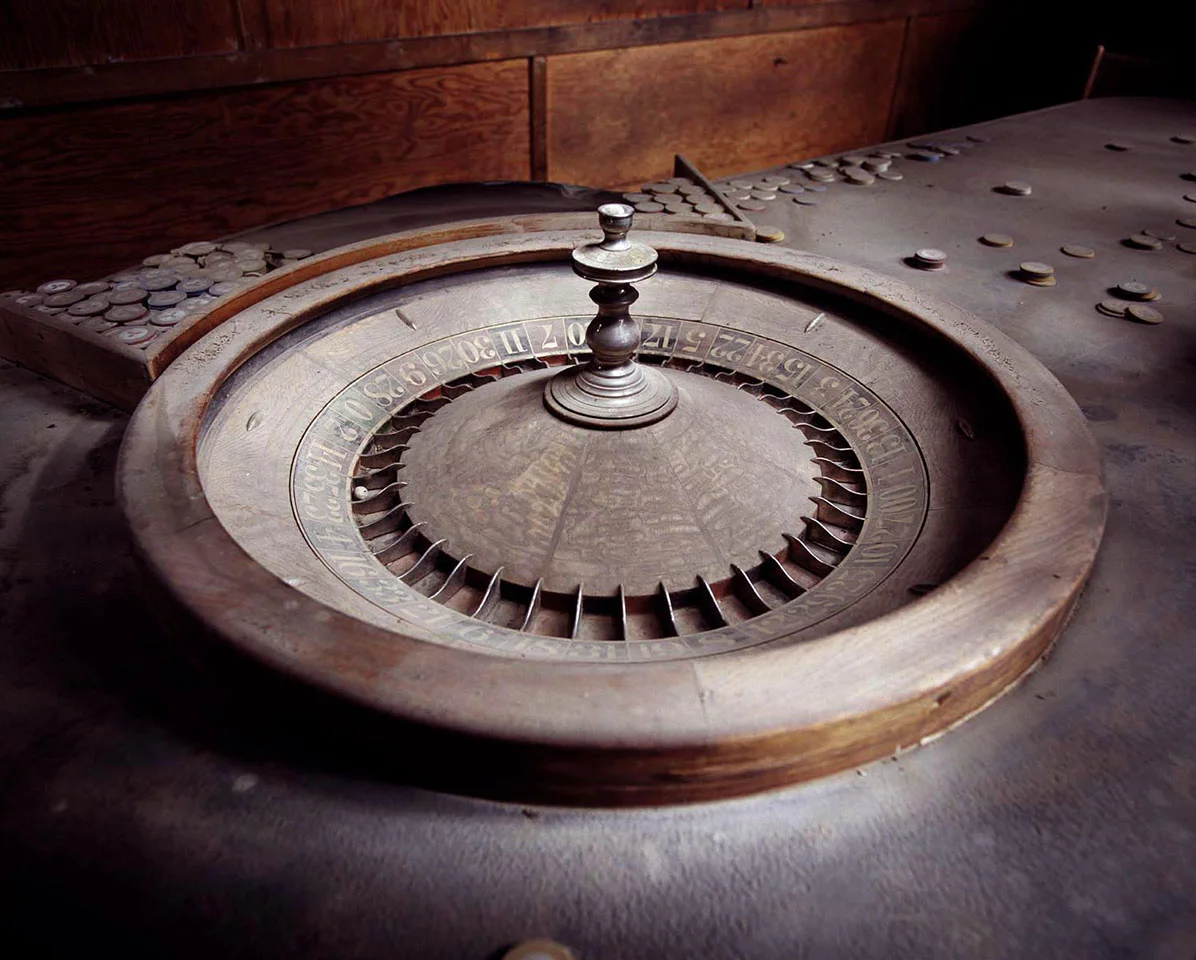
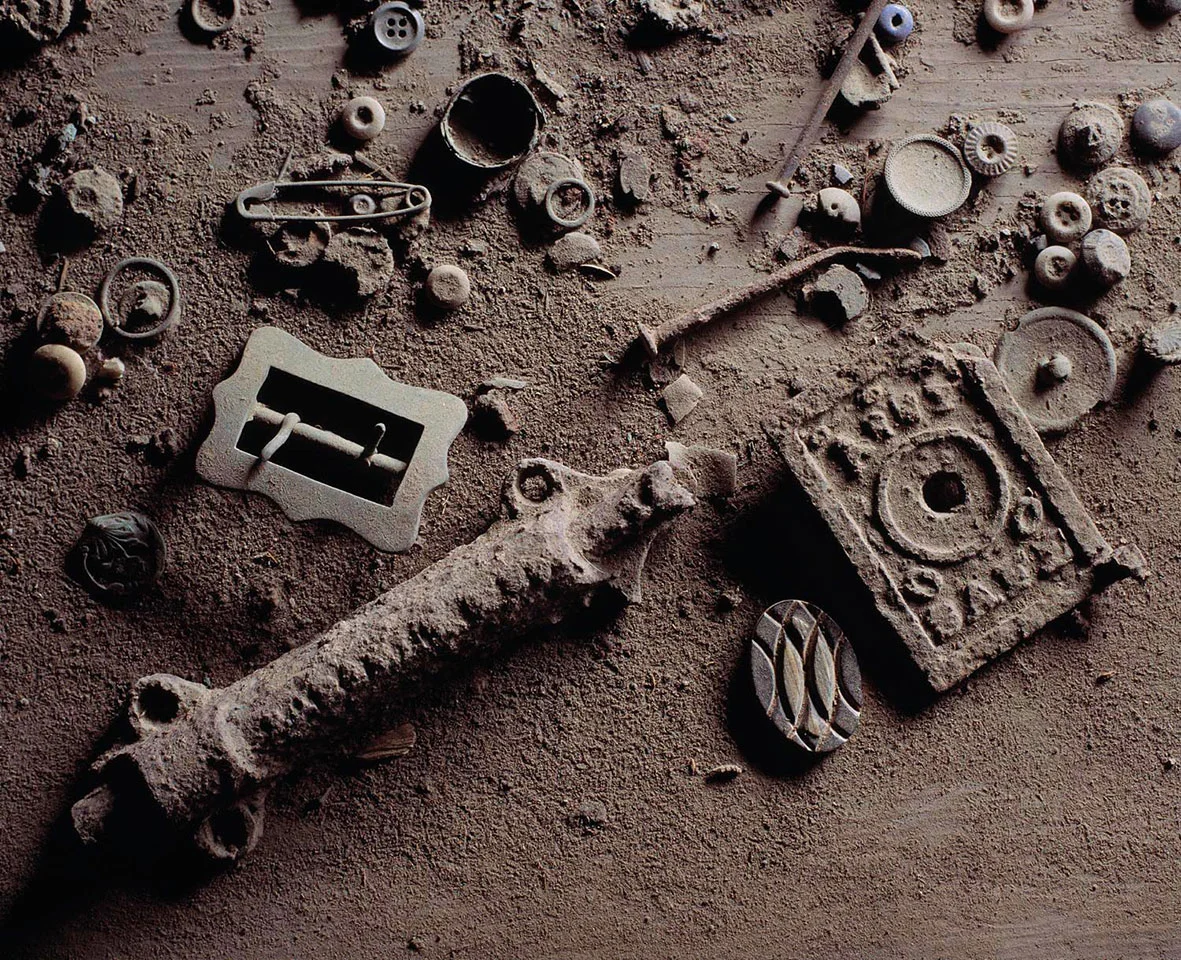
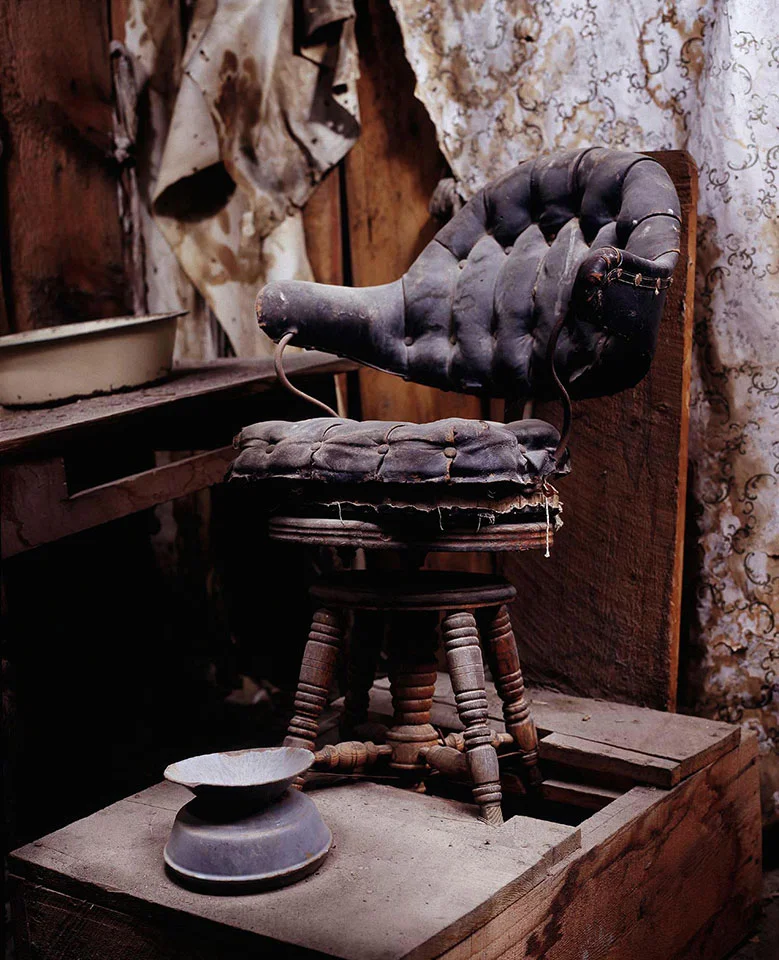
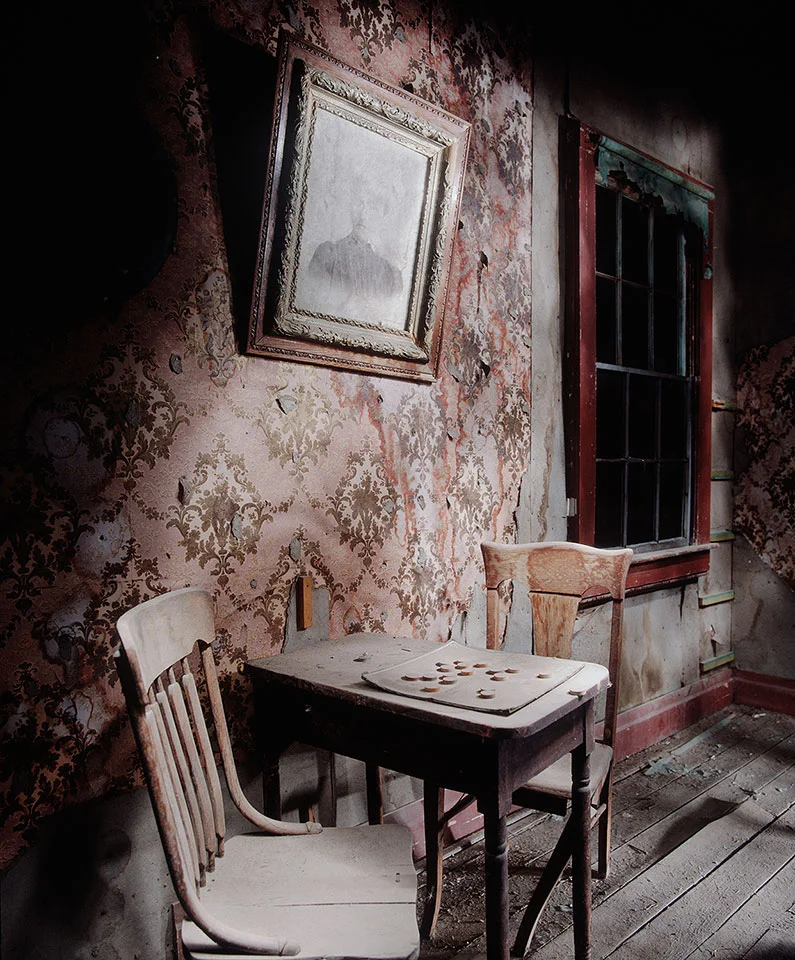
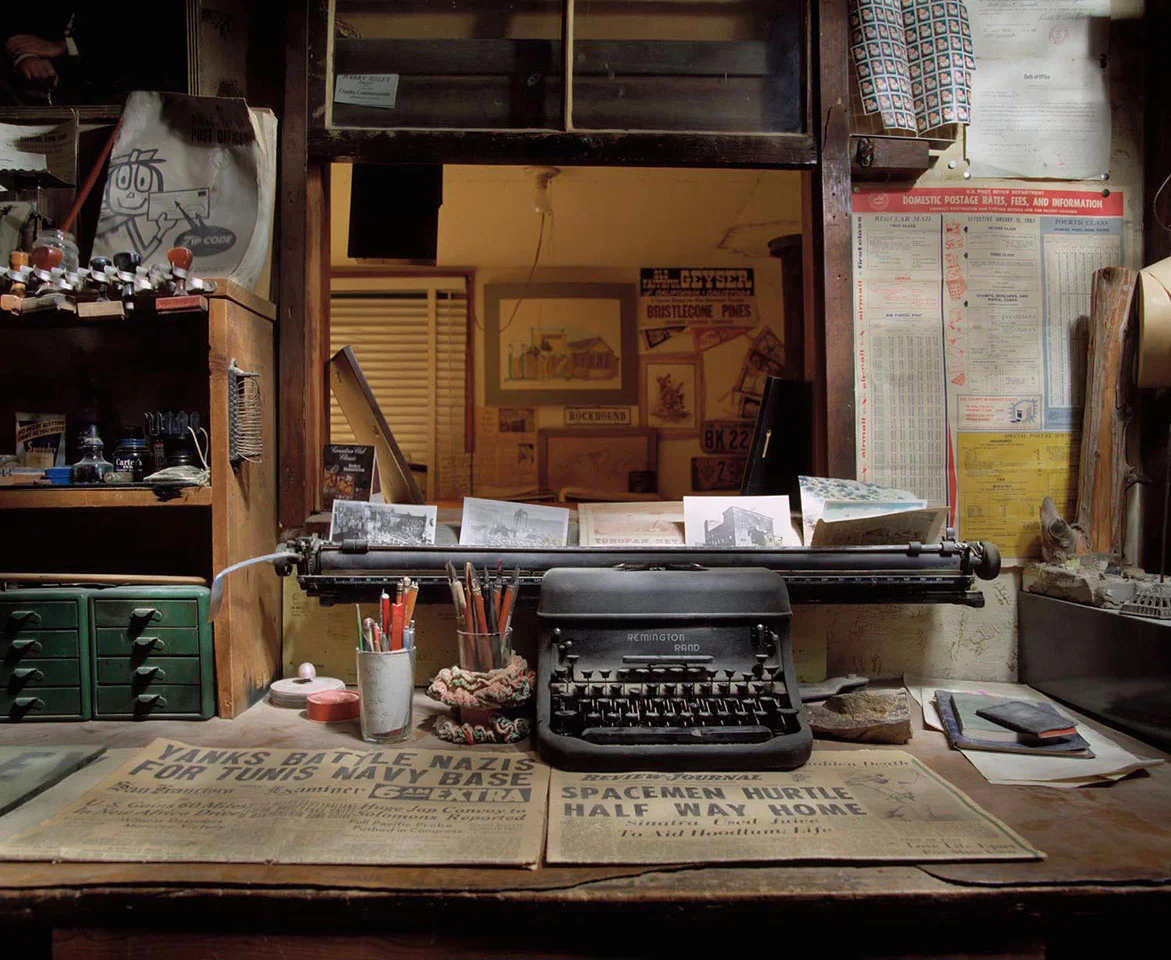
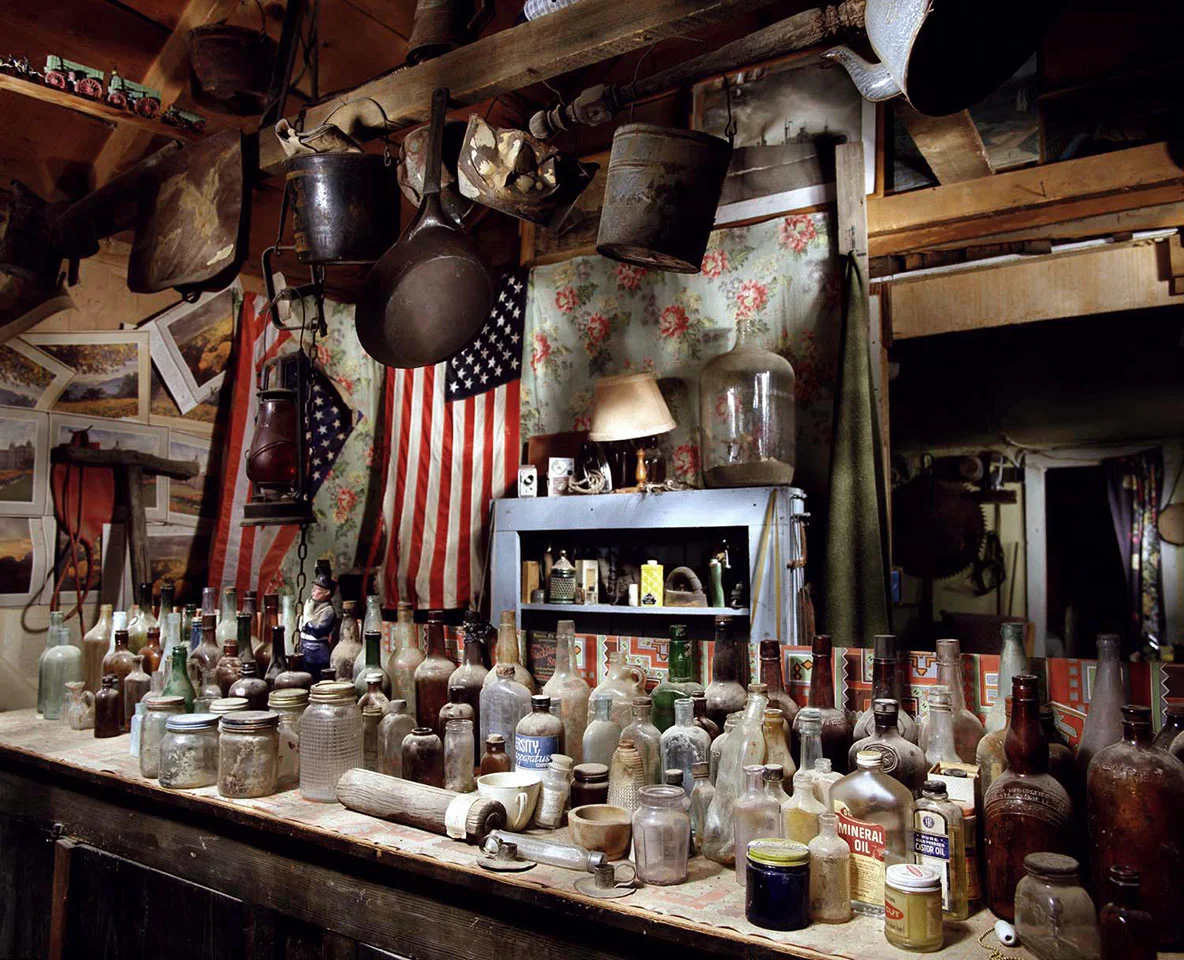
The fruitless search for minerals and riches has produced countless stories, and traces of them can be found everywhere. But one town surpasses all others in stories: Bodie. Many of its houses remain just as their residents left them. Dust covers the tables and playing cards in the saloon, glasses rest on books, as though the residents had only left yesterday.
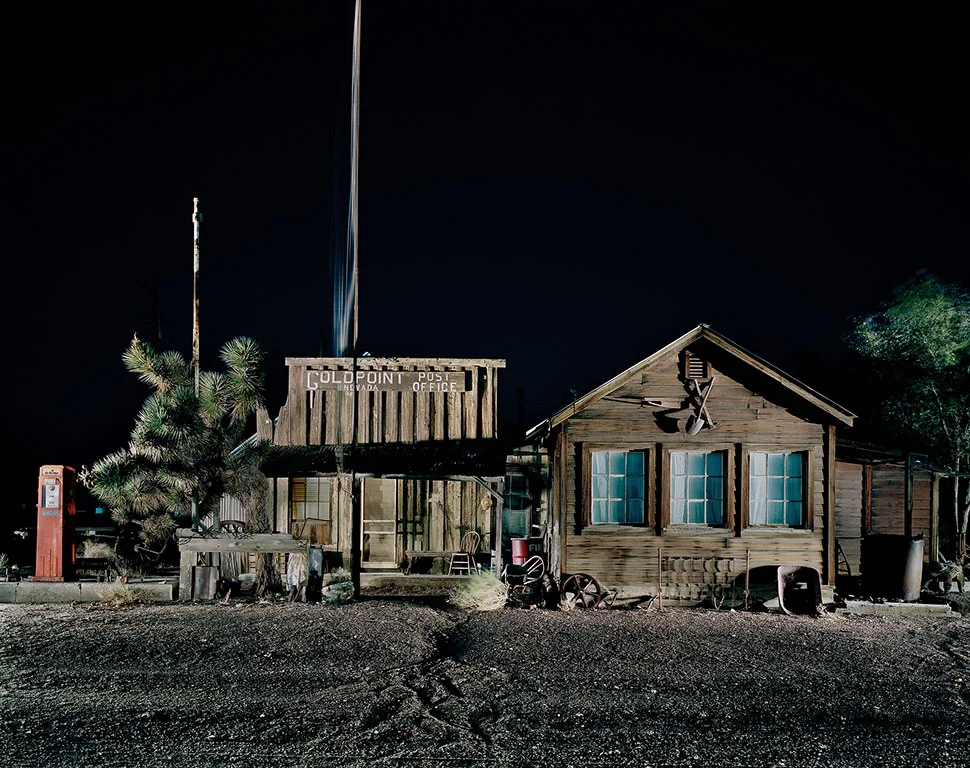
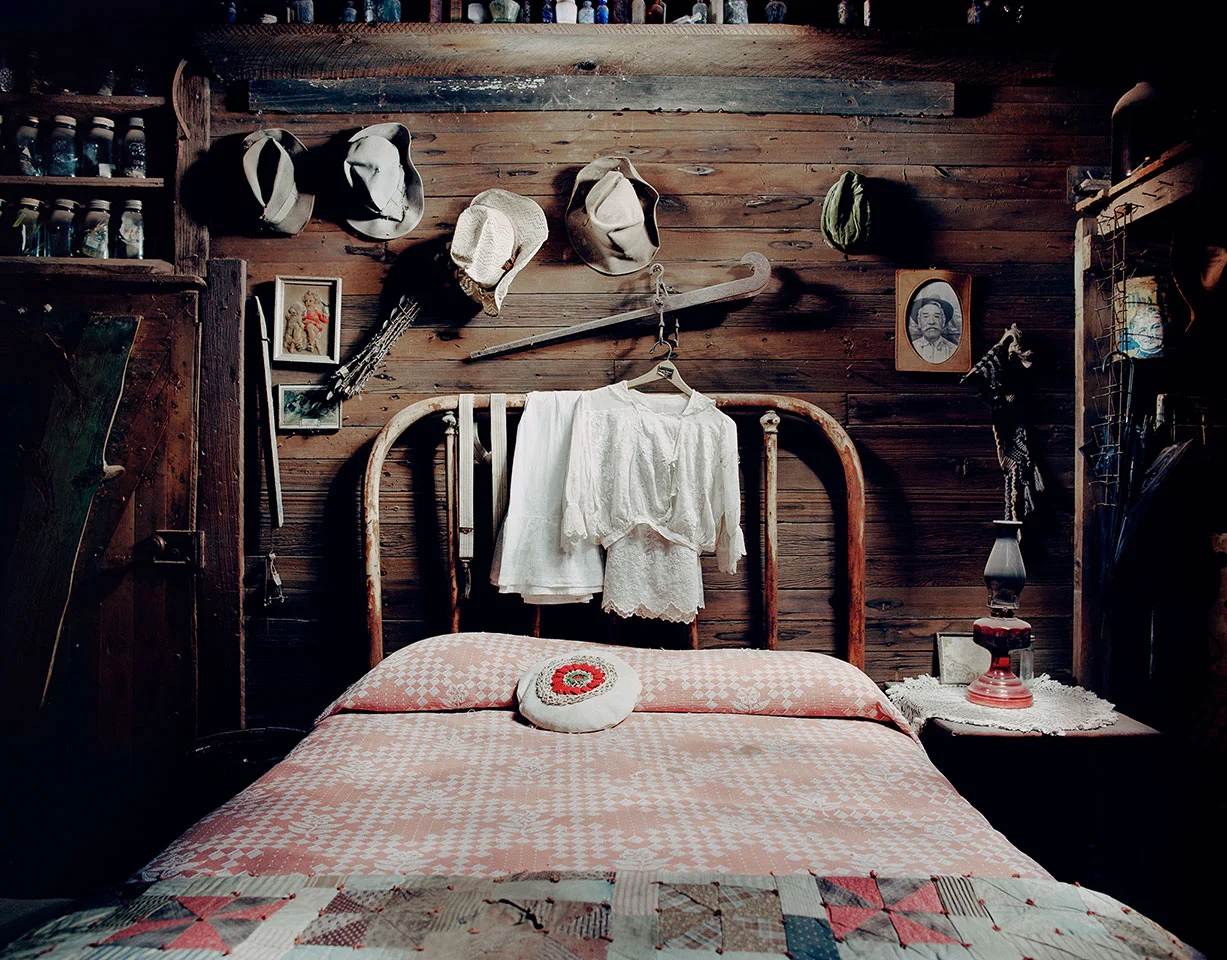
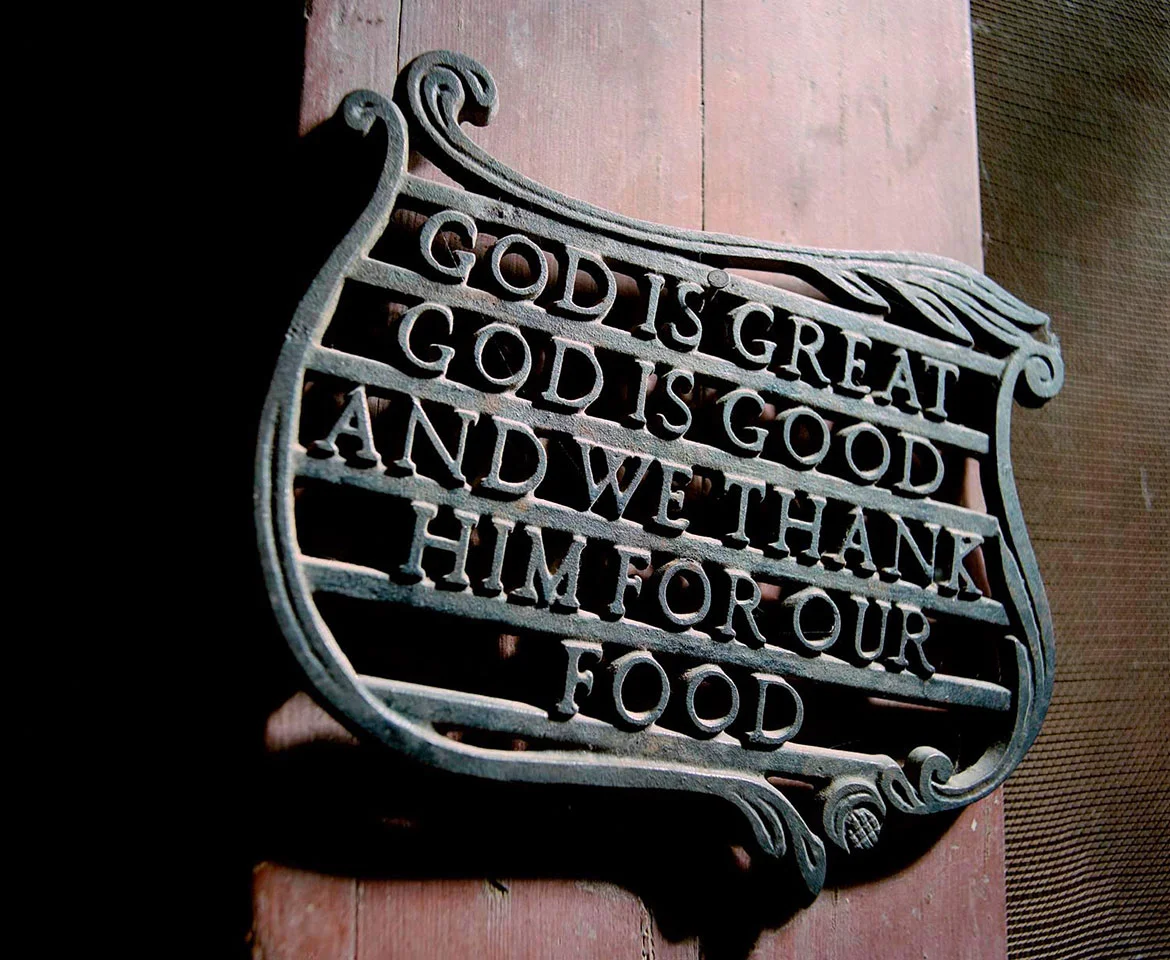
The reason some of these places have survived as ghost towns is often owed to their last inhabitants, who cared for their preservation. In Bodie, one of the remaining residents bought house after house and protected them from decay; in Gold Point, Ora Mae Wiley kept its stories alive.
The photographs of these 19 ghost towns were taken for Smithsonian Magazine and the book, across the western US states of California, Nevada, Utah, Colorado, Arizona, and New Mexico.
To close, a quote from Wim Wenders’ foreword to “Ghost Towns of the American West”: “Berthold Steinhilber has not photographed ghost towns. He has captured the spirit of these towns. Places and things are tenacious. Only we believe they cannot exist without us.”
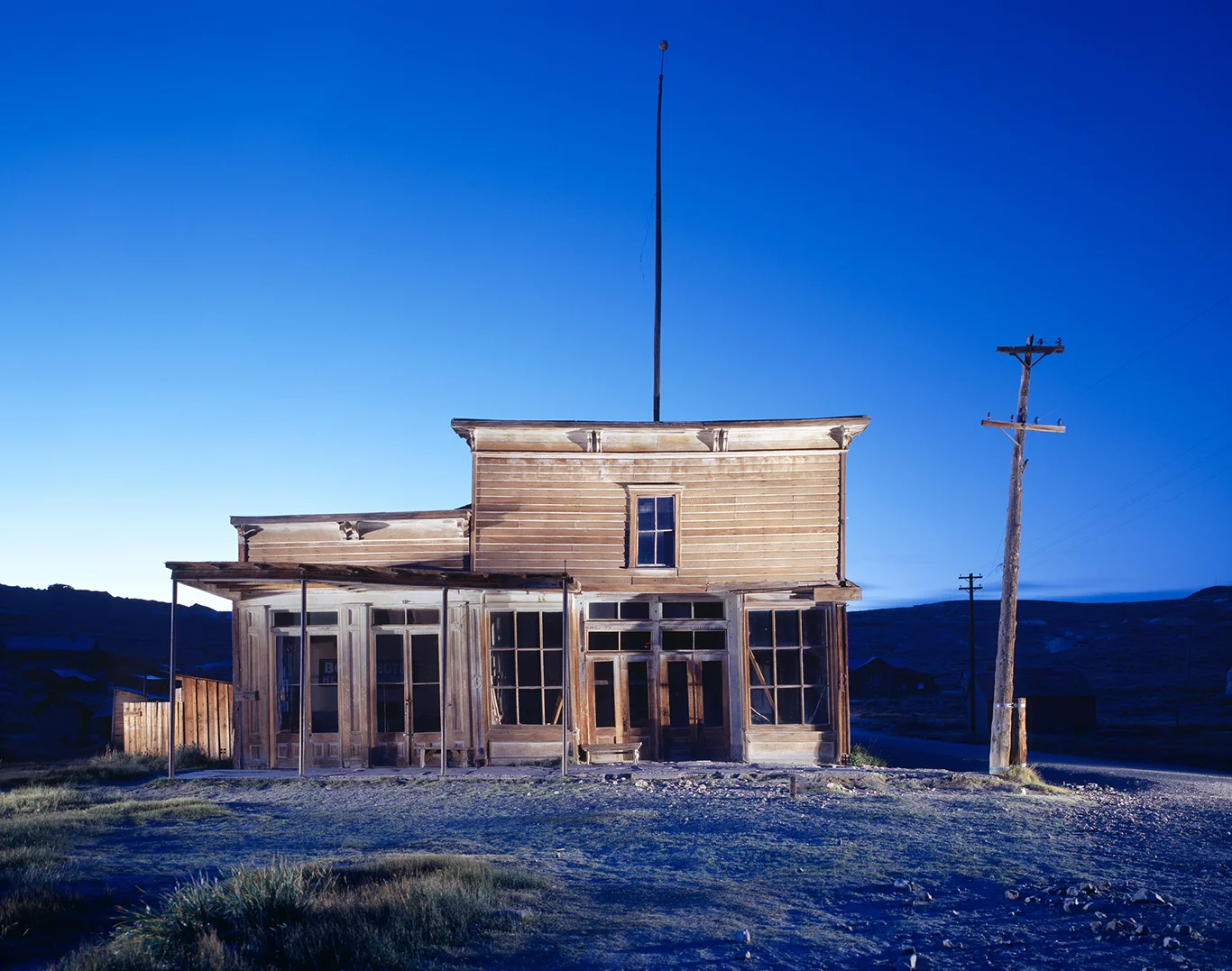
Wheaton & Hollis Hotel, Bodie, California
The hotel is located on the corner of Main Street and Green Street.
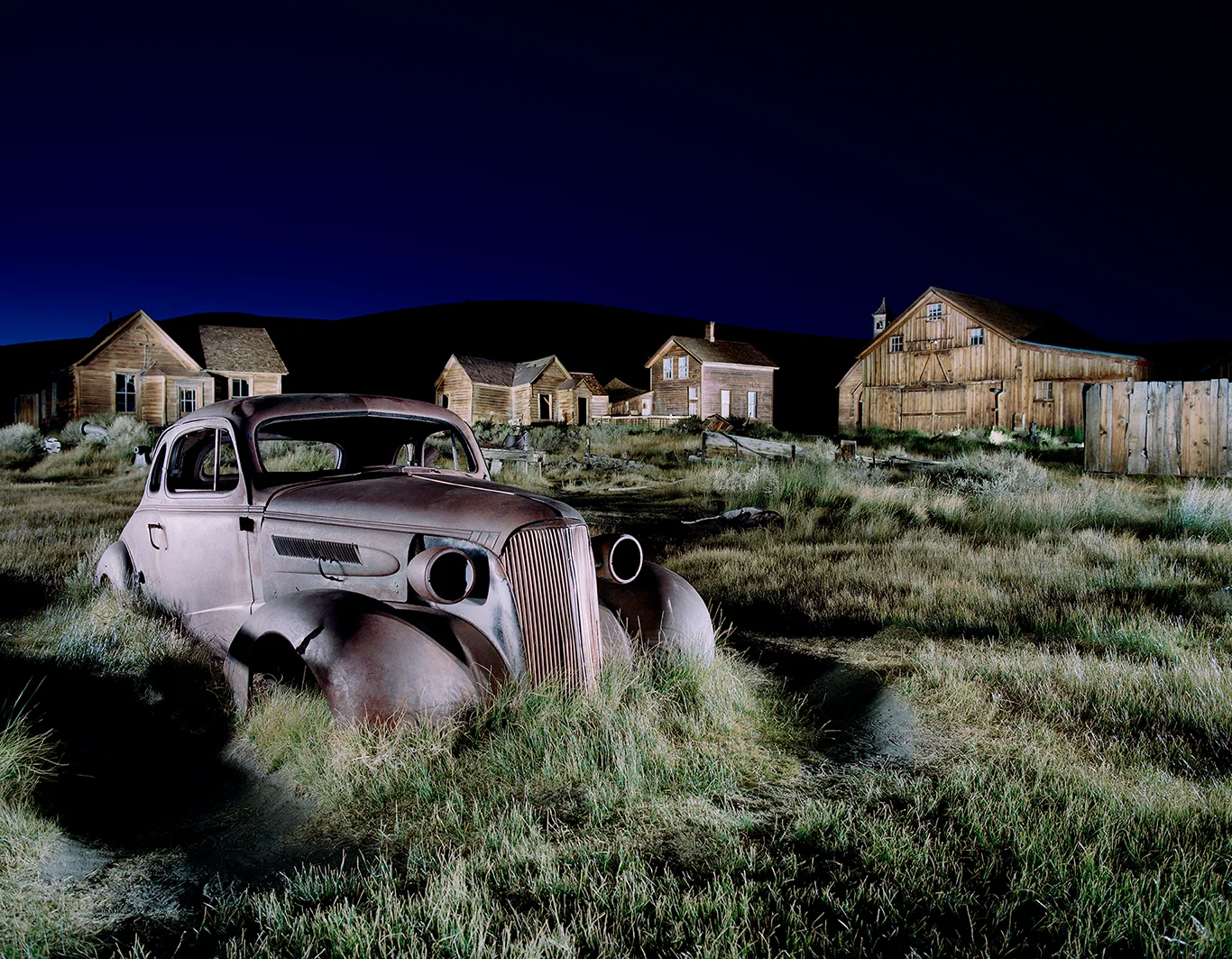
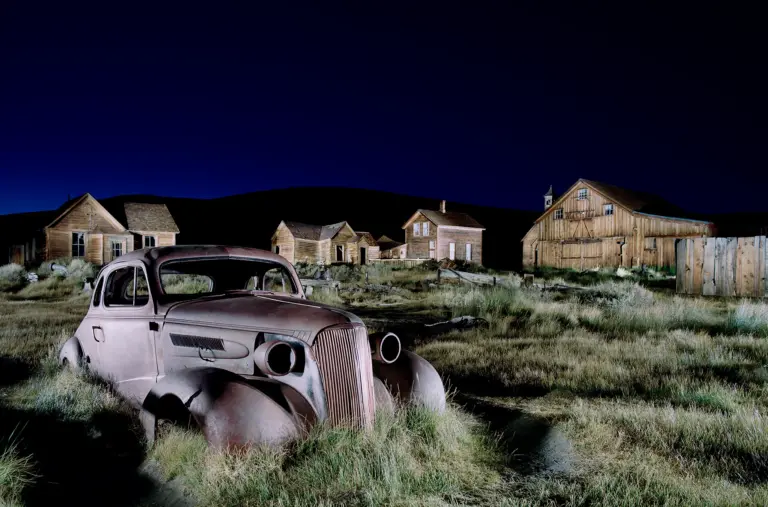
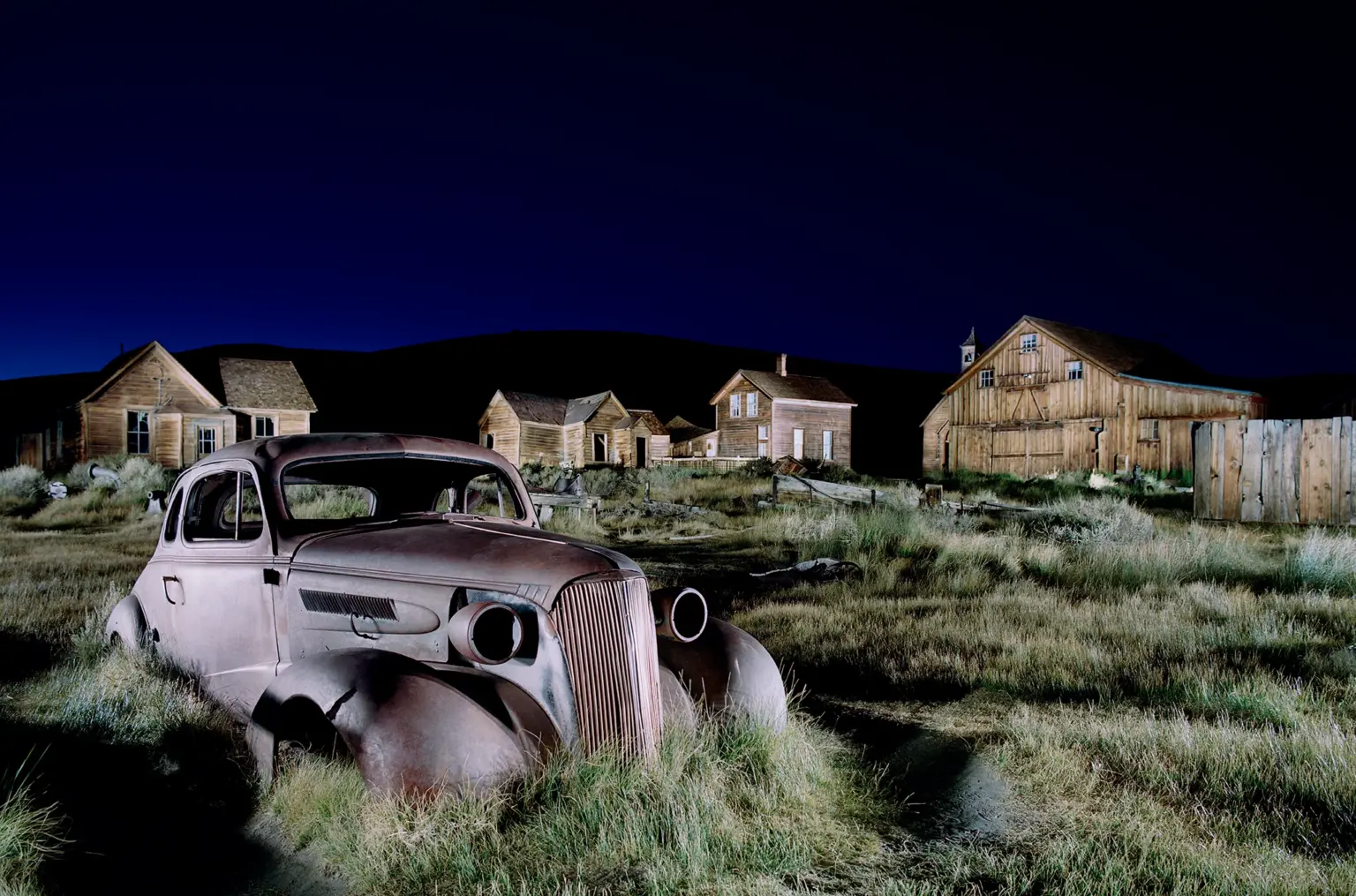
Chevrolet Coupé, Bodie, California
The fire of 1932 destroyed most of the houses in Bodie. Even the revival of the disused gold mine did not bring a new boom. Bodie became a ghost town.
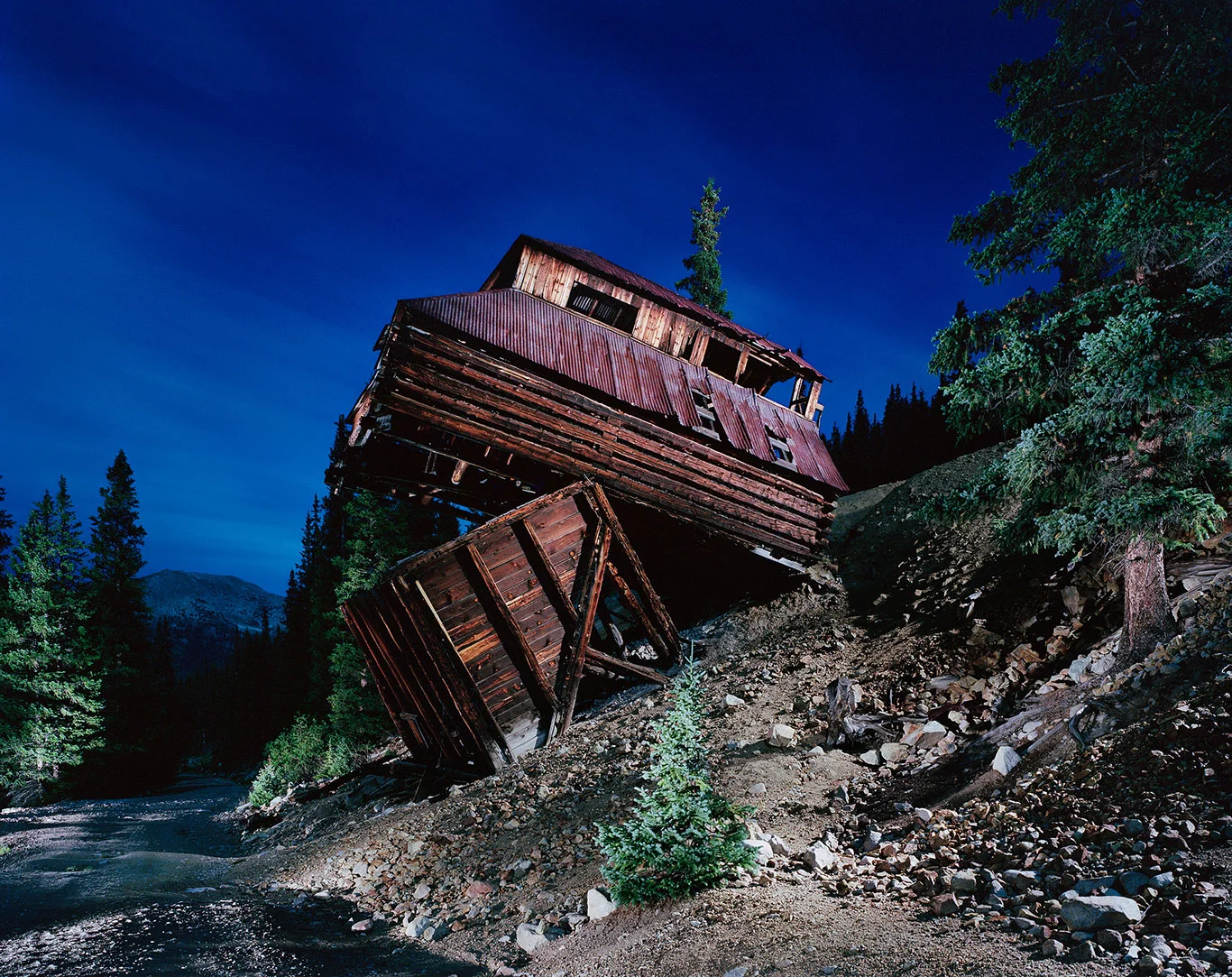
Alley Belle Mine, Colorado
At the beginning of the 20th century, the railway line of the Denver, South Park & Pacific Railway still ran over the Rocky Mountains. Ore from the Alley Belle Mine was loaded into train cars here and brought to the valley for further processing. By 1880, the mountains around Chalk Creek Canyon were dotted with mines and all the surrounding forests had been cleared. After the tracks were removed in 1926, the mine and the nearby mining town of Hancock were abandoned. Due to the many snow avalanches and landslides, the buildings fell into disrepair and today only sparse remains can be found in the regrown forests.
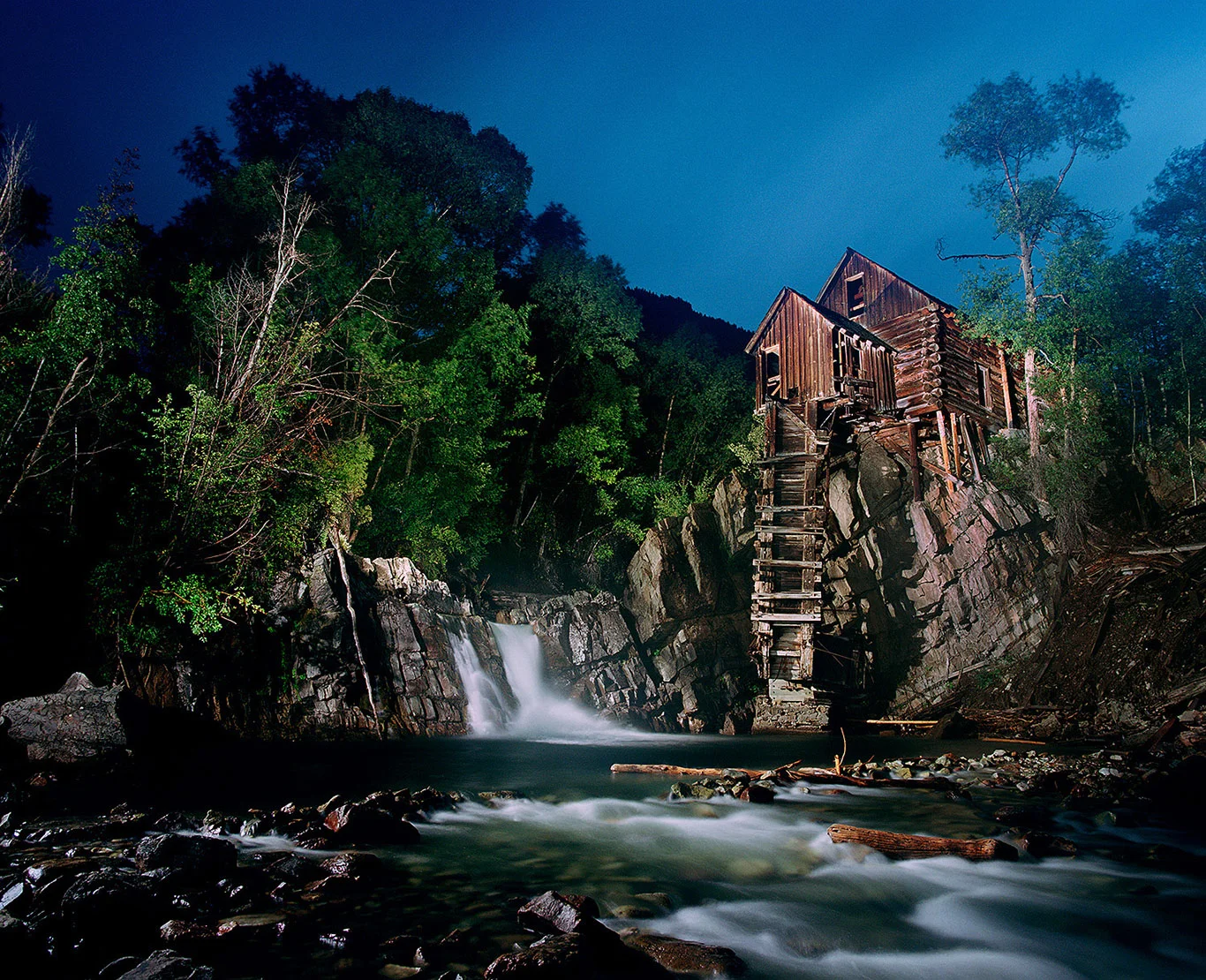
Sheep Mountain Tunnel Mill, Crystal, Colorado
In the 1890s, silver was discovered in the Rocky Mountains along the Crystal River. Mining in the rough terrain was extremely difficult. Mining equipment had to be brought in. In 1892, a small hydroelectric plant was built to power the air compressors for the drills in the mines.
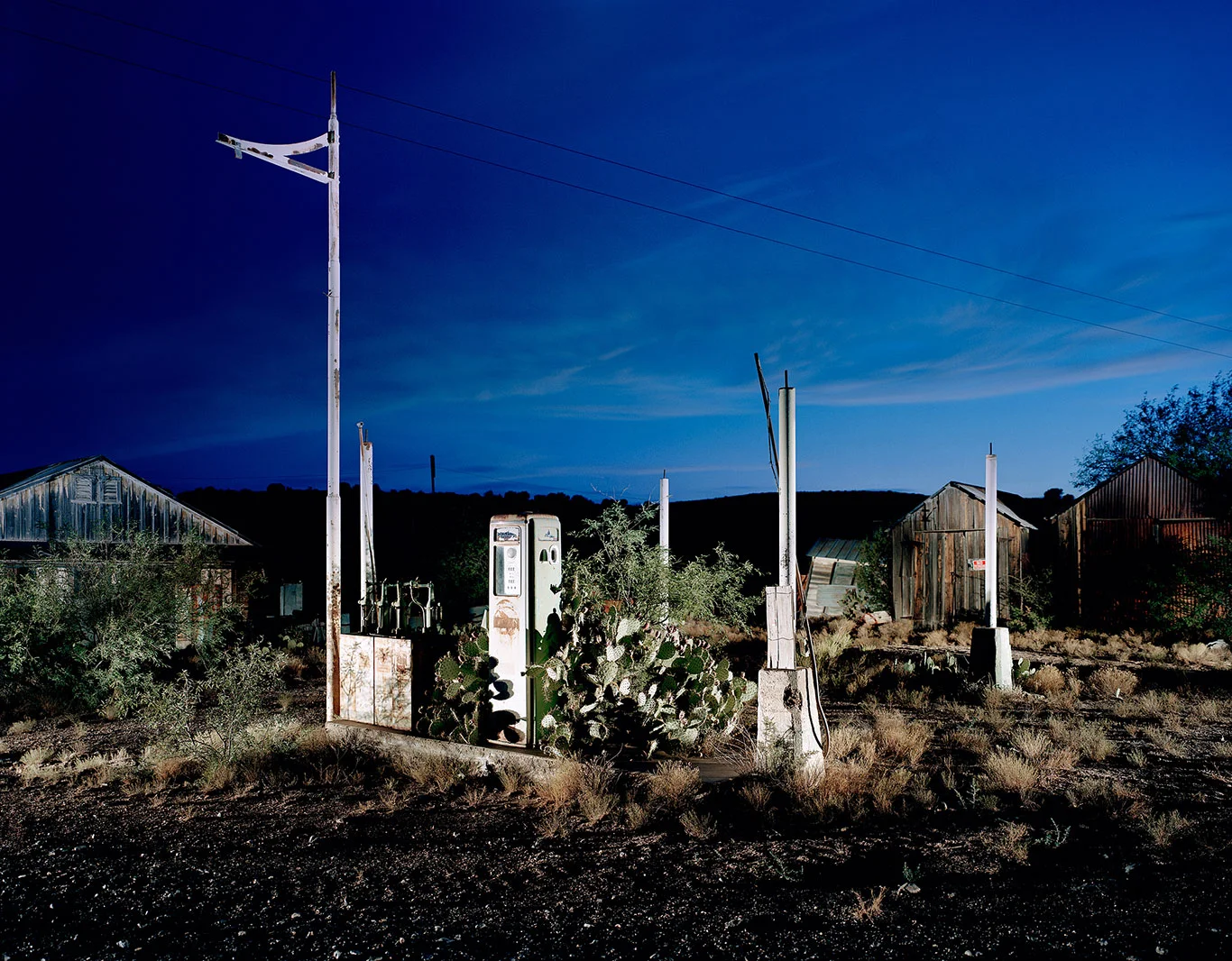
Gas station, Cordes, Arizona
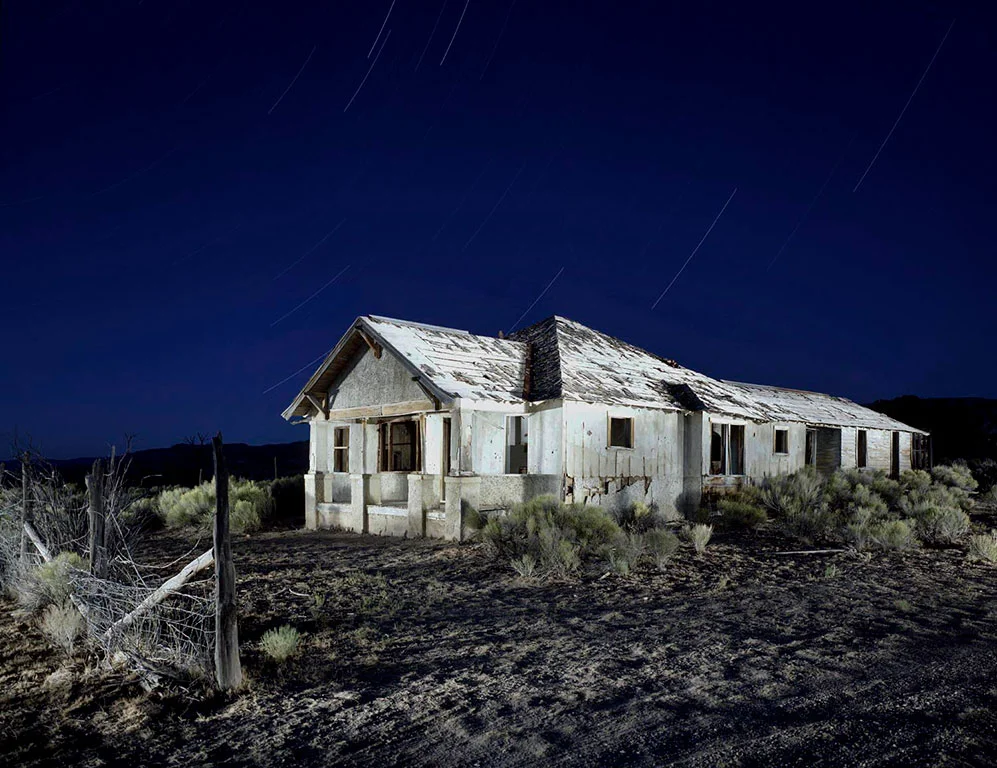
Cordes was founded in 1883 as a post station for the California and Arizona Stage Company on the old route between Phoenix and Prescott. A fire, its reconstruction using concrete blocks, and its relocation to Cordes Junction in the 1950s – the story of a place in flux. Today, the petrol station and shop stand abandoned on a gravel track in the barren highlands of Arizona.
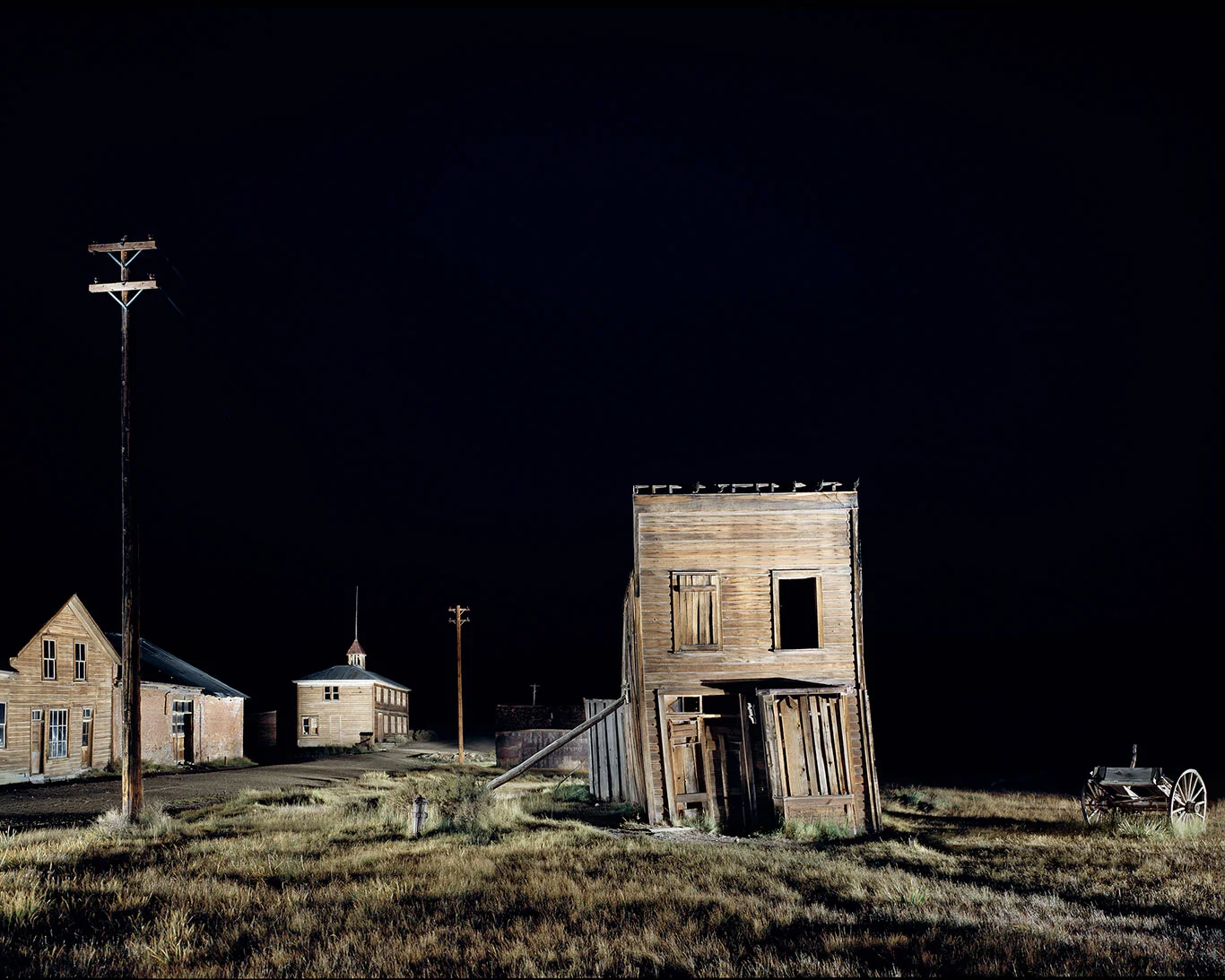
Swazey Hotel, Bodie, California
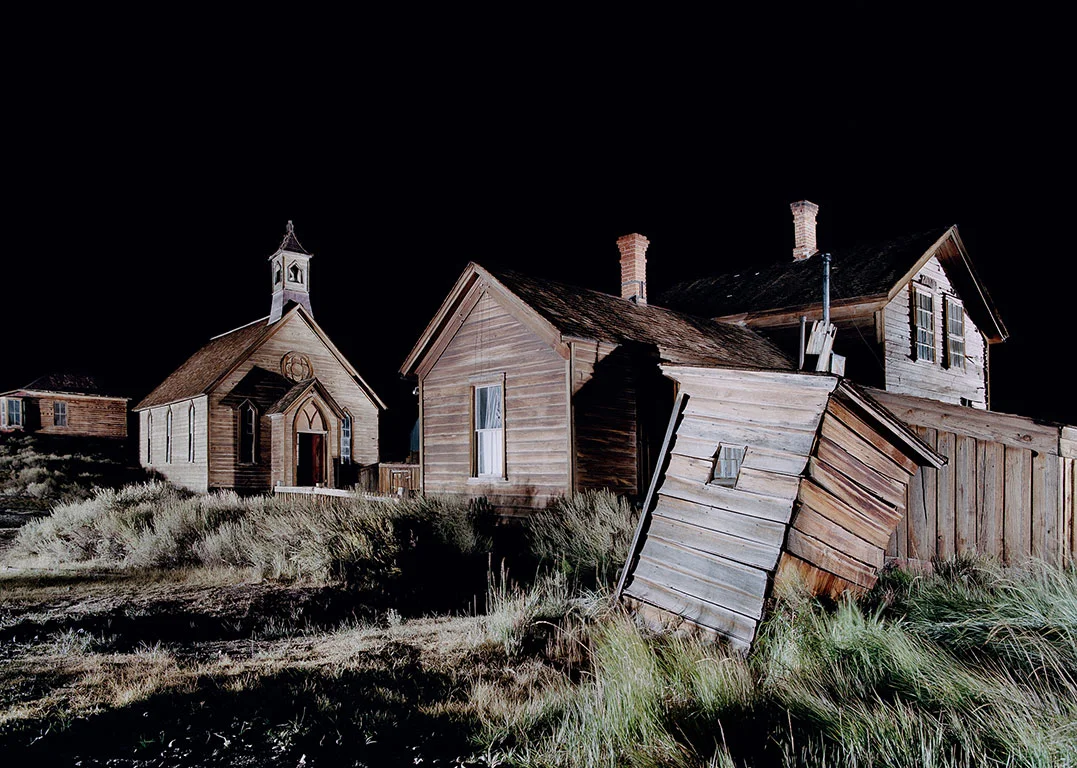
The Swazey Hotel on the corner of Main and Union Street is visibly leaning to one side – only the support beams put in place by the State Park Rangers are preventing it from collapsing, a prime example of ‘arrested decay’. Horace Swazey once ran both a shop and an inn here, selling everything from fine fabrics to coffins. Photographed in the first light of dawn, against an almost black sky, the image captures the quiet dignity of decay.

Piano, Sam Leon Bar, Bodie
Piano in the Sam Leon Bar. Entertainment in the city was not limited to gambling houses and bars, but the number of saloons was considered an indicator of the wealth of a city. There are said to have been over 60 in Bodie. Since 1962, the houses and interiors in Bodie have been subject to special protection. There is a state of "arrested decay" - controlled decay that is supposed to happen without human intervention. Only time is allowed to change the objects, nothing is restored.


„Berthold Steinhilber hasn’t photographed ghost towns. Instead, he has revealed the spirits of these places. Places and objects are tenacious. We’re the ones who are convinced they could not exist without us. But they’re not so quick to surrender their spirit.“
Wim Wenders in the foreword to my book


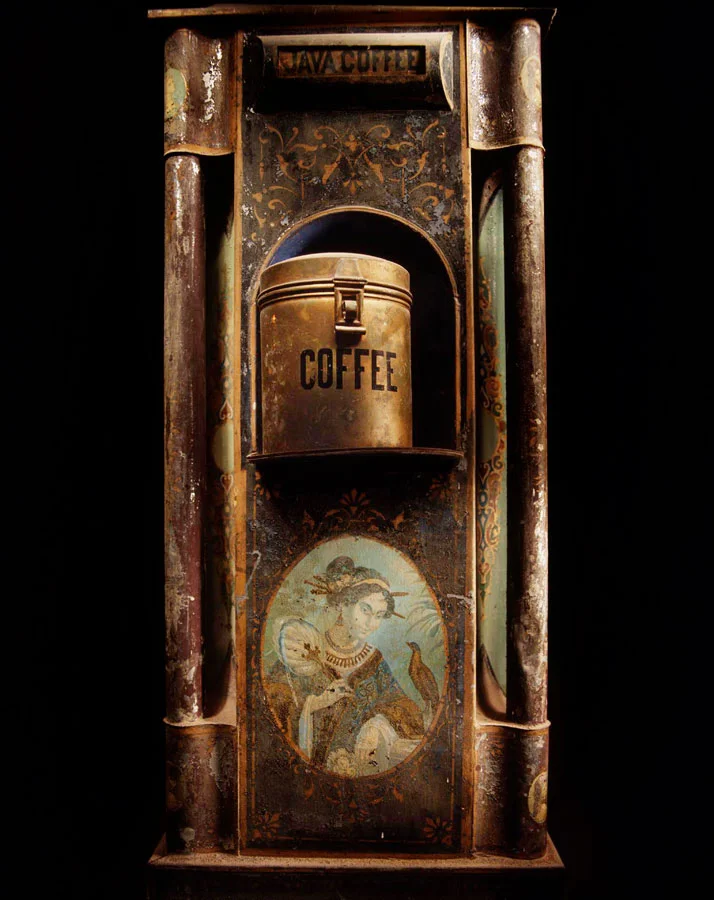
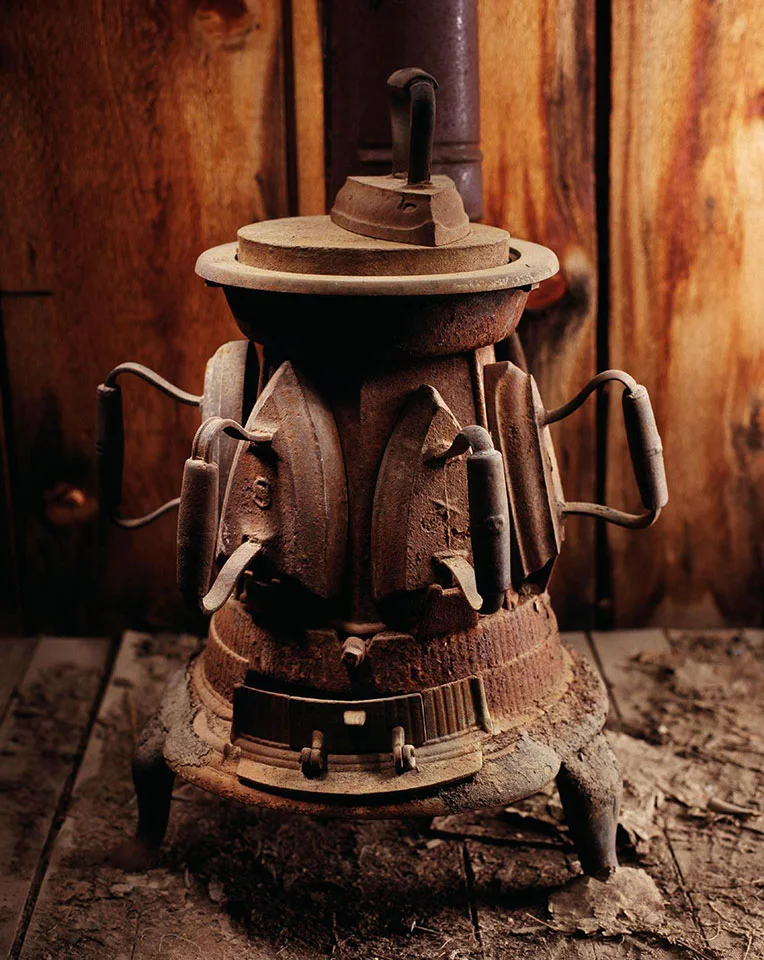
„In this suspended time, this fairy-tale moment between yesterday and tomorrow, you see these ghost towns in a new light, no longer in connection with the people who once lived and worked here, were born and died here, but solely in their own desolation.“
Wim Wenders im Vorwort zum Buch
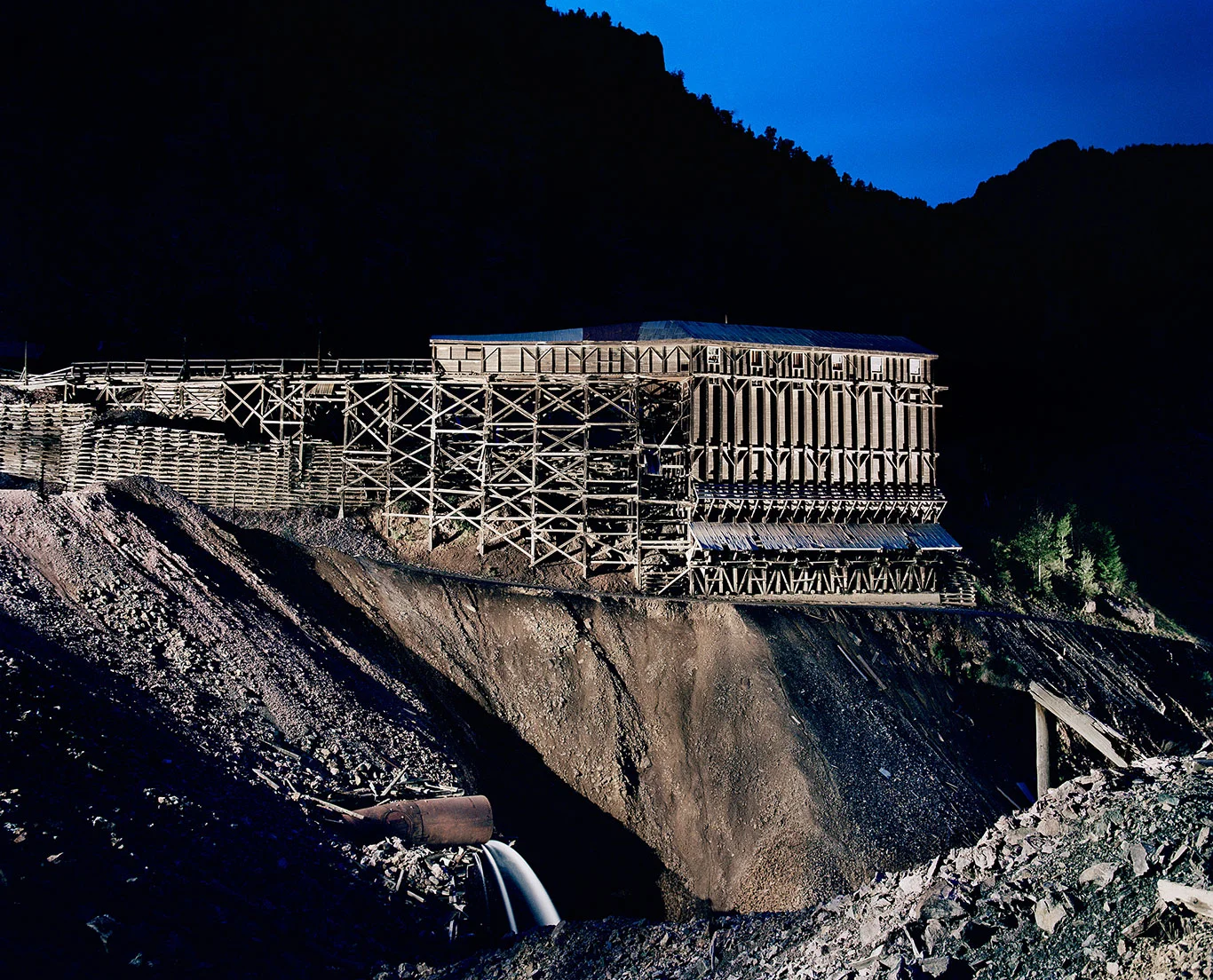
Commodore Mine, Creede, Colorado
In the early years, ore wagons pulled by mules stopped in front of the loading chutes of the Commodore Mine. They brought the ore down the steep roads to the valley for further processing. The mine was in operation from 1891 to 1976 and was one of the largest silver mines in the world.
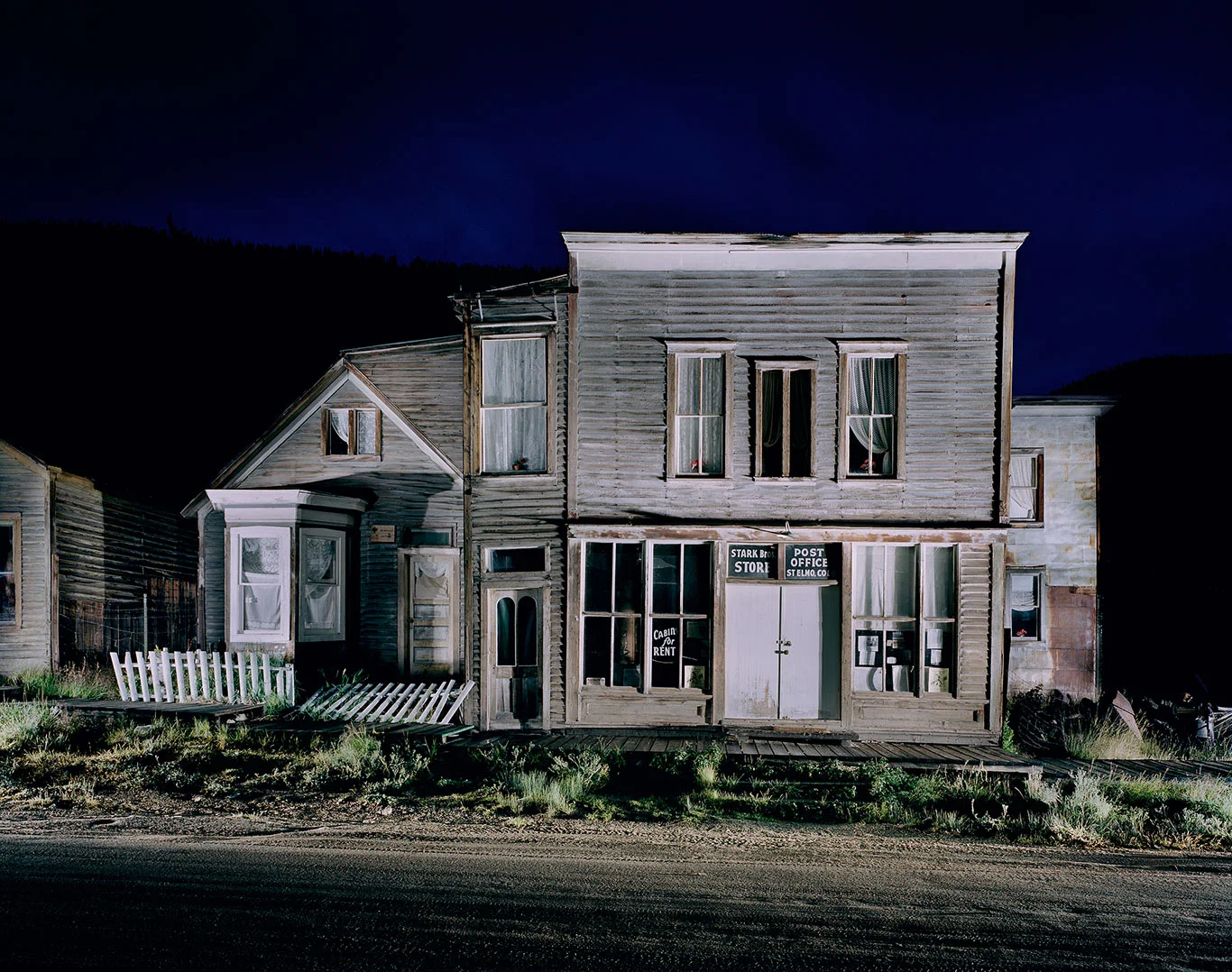
St. Elmo, Colorado
The founding Home Comfort Hotel was built in 1885 and was the centre of social life in St. Elmo. In 1909, the Stark Brothers Mercantile, a general shop with a post office and telegraph office and a large warehouse for the needs of gold miners, was also opened there. When it closed in 1958, St. Elmo gradually became a ghost town. I was told that it is now partly inhabited again, as many tourists visit St. Elmo because the surrounding old mine roads can now be used as off-road trails.
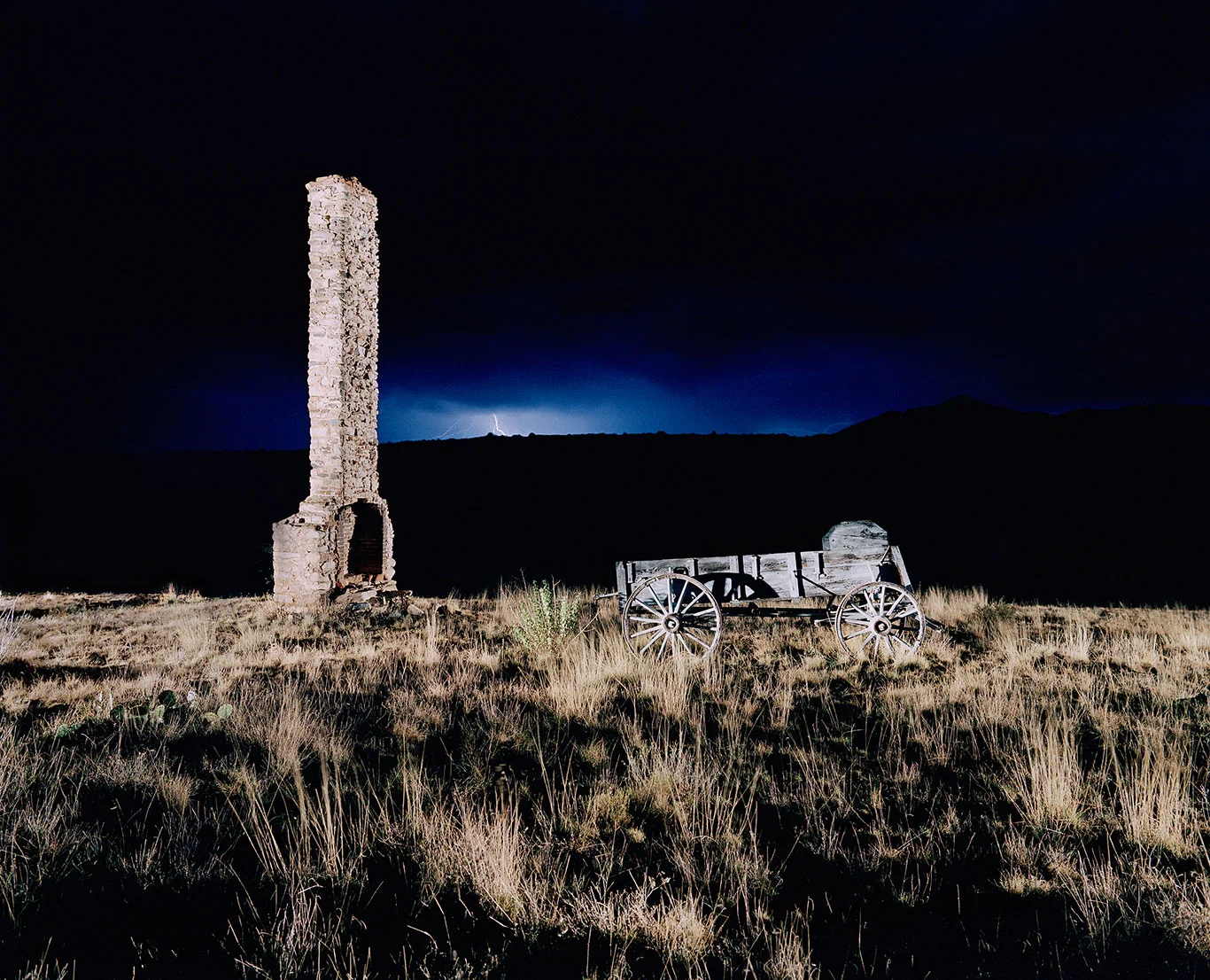
Massicks, Arizona
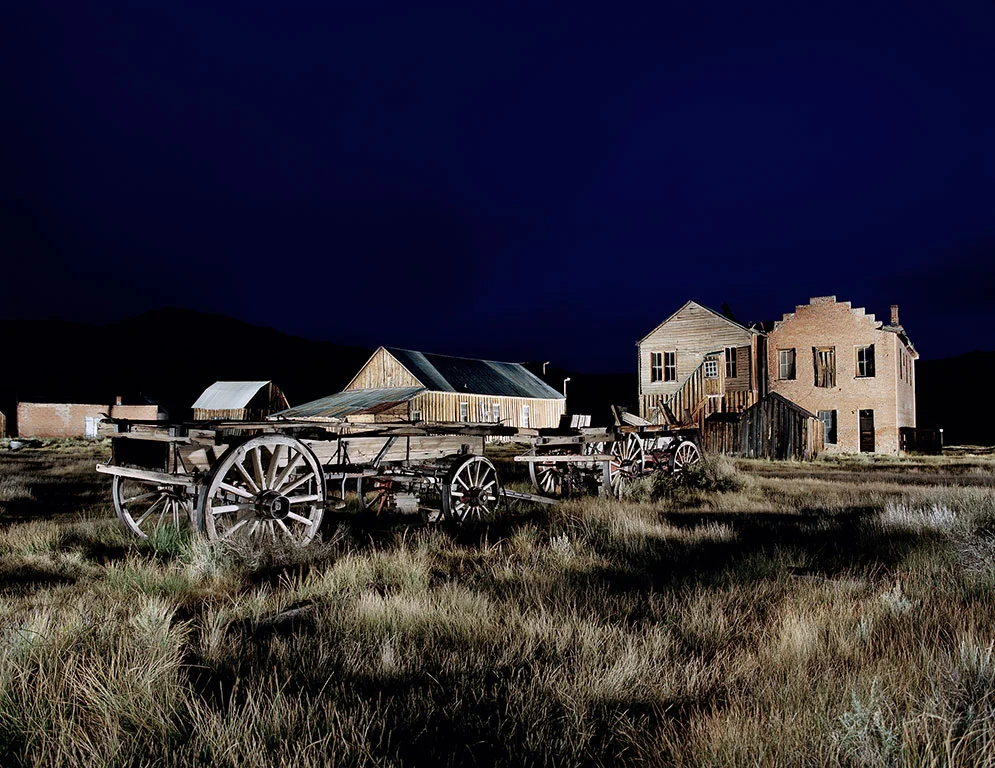
A storm passes over Prescott Valley, where the fireplace and an old covered wagon still remind us of Massick's place. At the end of the 19th century, gold miners searched the riverbank for the easily minable placer or wash gold, which could be extracted without costly equipment. The gold present in the sand and gravel deposits was soon washed out, and more extensive investment was required when the watercourse was to be uncovered. In Massicks, several hills along the river were excavated with high-pressure water jets - but the returns were too small to retain workers in the long term. In the 1930s, the work was stopped.
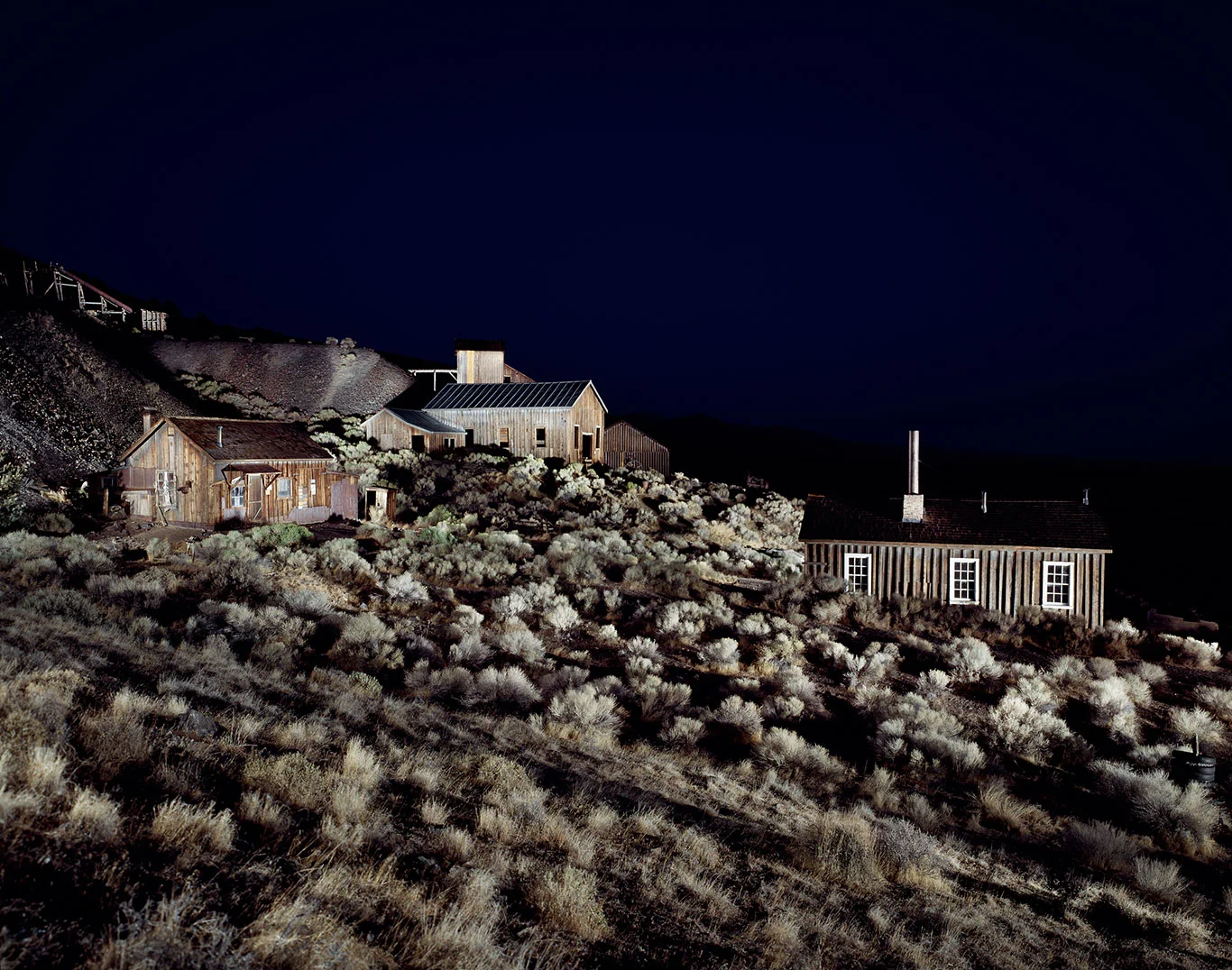
Berlin, Nevada
Berlin was founded in 1897 and never had more than 300 inhabitants - mainly men. In 1850, a census in California showed that just under 8% of the population was female. In mining camps like Berlin, the percentage was much lower still. The presence of women often determined the difference between a short-lived mining camp and a permanent city. By 1947, Berlin had become a ghost town.
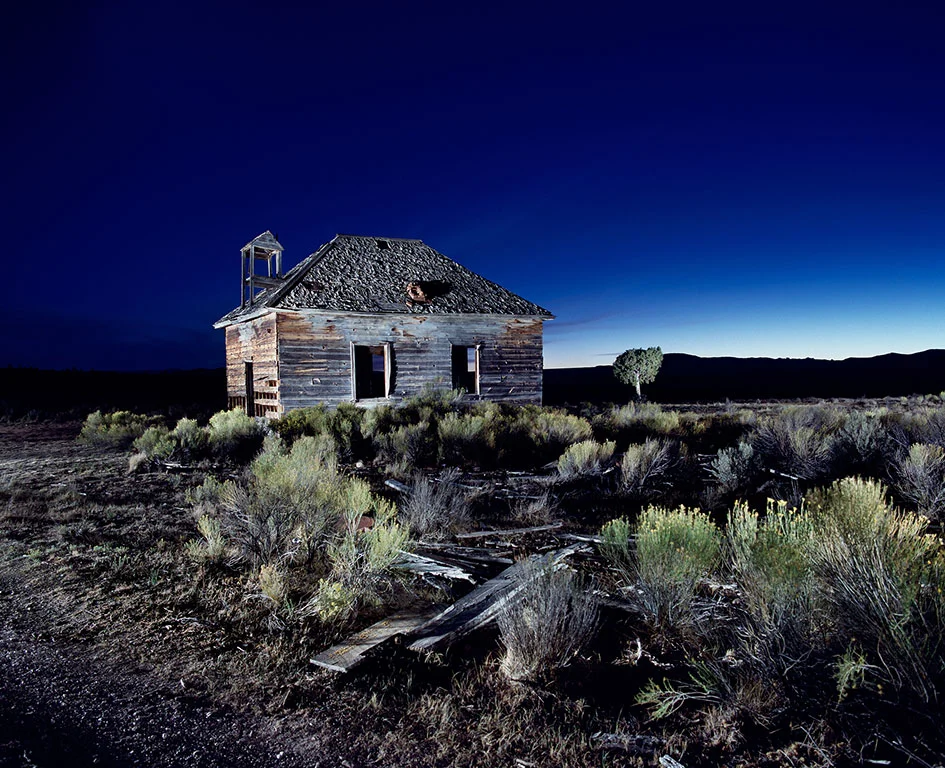
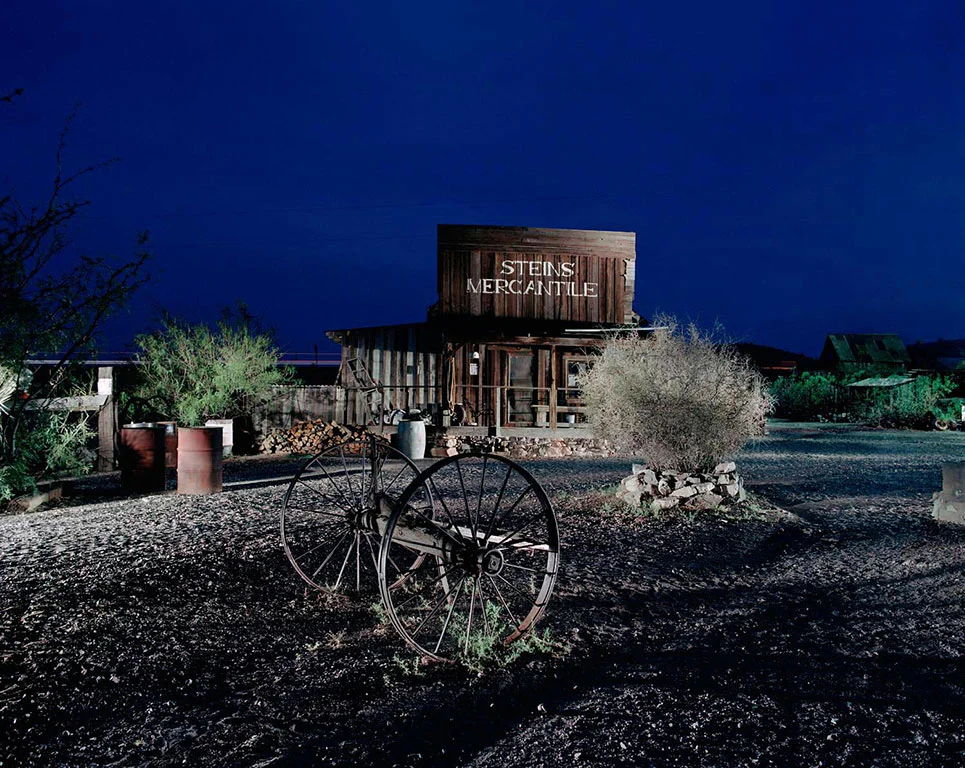
„Perhaps we have simply forgotten that patience can also be seen as a modern method. And that photography can still do everything it managed to do back then, that it can still capture places in a way they’ve never been captured before…“
Wim Wenders im Vorwort zum Buch
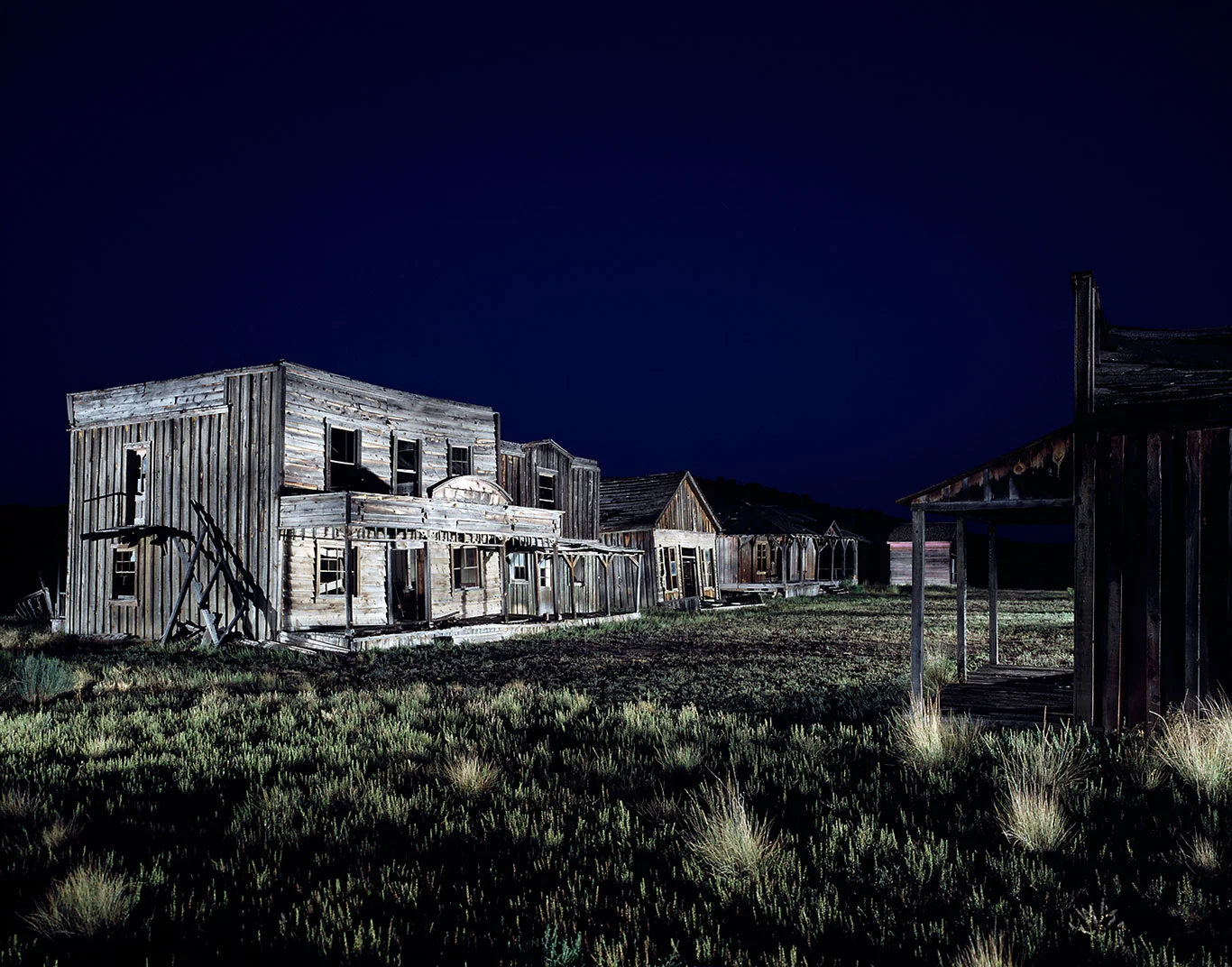
Johnson, Utah
In the early 1950s, the shacks in the abandoned town of Johnson were transformed into a film set. Many early American Westerns and the television series "Gun Smoke" were filmed in Johnson Canyon. The centrepiece of the series was Miss Kitty’s Longbranch Saloon (left).
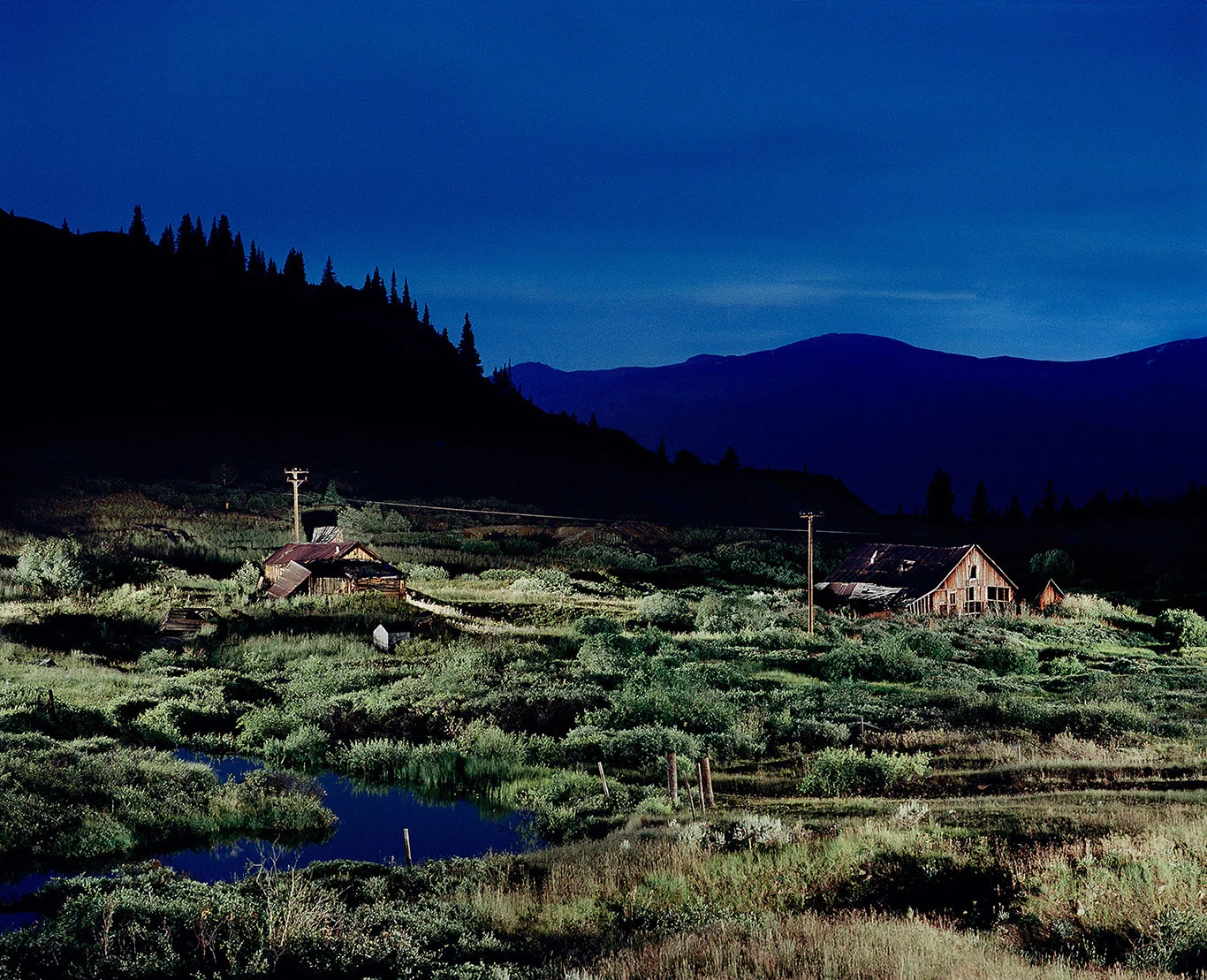
Stumptown, Colorado
In 1860, gold drew prospectors to a gorge in the Mosquito Range; thirteen years later, Will Stevens’ discovery of silver sparked a second boom – Leadville and places such as Stumptown sprang up. When the silver ran out too, copper and zinc kept the region alive until the small settlements were abandoned in the 1930s. Since then, houses and mining facilities in the Rocky Mountains have fallen into disrepair – most strikingly in Stumptown, which is slowly sinking into the mountain marshes.
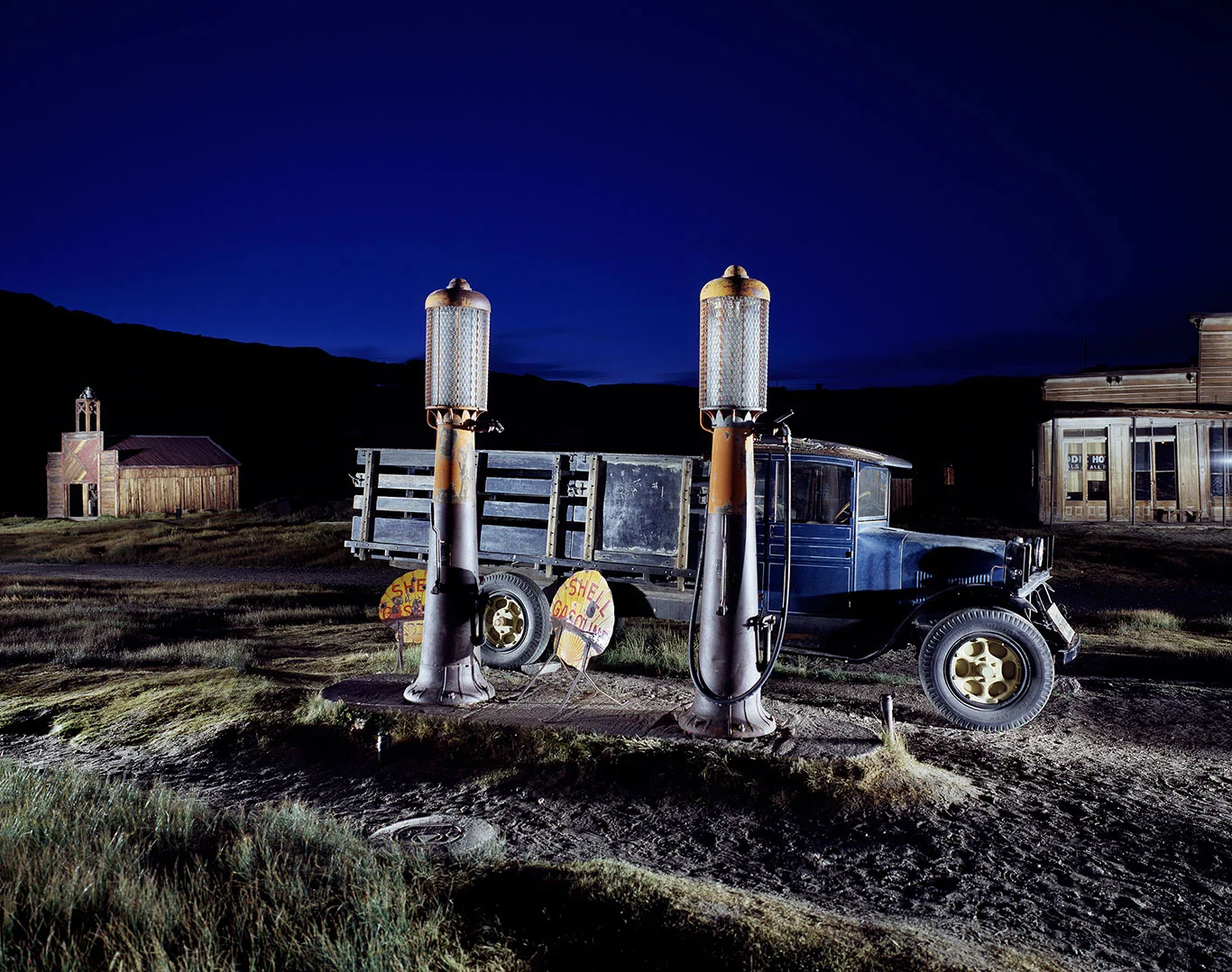
Bodie, California
Petrol station with the Dodge Graham truck on Main Street.
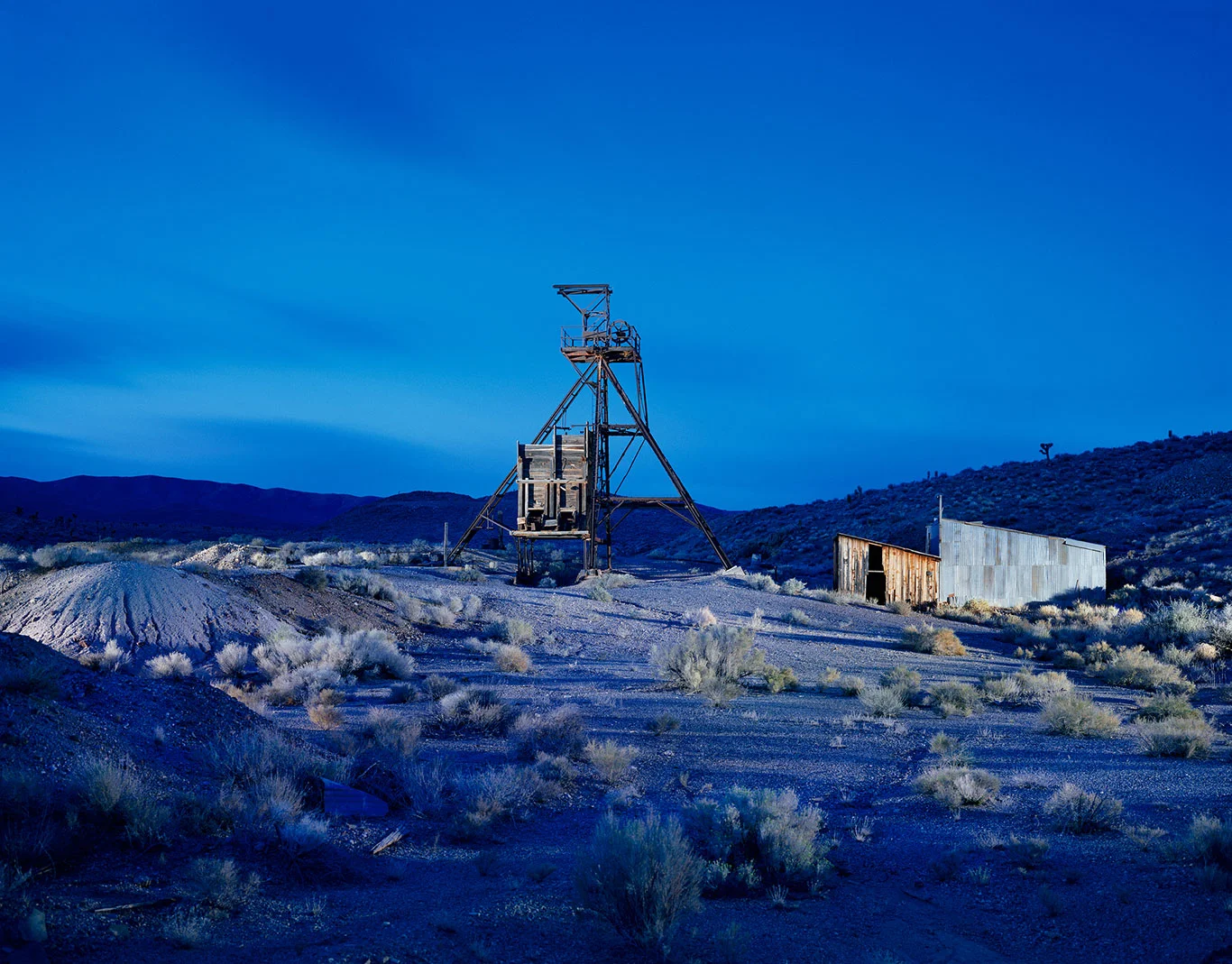
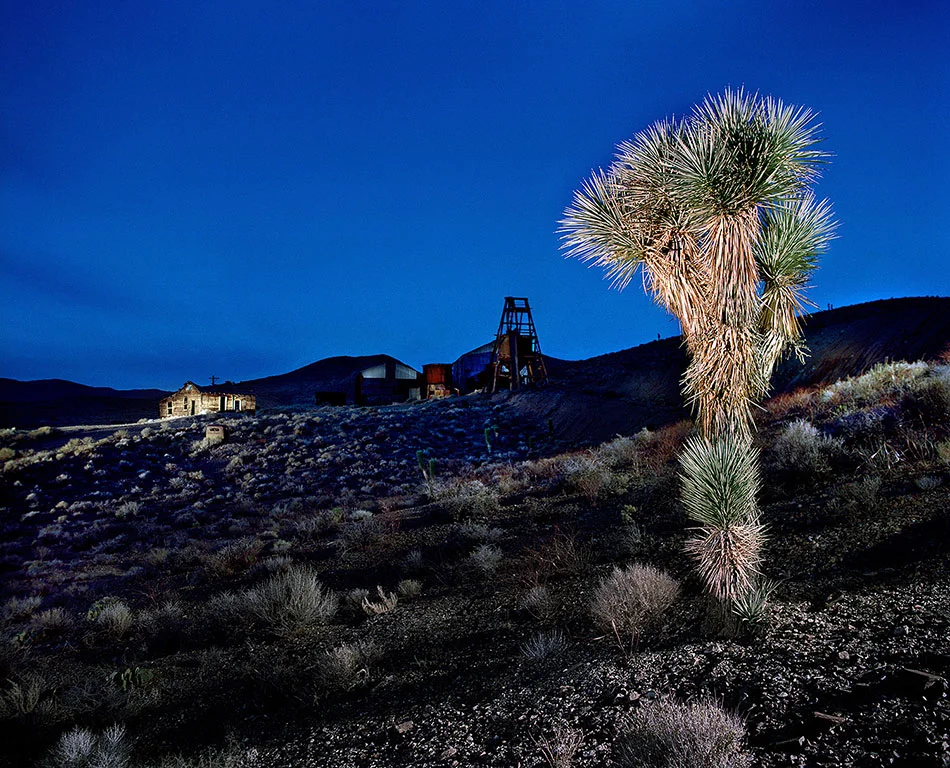
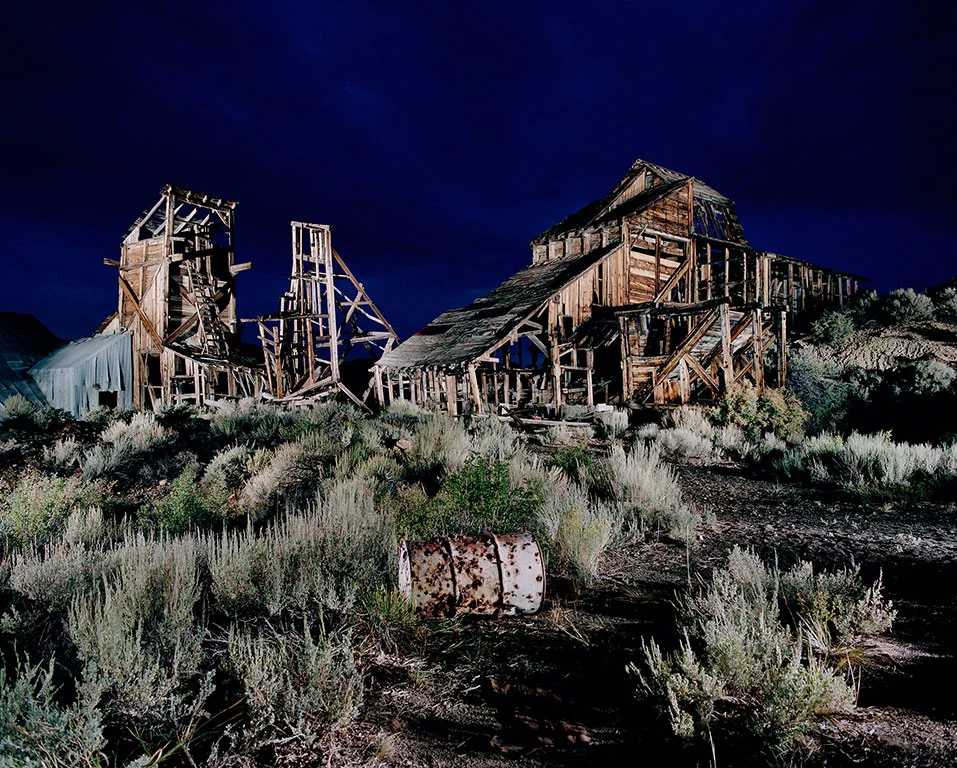
Dunfee Mine, Gold Point, Nevada
In the 1880s, silver was discovered at Gold Point; a prospectors’ camp sprang up quickly, and later a town was established. Proving the presence of silver was a laborious process – the ore mixed easily with other minerals, had to be tested with acid and confirmed by experts, and was usually found underground rather than in easily accessible surface veins. In 1960, the Dunfee Mine, along with all the other gold mines in the area, was finally abandoned.

„I’d like to know how many times I’ve undertaken a detour simply because a place was identified on the map as a ghost town. That designation, usually in parentheses, has a magical attraction for me, and not only for me, almost like a siren song.“
Wim Wenders im Vorwort zum Buch
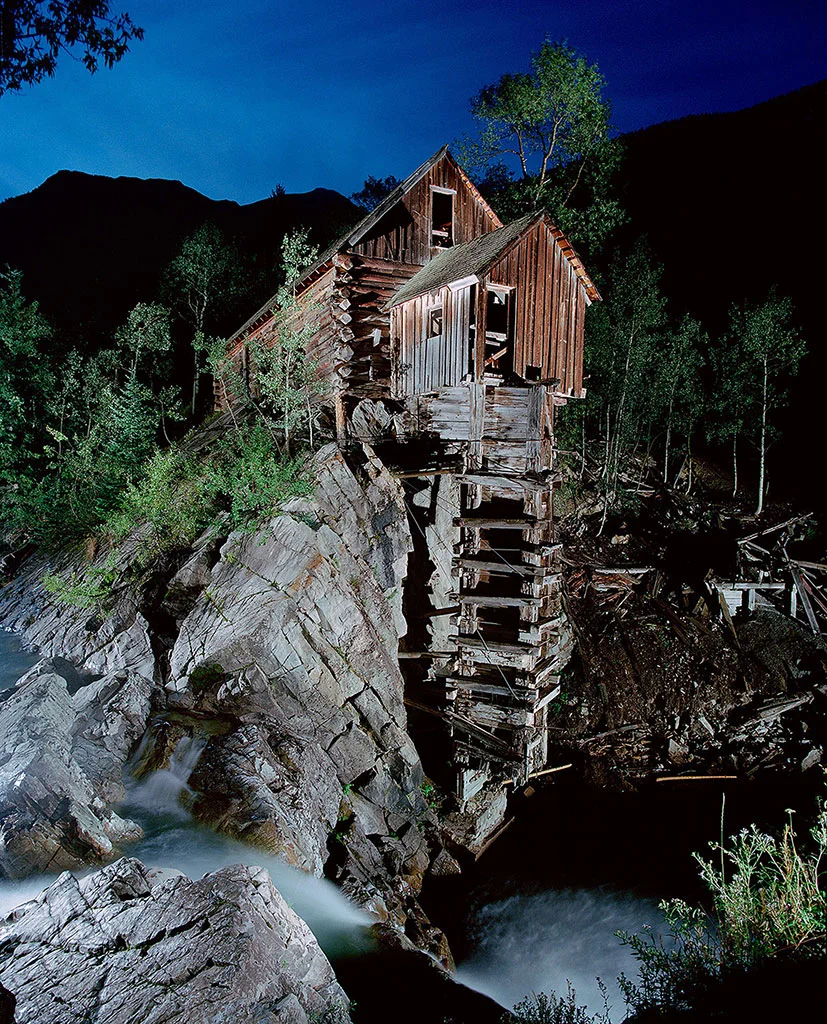
Crystal, Colorado
Sheep Mountain Tunnel Mill. Above the former small power station was the miners’ village of Crystal, which became a ghost town after the mine closed around 1917. Many of the old houses, however, still stand and are maintained by their owners.
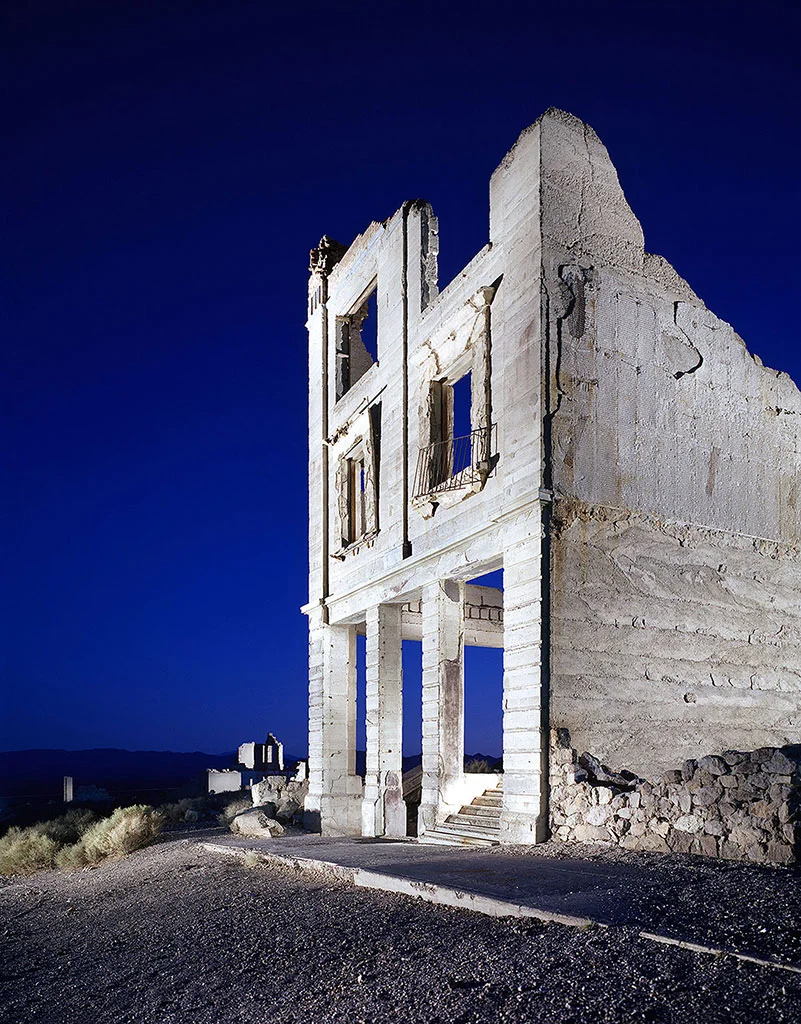
Rhyolite, Nevada
Frank “Shorty” Harris and Eddie Cross struck a rich vein of gold on the edge of Death Valley in 1904. Within three years, the population rose to over ten thousand. Solid concrete buildings like the Cook Bank Building were erected. But the gold boom proved to be very short-lived – the last resident of Rhyolite died in 1924.
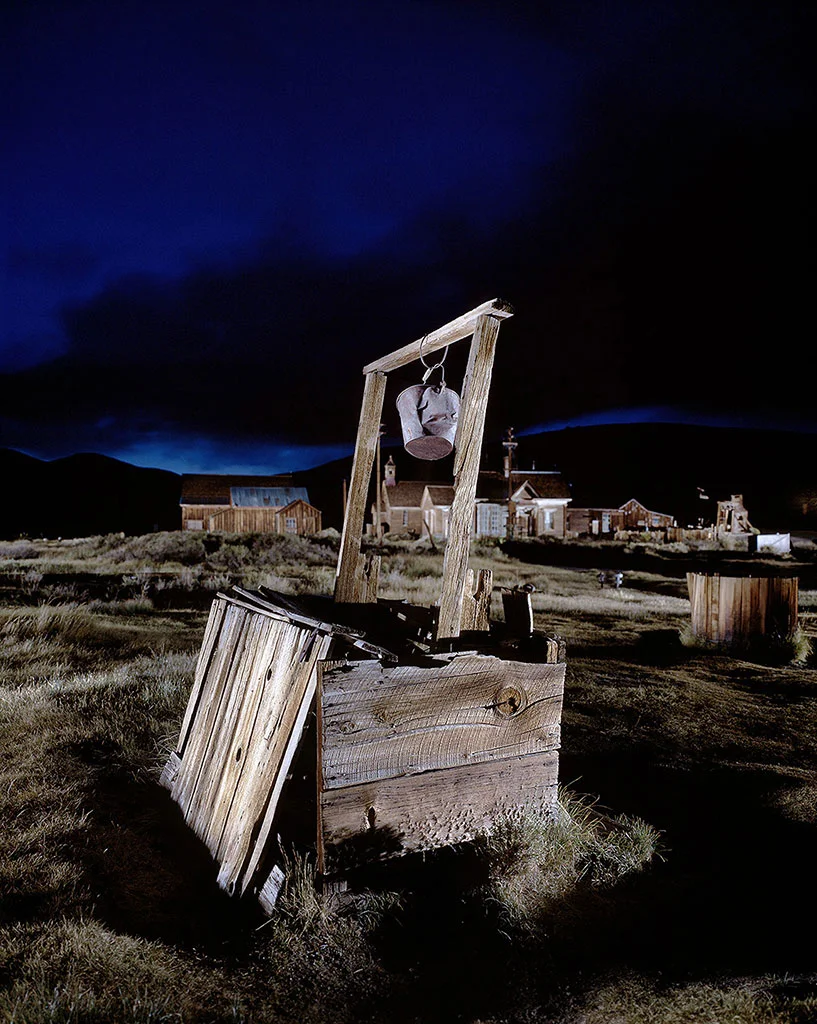
Bodie, California
Fountain next to Green Street with the backdrop of the abandoned western town.
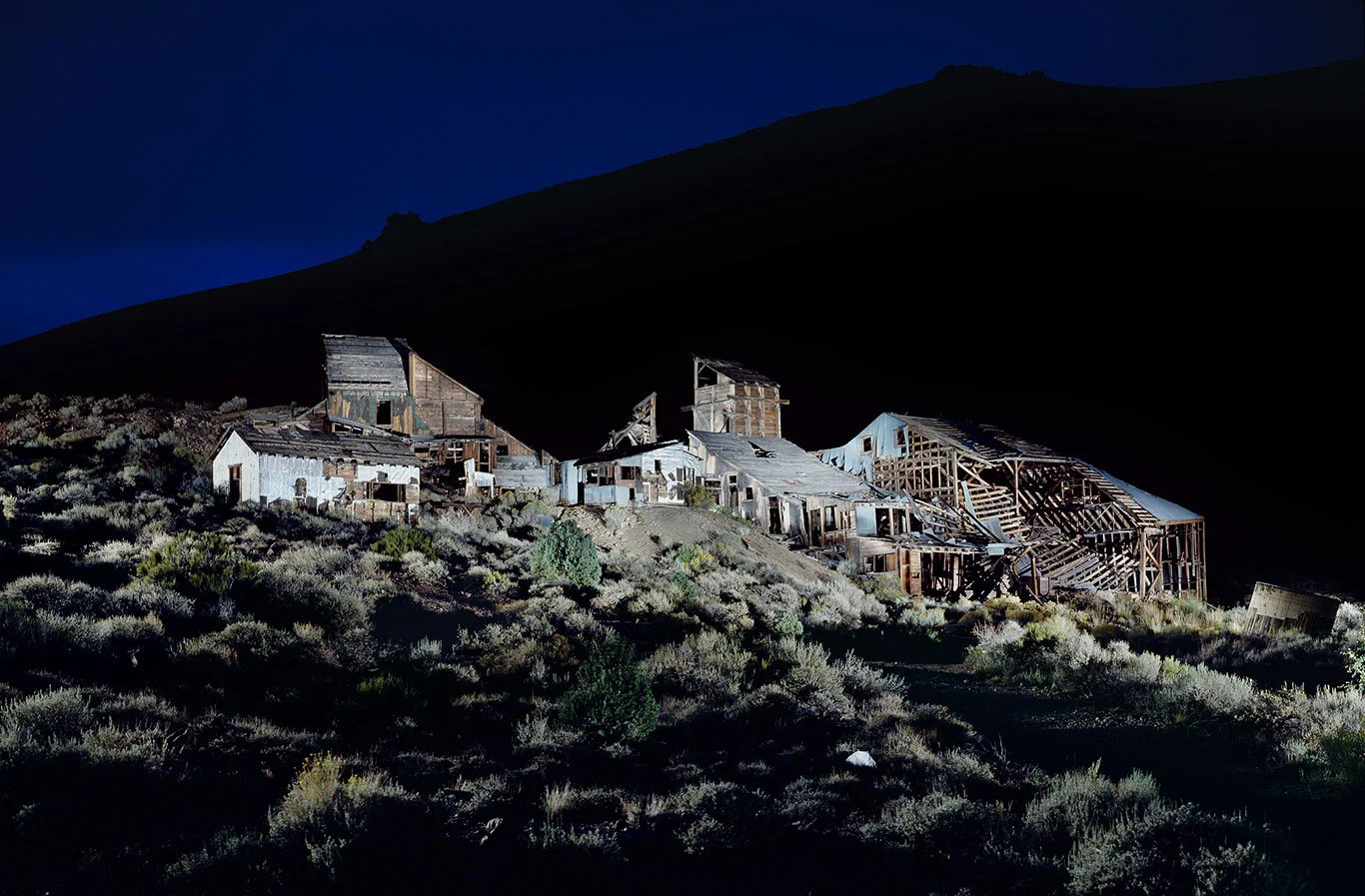
Chemung Mine, Nevada
When gold was also found on the eastern side of the Sierra Nevada around 1860, many boomtowns like Masonic sprang up. At the beginning of the 20th century near the Chemung Mine, which was mined until 1938.
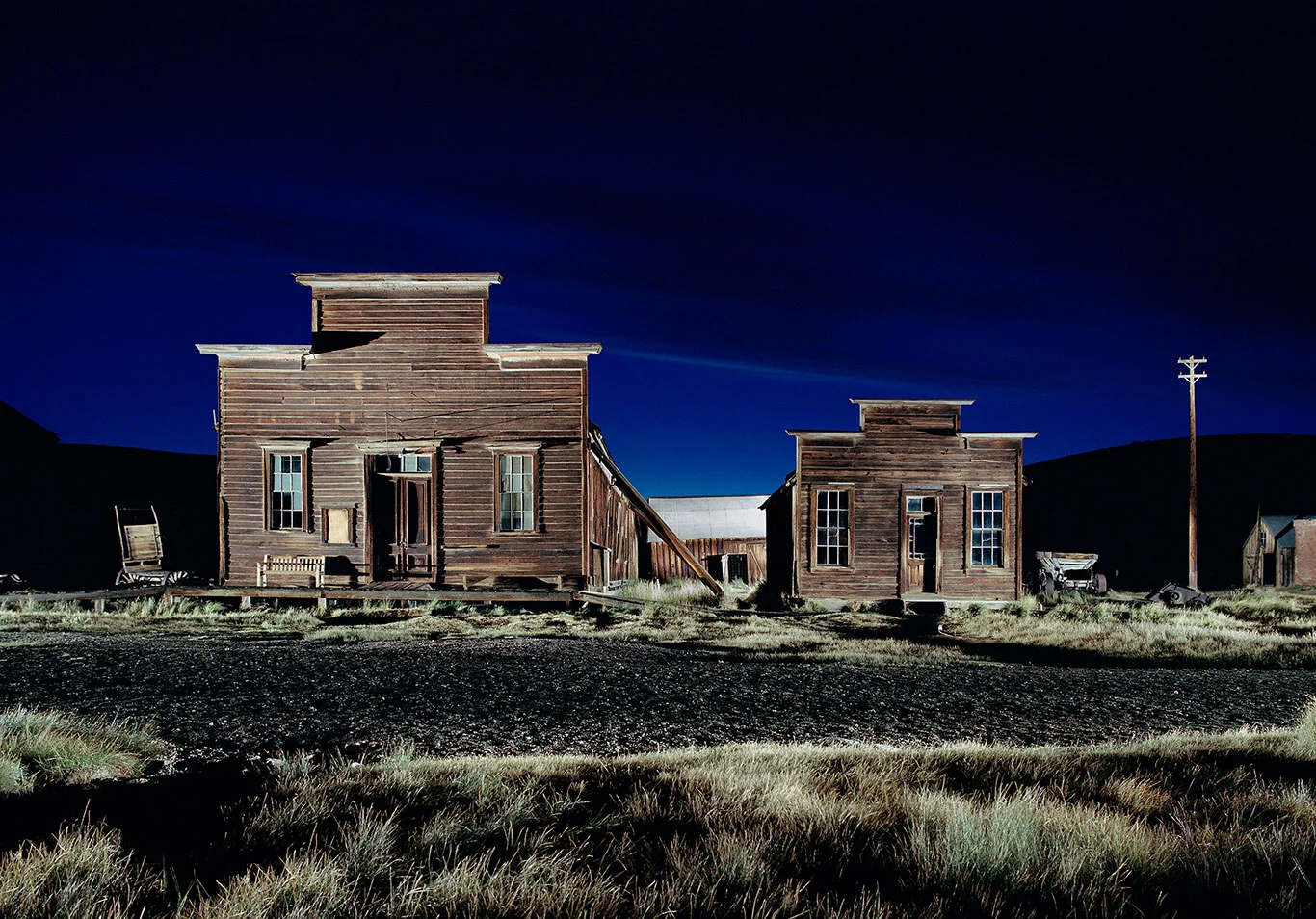
Miner’s Union Hall, Bodie, California
The Miners Union Hall on Main Street was an important social and cultural meeting place in Bodie. The big Independence Day celebrations were held here. On the right, the undertaker’s business.
„As an afterthought to these images, I am left with the feeling of having seen pictures from another planet, a little like those from the fabulous probe that landed on Mars and sent us images of a reality that exist wholly without human beings, so obviously and frighteningly independent of us…“
Wim Wenders im Vorwort zum Buch
All other series
- Info
- Landscapes
- The Lightworks
- Portraits
- Projects
From here, you can navigate to all the other series.