Berthold Steinhilber Photography

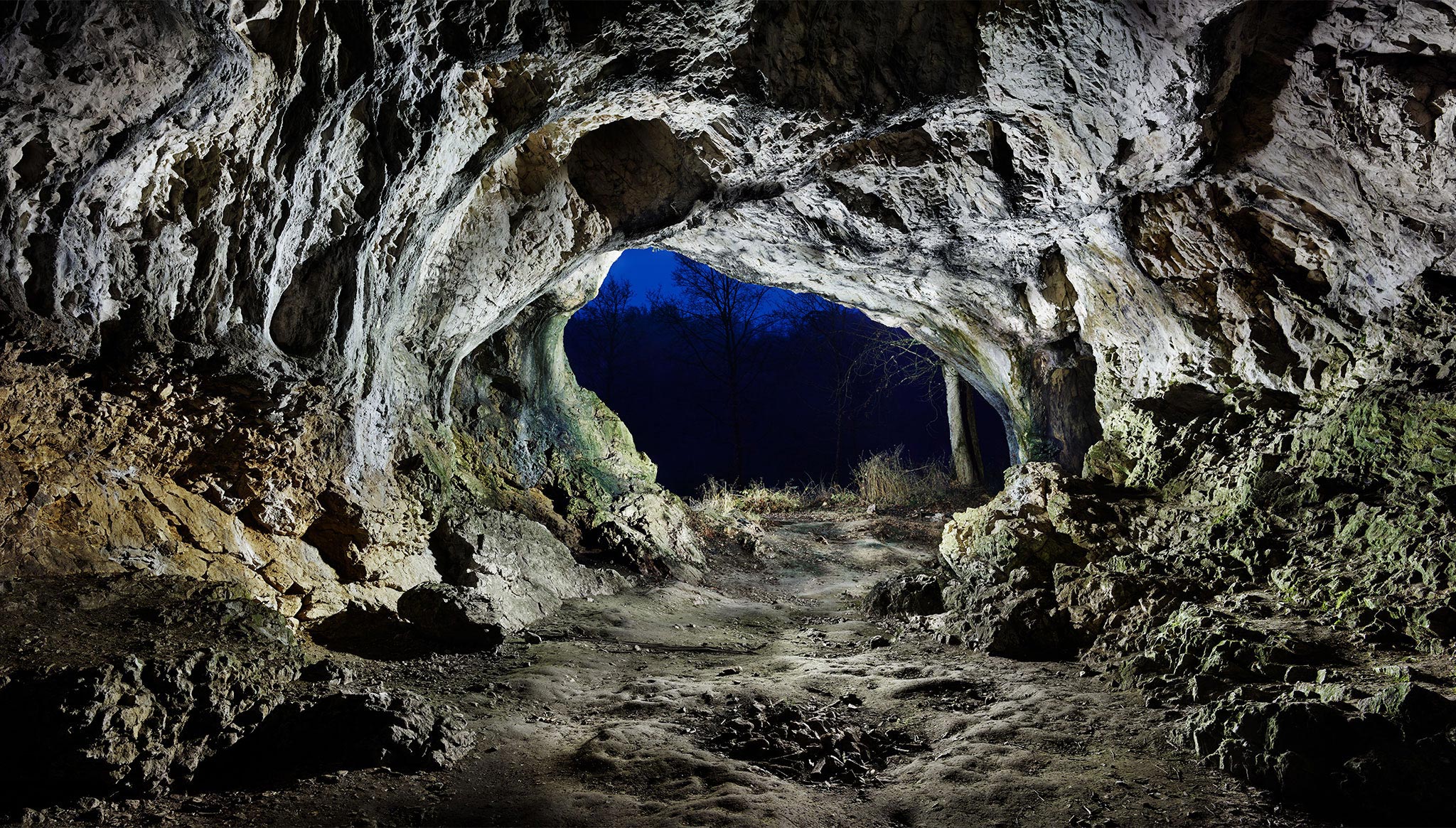
Eingang der Hohlenstein-Stadel Höhle im Lonetal

Caves of the oldest Ice Age Art

The Invention of Art

The oldest works of art known to mankind have been found in six caves in the Lone and Ach Valleys in the Swabian Alb near Ulm. They are between 35,000 and 43,000 years old. They were created by modern man, who came to Central Europe more than 35,000 years ago during the last ice age along the Danube.

It was a non-sessile hunter-gatherer society. Glaciers covered northern Europe, Berlin, Lake Constance and reached as far as the Danube, and Neanderthals lived alongside Homo Sapiens.
Humans gathered not only food, but also knowledge. Without this, they would not have survived in their environment. The people of that time had extensive and diverse knowledge about their environment – more than most modern people today.

The caves and the finds document the creative power of modern humans in an extraordinary way.

I took the first photographs of the caves more than 15 years ago. At that time, many caves were still covered by trees and bushes and hardly visible. People barbecued on the caves and there were rubbish bins in front of the caves.
In recent years, trees have been felled in front of the cave entrances, the archaeopark was created at Vogelherdhöhle and today the caves are part of the UNESCO World Heritage.
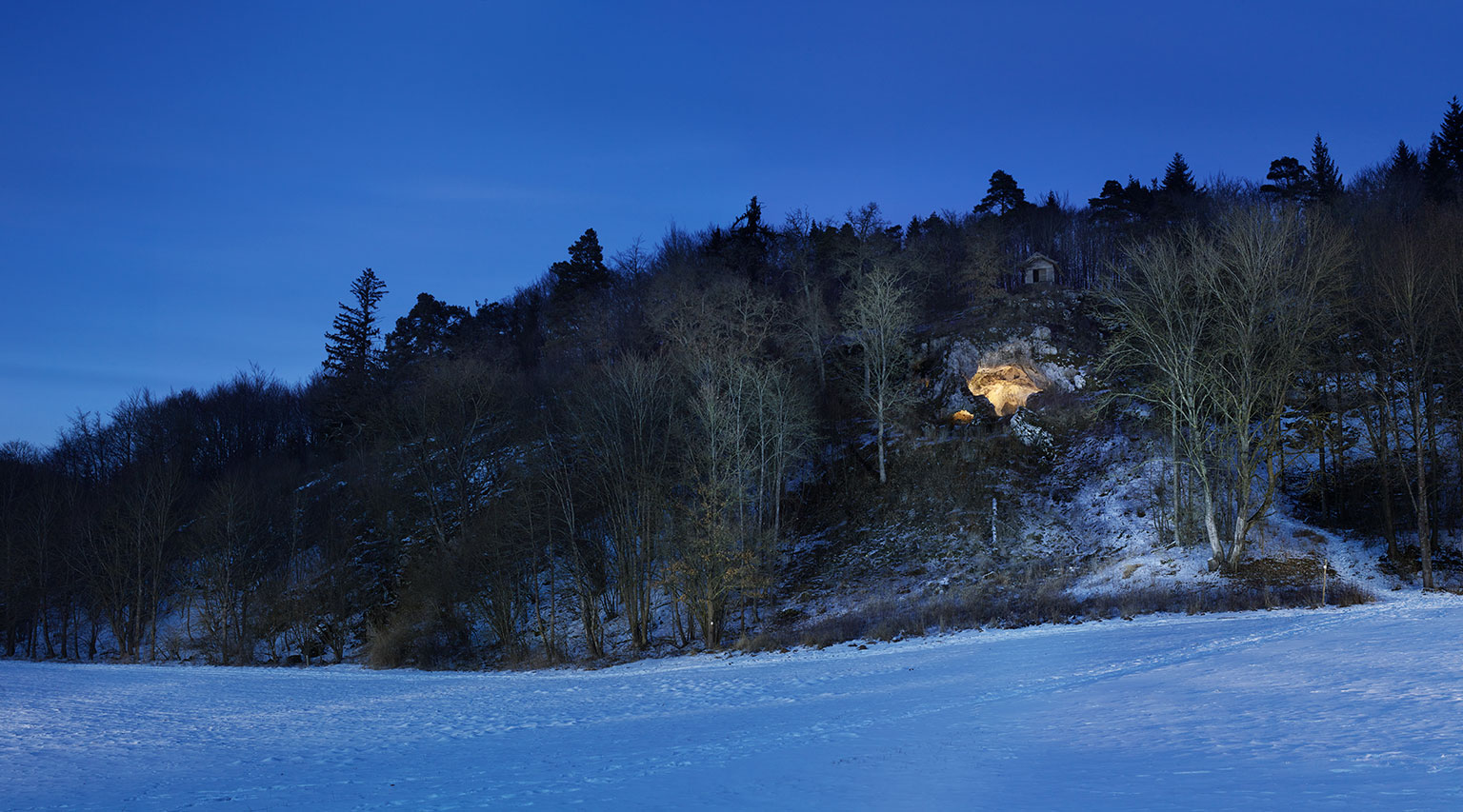
Bockstein Höhle im Winter im Lonetal

The Bockstein Cave in the Lone Valley

The caves are particularly impressive in the winter months, when the forest does not block the view from the caves. From the Bockstein cave you have a good view over the Lone Valley – at that time the landscape was barren and there was no forest.
We illuminated the interior of the cave with a somewhat warmer light – quasi “someone is at home here”…

Vogelherdhöhle im Lonetal

Vogelherd cave in the Lone Valley

The cave has two entrances, and the first time I photographed here was over 15 years ago. In front of this entrance was the typical communal waste bin in green, and bushes hiding the other entrance. For this shot we illuminated the cave at the beginning of dusk, which is rather untypical, but seemed quite appropriate for this view.

Geissenklösterle Höhle im Achtal

The Geißenklösterle cave near Blaubeuren in the Ach valley

The cave was much larger 40,000 years ago. Where the trees grow today and the sky can be seen, was the interior of the cave. The excavations took place at the back of the closed-off part of the cave.
The steep terrain was difficult to walk on at night for lighting, and therefore quite demanding. While I took care of the upper part of the cave in terms of lighting, my assistant illuminated the corresponding parts of the rocks and the cave from below and the much more difficult part. A very energy-sapping job.

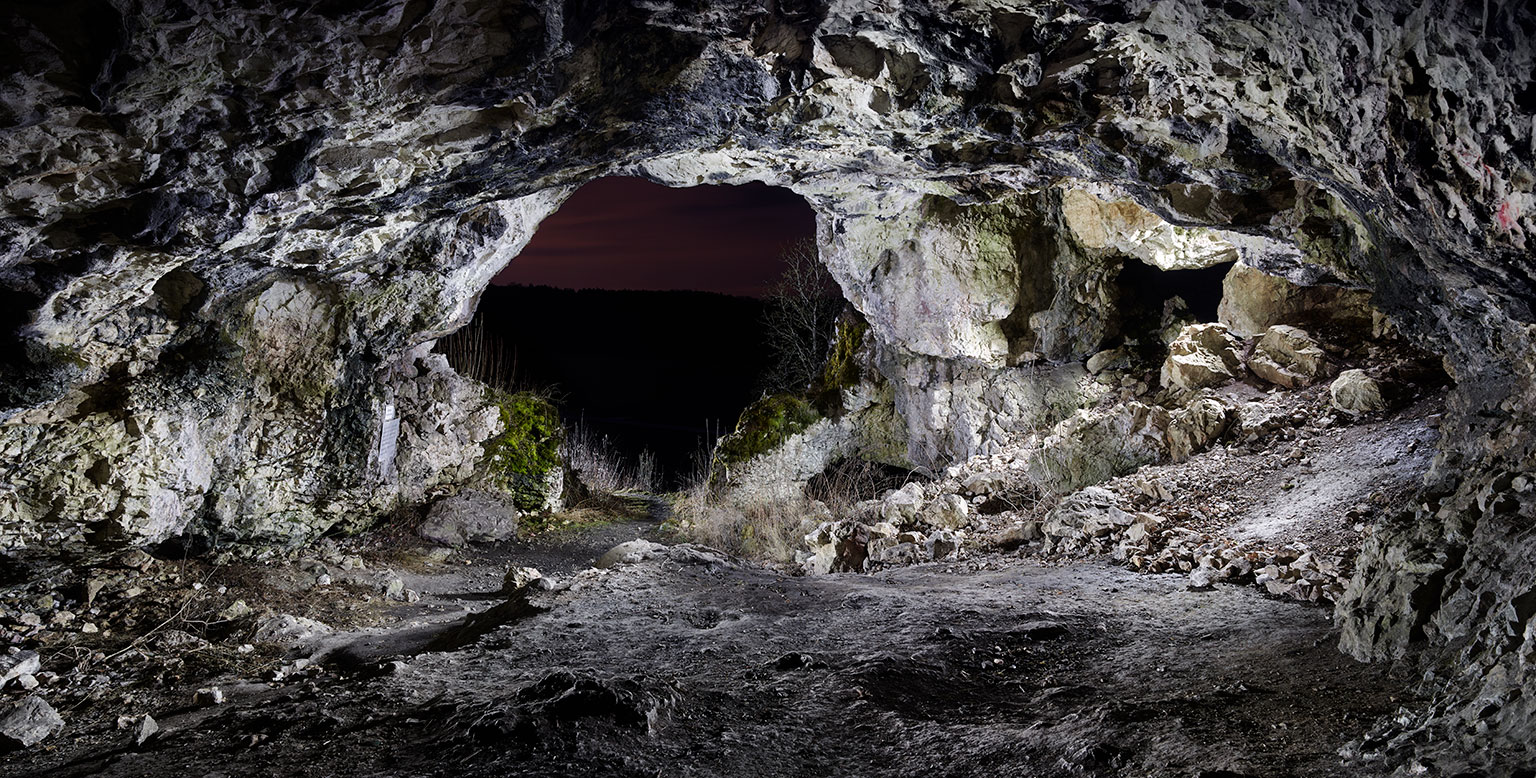
Im Innern der Bocksteinhöhle im Lonetal

Inside the Bockstein Cave in the Lone Valley

Interior view of the Bockstein Cave. From the entrance of the cave, you have a very good view down into the Lone Valley. You can imagine very well how the ice age hunters watched the herds of reindeer here.

Sirgensteinhöhle im Achtal

Inside the Sirgenstein cave in the Ach valley.

Sirgensteinhöhle im Achtal

The Sirgenstein cave near Schelklingen in the Ach valley.

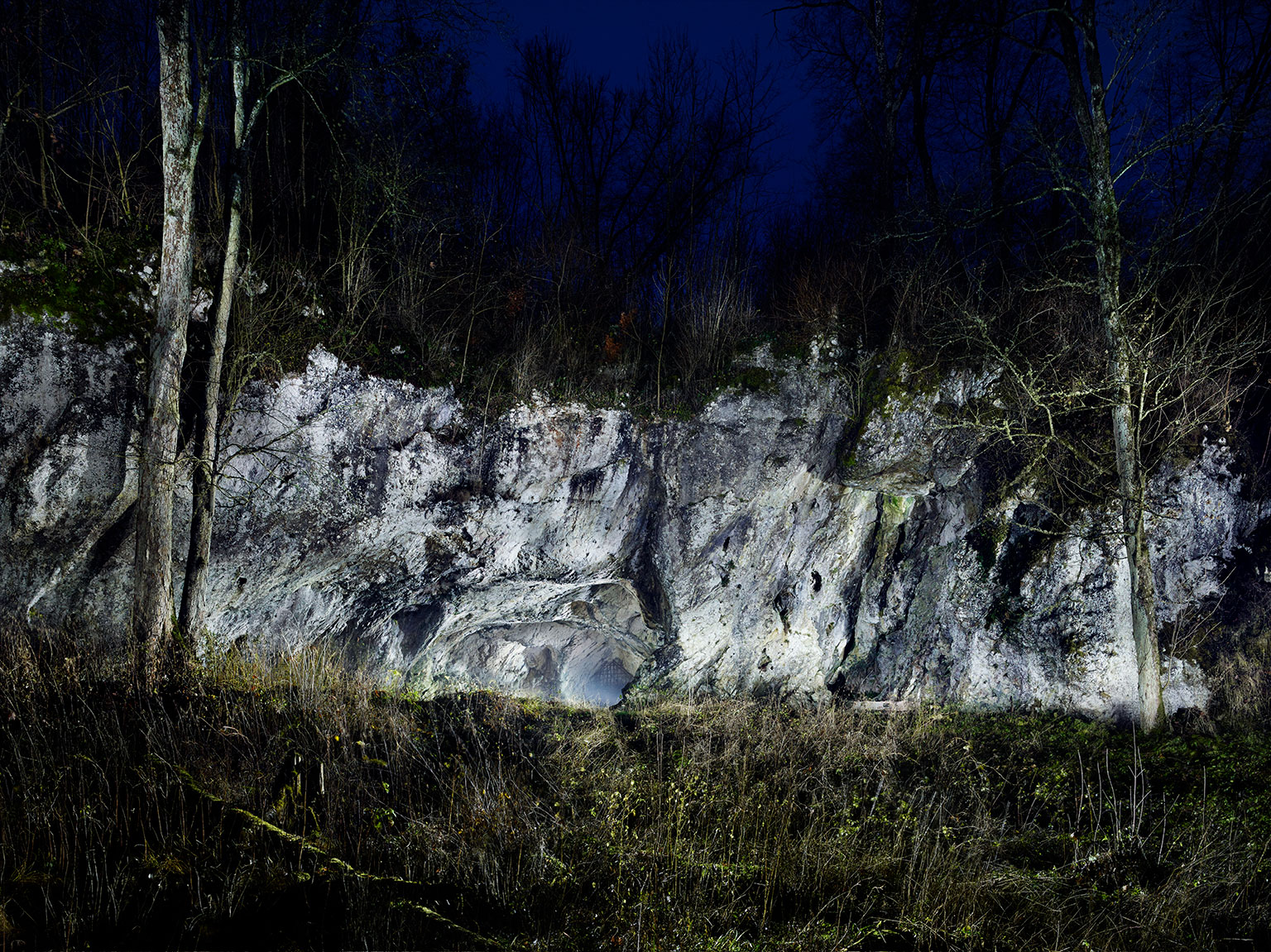
Hohlenstein-Stadel Höhle im Lonetal

Hohlenstein-Stadel Cave

Exterior view of the cave in the Lone Valley, where the Lion Man was found.

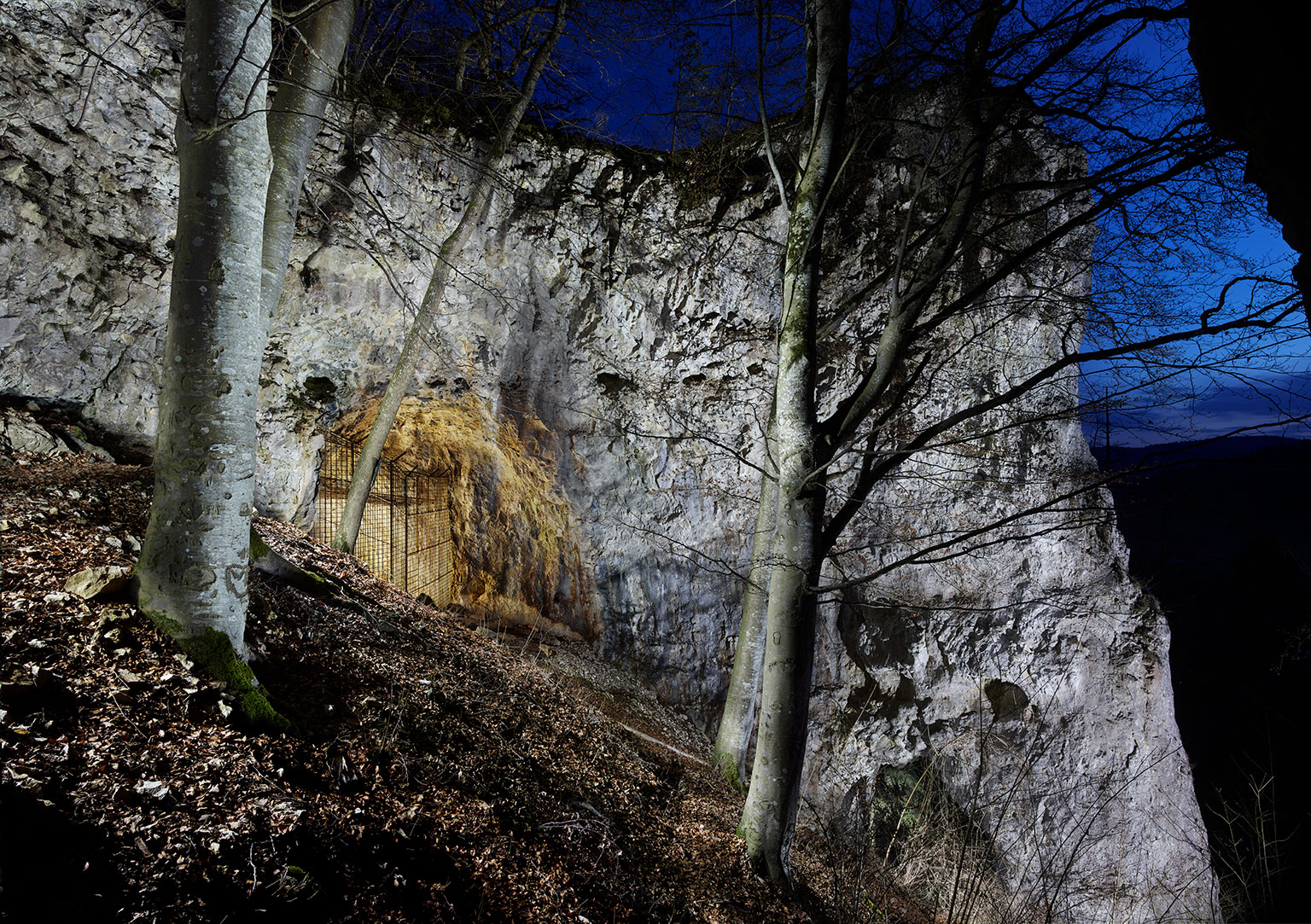
Eingang der Hohlenstein-Stadel Höhle im Lonetal

Hohlenstein-Stadel Cave

The place where the Lion Man was found is in the back and closed off part of the cave.
I had a specific image in mind to do justice to the significance of the cave and the location. The realisation was tricky, because lighting cave interiors is anything but easy. All the more we were more than satisfied with the result.

Hohler Fels Höhle im Achtal

Hohle Fels Cave

The entrance to the cave is in the Achtal valley near Schelklingen and it is the treasure trove of Ice Age art finds. The famous “Venus of Hohle Fels” was found there.