Get out, happiness lies elsewhere
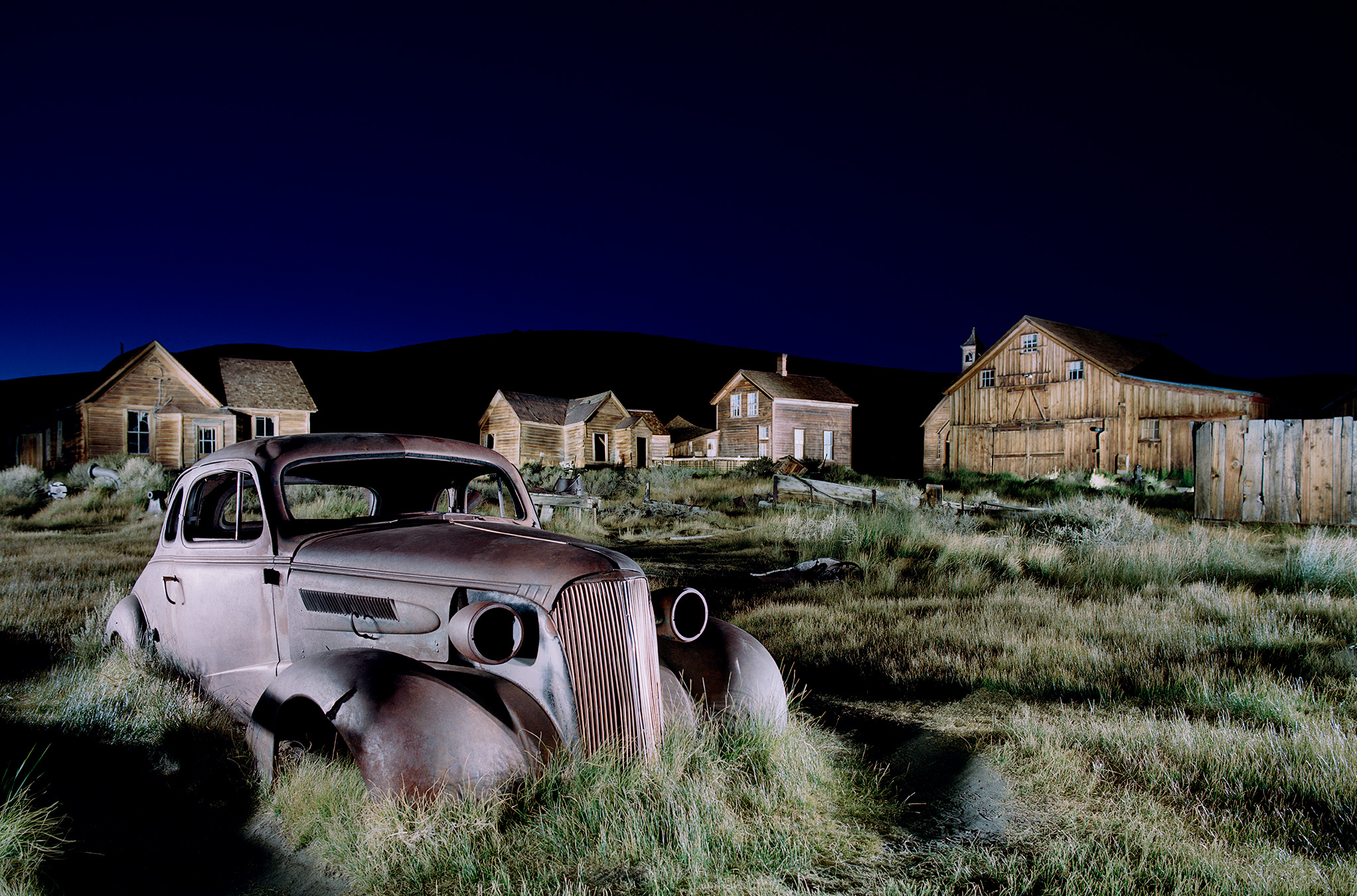
Photographs from the book “Ghost Towns of the American West” with a wonderful foreword by movie director Wim Wenders. The abandoned western and mining towns left some of the most impressive traces in the settlement of the American West.
Ghost Towns – in the broader sense, any form that even vaguely resembles a settlement or a house and breathes history – every pile of stones, every crooked hut or still inhabited place is quickly declared a ghost town. This is irritating. With time, however, one understands and appreciates this unusual way of dealing with history. After all, none of the places is older than 150 years, none has been inhabited for more than 100 years. The compulsion to change one’s place of residence, to leave one’s house and farm and start anew elsewhere was much greater than in Europe. Traditions and ways of life therefore had a much shorter lifespan.
Almost all Ghost Towns are abandoned mining and western towns. The fate of these towns was closely linked to the economic success of the mines. When the mineral resources were exhausted, the place was abandoned and the people left. An impressive example is the fate of the town of Rhyolite near Death Valley in Nevada. It is the story of a classic boomtown. After two gold miners stumbled upon a large gold deposit in the desert, one of them, in a whiskey frenzy, revealed the location of the find and within a few weeks the town of Rhyolite emerged from a makeshift camp. After three years, over ten thousand people lived in the town. When the ore deposits were exhausted a few years later, the exodus began.
Get out, happiness lies elsewhere – the people packed all their belongings and took their houses with them, because wood was scarce and expensive. Today, only the concrete skeleton of the bank and the schoolhouse remain in the desert.
The futile search for mineral resources and wealth knows many stories and you encounter them in every place. There is one particular town, however, whose stories are inexhaustible: Bodie. Many houses are still in the same condition as the inhabitants left them. Dust covers the tables and maps in the saloon, glasses lie on books as if the inhabitants had left only yesterday.
Why some of the places have survived as Ghost Towns is often thanks to their last inhabitants, who took care of the town’s legacy. In Bodie, one of the remaining residents bought house after house and protected them from decay; in Gold Point, Ora Mae Wiley preserved their stories.
The photographs of the 19 Ghost Towns were taken for the book „Ghost Towns of the American West“ and during an assignment for Smithsonian Magazine in the western states California, Nevada, Utah, Colorado, Arizona and New Mexico.