Berthold Steinhilber Photography

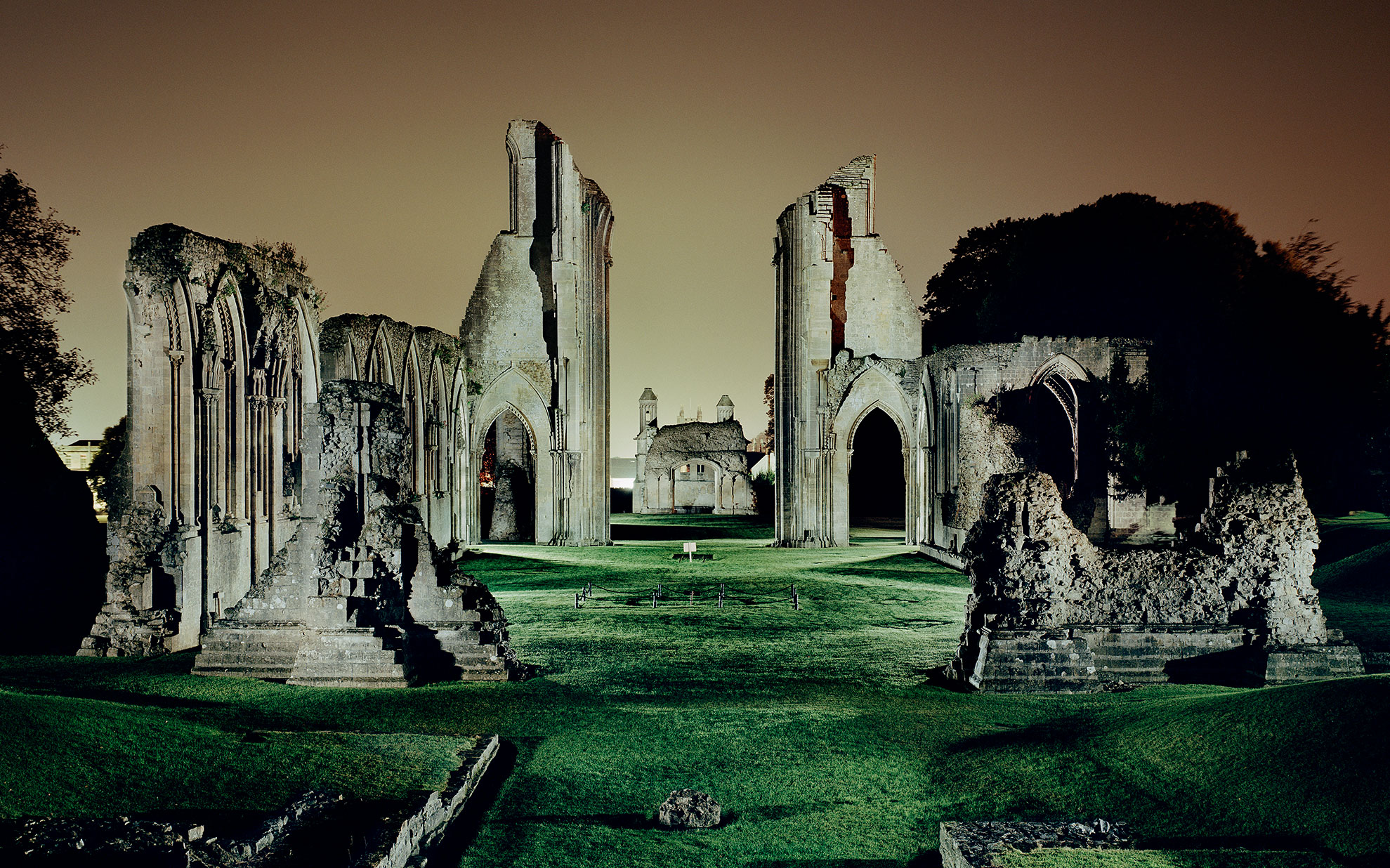
Glastonbury Abbey

British Abbeys

The Legacy of the British Monastic Ruins

For a good half millennium, British monastic ruins have been part of the English landscape, standing as stone witnesses in the midst of parkland, along river courses or wind-blown uplands. They tell of England’s greatest expropriation.

To obtain a divorce from Catherine of Aragon, Henry VIII broke with Rome and declared himself head of the Church of England by the Act of Supremacy in 1534.
The English clergy had to recognise the new head of the church in an oath. Those who refused were punished by death, and those who agreed surrendered to the crown.

Breaking away from Rome was also lucrative for Henry. The newly founded Anglican Church now had to make its large payments directly to the Crown rather than to Rome. The king also eventually ordered the dissolution of the monasteries. Between 1536 and 1540, monasteries all over the kingdom were seized, destroyed, plundered and lands transferred to the loyal nobility.

By then, the Catholic Church had long since departed from the ideals of the early monastic foundations: huge buildings on even larger estates and the enormous economic influence of the monasteries displeased not only the king.
As a result of the “Dissolution”, the monastic world on the island was dragged into the abyss. By 1540, only the skeletons of a thousand years of English monastic life remained.

Today, the monastic ruins can be read like an open book. No gate is locked any more, no view is denied into the choir or the cells of the monks. They tell of ice-cold royal power politics, the monastic orders and their ideas, legends, and sufferings of a cultural idea that shaped the Christian West.
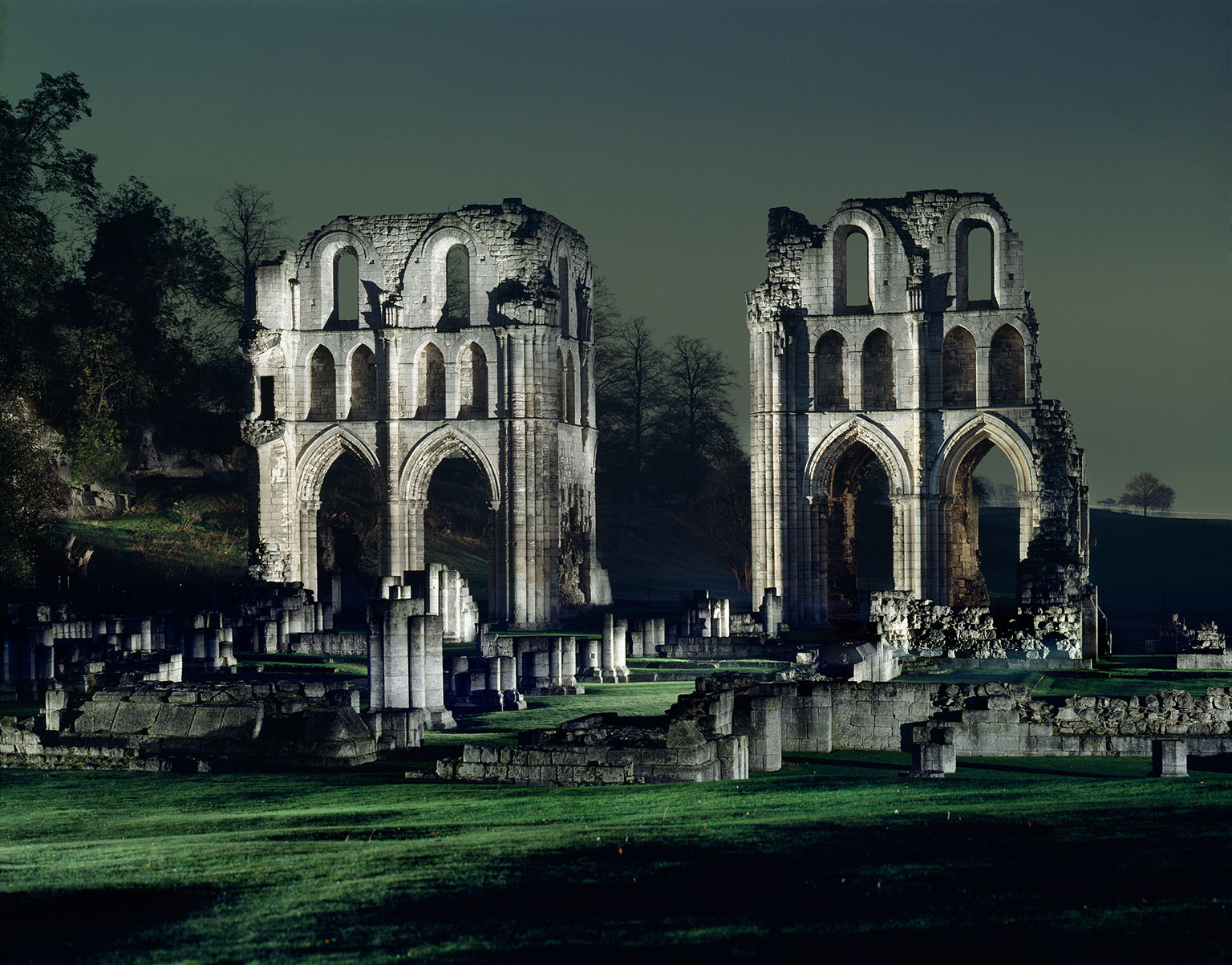
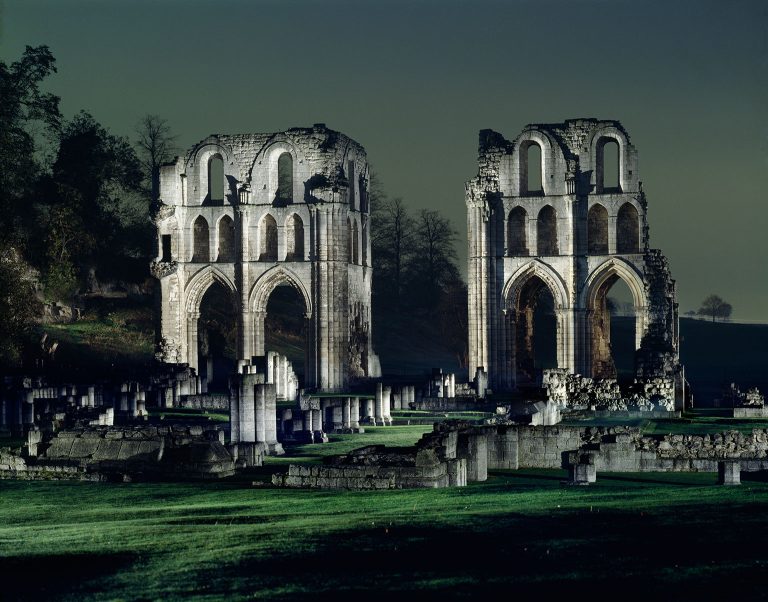
Roche Abbey church

Roche Abbey, South Yorkshire

Remains of the Gothic transept of the church of the Cistercian abbey, founded in 1147 and dissolved on 23 June 1538. “Give these monks a barren moor or a wild forest, then let a few years pass and you will see not only beautiful churches but also human settlement built there.”

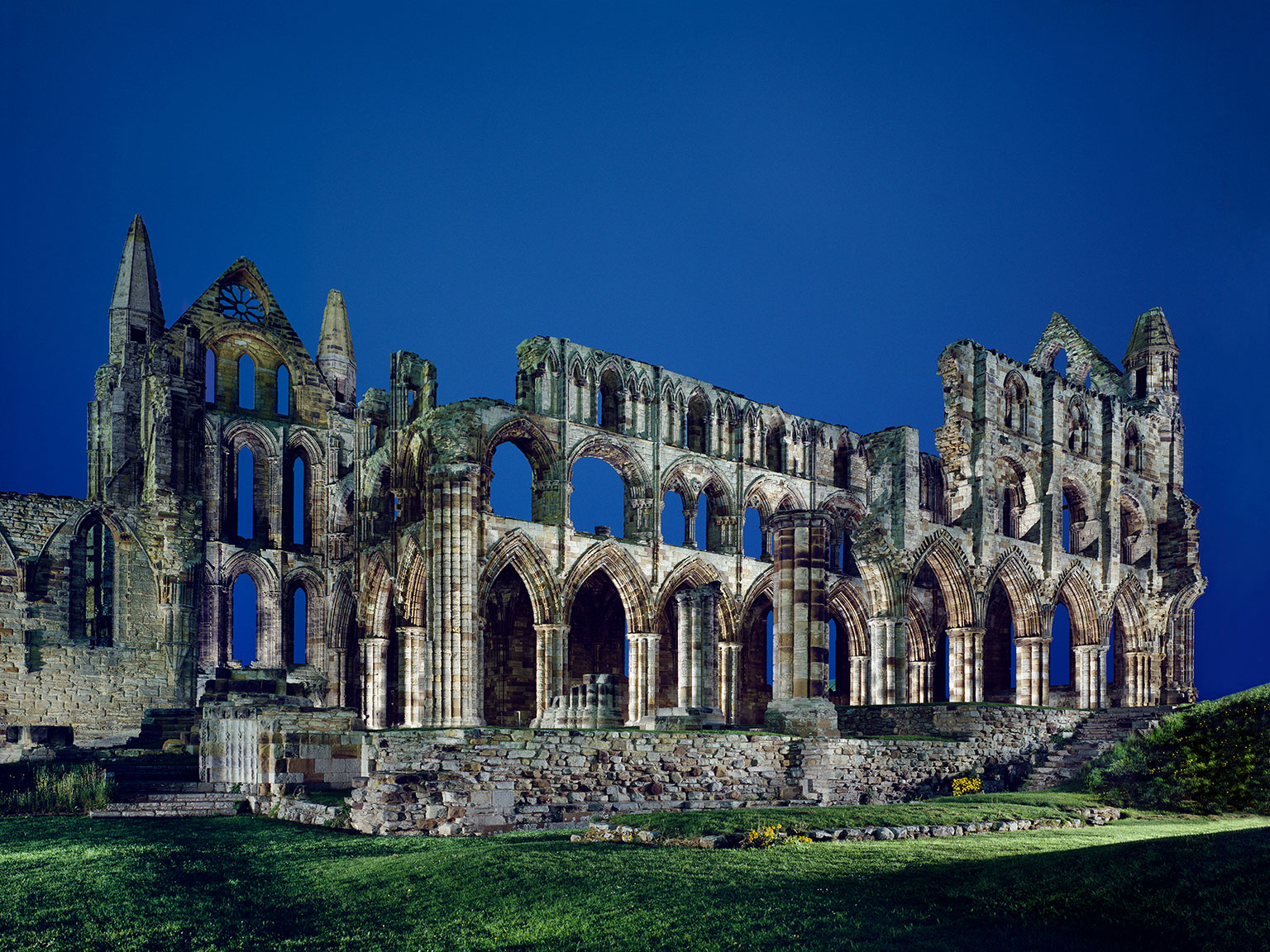
Whitby Abbey church

Whitby Abbey, North Yorkshire

Benedictines, founded in 657, dissolved in 1539. The former monastery is situated on a hill high above the harbour town of Whitby. It seems interesting to me to know that Bram Stoker looked for ideas for his novel “Dracula” here in the old Whitby Abbey and then had the Count set foot on British soil in Whitby as well.

Bolton Priory church

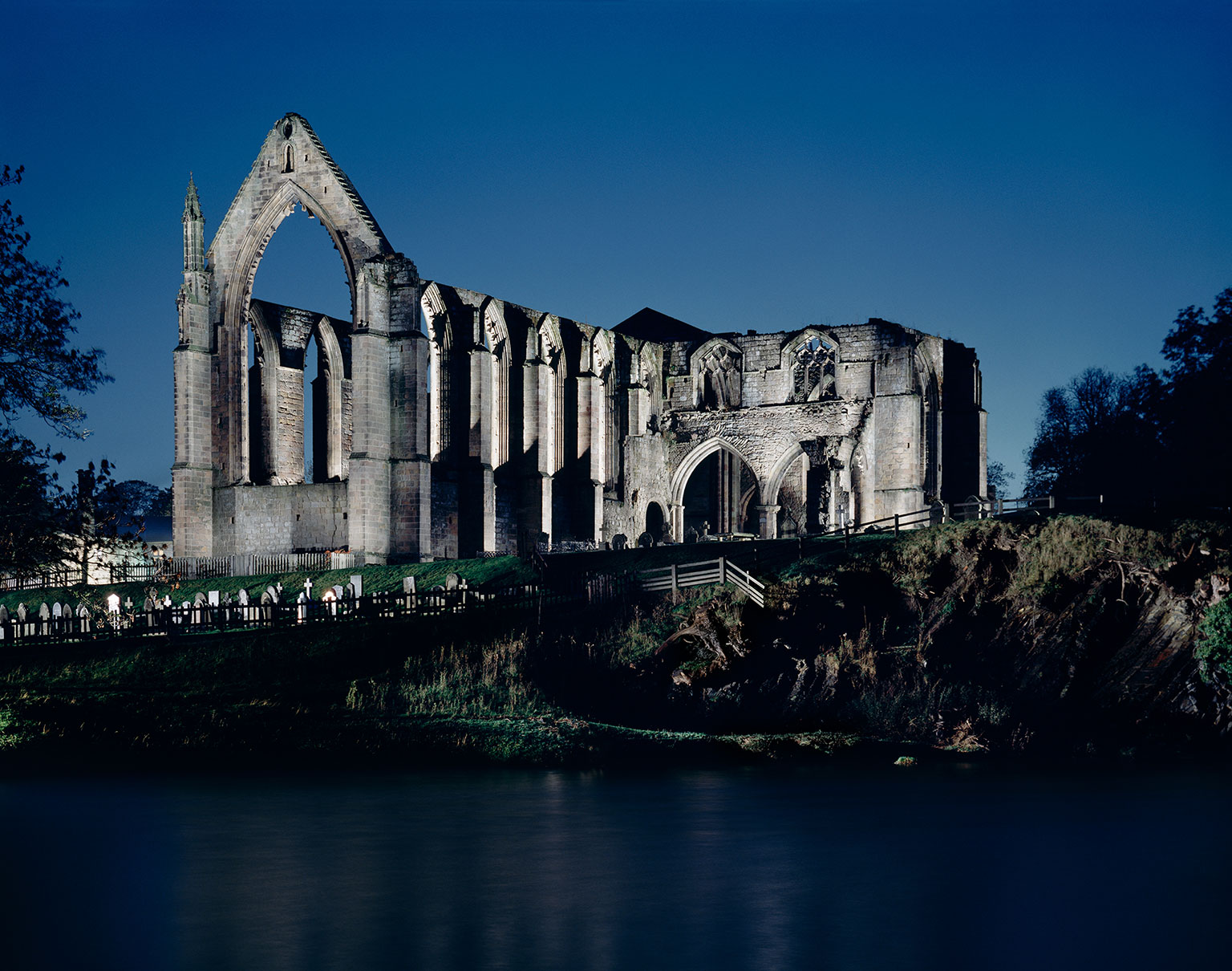
Bolton Priory, North Yorkshire

Augustinian canons, founded 1154/55, dissolved in January 1539. The ruins are beautifully situated on the River Wharfe and I remembered the historians – hence the river view – describing how medieval man, travelling in such a river valley, encountered an unknown culture trying to take over nature. The strict plan scheme of the monastery buildings must have left a lasting impression on the people, as it was the only architecture in sight.

Whitby Abbey church
Neath Abbey
Bolton Priory church
Byland Abbey church
Jervaulx Abbey
Buildwas Abbey church
Byland Abbey church

Byland Abbey, North Yorkshire

Cistercians, founded in 1177, dissolved in 1538. A stone crescent moon still rises into the evening sky from the luminous rose window in the west façade. It tells of what was once the largest and most beautiful Cistercian church in England. Byland was the first church to break through the strict ideal of the early years, the first example of the new way of dealing with space and light. However, the former reform order had long since become powerful and wealthy and the target of worldly envy.

Binham Priory church

Binham Priory, Norfolk

Benedictines, founded in 1091, dissolved in 1540. The remains of the crossing tower rise into the sky like bizarre sculptures. Only the nave of the church has survived the dissolution of the monasteries.

Glastonbury Abbey church

Glastonbury Abbey, Somerset

Benedictines, founded around 63, dissolved in 1539. If there were a ranking of mystical holy places in England, Glastonbury would occupy the first place. Joseph of Arimathea, the man who requested the body of Jesus from Pontius Pilate and buried it in the rock tomb at Golgotha, came to England for missionary work. In his luggage he had the cup of the Last Supper, with which he had also collected the blood of the Crucified. He is said to have buried it somewhere in the vicinity of the village. Thereupon began a restless search for the Holy Grail, which also kept King Arthur’s Round Table in suspense. Its grave is in the middle of the abbey – where the shield stands.

Furness Abbey

Furness Abbey, Cumbria

Cistercian, founded in 1147, dissolved in 1537. The imposing arcades of the chapter house in red sandstone give an idea of the wealth of the monastery. Furness was the most powerful abbey in the North West and one of the richest Cistercian abbeys in England, also owning land in Ireland and on the Isle of Man. It was the first of the more important monasteries to be dissolved.

Buildwas Abbey church

Buildwas Abbey, Shropshire

The church clearly shows the austerity and simplicity of early Cistercian architecture. The order demanded clarity, purity and durability for its buildings.

Rievaulx Abbey

Rievaulx Abbey, North Yorkshire.

Rievaulx was founded in 1132 as the first Cistercian abbey in northern England. The first monks and their abbot came from Clairvaux in Burgundy.

Guisborough Priory church facade

Guisborough Priory, North Yorshire

The impressive east wall of the nave of the Augustinian canons’ monastery stands like a triumphal arch in the landscape.

Lindisfarne Priory church

Lindisfarne Priory, Northumberland

The Benedictine monastery is located on Holy Island off the east coast of Scotland in Northumberland.

Saint Cuthbert of Lindisfarne

Lindisfarne Priory, Northumberland

Saint Cuthbert of Lindisfarne.

Detail in the church of Rievaulx Abbey

Rievaulx Abbey, North Yorkshire.

Twelve monks from a French hermit colony in Arrouaise founded the monastery in the Shropshire woods in 1143.

When I started the series on the British Abbeys, I was intensively involved with the meaning of light and studied the paintings of William Turner, Caspar David Friedrich, Jan van Eyck and Jan Vermeer (William Turner is still one of my heroes today).

The ruin appears again and again as a motif in many of these painters. On the one hand, it is a symbol of transience, but also one of the perfection and harmony of the original building, and some see it as an ideal of the past in the future and a new beginning in an ever-changing society.
For me, it marked the entry into a genre that I still love to photograph today: the traces left by our civilization.

Perhaps even more important, however, were the insights I gained into the importance of light in my photography. Not in technical terms (that is truly difficult enough), but in the meaning of light.

When my photographs were discussed later, the questions were mostly about the elaborate and somewhat archaic technique (which was absolutely ok though) than about the character of the light.

Here is one of my favourite photographs: the magnificent Tintern Abbey in Monmouthshire, Wales.

Tintern Abbey
Rievaulx Abbey church

Rievaulx Abbey, North Yorkshire.

Cistercian, founded in 1132, dissolved in 1538. Abbeyy church. The entire monastery complex followed a uniform plan. The ideal of a Cistercian monastery remained the guiding principle for each foundation and was adapted to local conditions.

Rievaulx Abbey in North Yorkshire

Rievaulx Abbey, North Yorkshire.

The wonderful church of Rievaulx.

Sweetheart Abbey church and cemetery

Sweetheart Abbey, Dumfries and Galloway, Scotland

Cistercians, founded in 1196, dissolved in 1624. Lady Devorgilla founded the abbey in 1273 in memory of her deceased husband. She carried the heart of her dead husband embalmed and in a silver amulet until the end of her life: Sweetheart Abbey.

Finchale Priory, Durham

Finchale Priory, Durham

Benedictines, founded 1196, dissolved 1535. The ruins of the monastery near Durham lie in a bend of the River Wear.

Newark Prioy
Valle Crucis Abbey
Thornton Abbey Gatehouse
Melrose Abbey church
Dundrennan Abbey church
Melrose Abbey church
Cockersand Abbey

Cockersand Abbey, Lancashire.

Premonstratensians, founded 1184-1192, dissolved 1539. Only the chapter house survived the test of time and served as a mausoleum for the noble family of the Daltons.

Waverley Abbey

Waverley Abbey, Surrey.

Cistercian, founded 1128, dissolved 1536. Waverley Abbey was the first Cistercian monastery in England and was built according to the strict principles of the order. The decisive factors were a secluded location in woodland and water-rich valleys, far away from larger settlements or busy traffic routes, and sufficient space for the entire monastery complex and business operations. Ruin of the storehouse and above it the refectory of the lay brothers.

Talley Abbey tower of the church

Talley Abbey, Carmarthenshire, Wales.

Premonstratensian, founded 1184-89, dissolved 1536. Remains of the 26-metre-high central or crossing tower of the monastery church. The monks’ choir was once located below the tower.

Netley Abbey cloister
Titchfield Abbey
St. Augustine Abbey in Canterbury
Egglestone Abbey cloister
Valle Crucis Abbey
Lindisfarne Priory church

I photographed most of the monasteries with a large format camera on 4×5 inch slide film. The photographs were taken on several trips between 1996 and 2000. With the medium format I photographed the details of the ruins.

A selection of the rare detail photographs can be seen here – I was particularly interested in the stonemasons’ marks that could still be found hidden in one or the other church.

Portal in Furness Abbey
sign of a mason in Furness Abbey
Basin in the church of Rievaulx Abbey
Finchale Priory
Dundrennan Abbey
Finchale Priory
Mount Grace Prioy church
Reculver Abbey
Byland Abbey church
Sweetheart Abbey church
Strata Florida Abbey church
Nave of Sweetheart Abbey church